Insights & Industry News
Global Freight, Supply Chain & Trade Solutions
Moving a boat across oceans demands more than a low quoted rate. A capable carrier must coordinate vessel loading, port transfers, customs paperwork, marine insurance, and final delivery. This guide introduces seven respected Ocean Boat Transport Freight companies serving international routes. Their services may include roll-on/roll-off shipping, container solutions, lift-on/lift-off handling, and yacht transport. These methods suit different hull sizes, cradles, masts, and destination ports. Small details matter. A poorly prepared support frame can create costly delays or damage.
The comparison focuses on route coverage, boat-handling experience, equipment quality, shipment tracking, communication, pricing clarity, and claims support. Reliable providers should explain your boat’s dimensions, draft, lifting points, port charges, and weather-related contingencies before booking. Photographs, inspection records, and an itemized quotation can reduce misunderstandings. Experienced freight teams also confirm whether the vessel needs a custom cradle, shrink wrapping, disassembly, or specialist lifting equipment. These practical steps often influence the final cost more than the original estimate.
No company is best for every vessel or route. A compact fishing boat may need different handling from a 60-foot sailing yacht. Port access, seasonal schedules, and local procedures can also change the result. Independent reviews are useful, but they are not perfect evidence. Some describe one shipment or an unusual delay. Even careful comparisons have limits, and published service claims deserve verification. Check the details. Request current transit times, insurance terms, responsibilities, and delivery conditions in writing before selecting a carrier. This approach supports a safer, clearer, and more dependable transport decision.
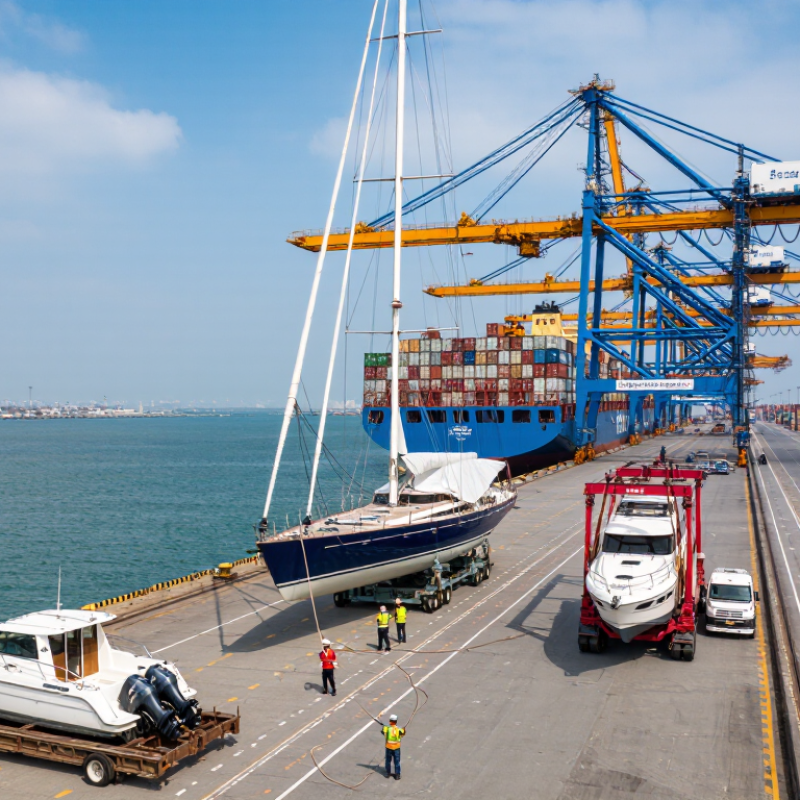
Ocean boat transport freight companies coordinate the movement of vessels, machinery, and oversized cargo across international routes. They do more than reserve space on a ship. They assess cargo dimensions, weight, loading points, port restrictions, sailing schedules, and delivery risks.
According to the UNCTAD Review of Maritime Transport 2024, ships carry over 80% of global merchandise trade by volume.
That scale makes careful planning essential. A reliable freight provider prepares route options, checks vessel suitability, arranges port handling, and explains every charge before departure.
A useful quote should include ocean freight, terminal fees, documentation, insurance, and possible storage costs. Hidden charges can damage a project budget quickly.
The work continues after booking. Freight teams coordinate cargo securing, loading inspections, tracking updates, and arrival procedures. They also manage shipping documents and communicate with port agents when schedules change.
Delays happen. Weather, congestion, equipment shortages, and labor disruptions can affect delivery times.
The International Maritime Organization’s 2023 greenhouse gas strategy targets net-zero emissions from international shipping around 2050, with progress checkpoints for 2030 and 2040.
This pushes transport providers to consider fuel efficiency, route optimization, and emissions reporting. Customers should ask how these figures are calculated. Some estimates still depend on incomplete data. That weakness deserves attention.
Experienced teams also review damage risks, photograph cargo condition, and keep a clear record of decisions throughout the shipment.
Choosing among the 7 best ocean boat transport freight companies worldwide requires more than comparing prices. Evaluate each provider’s experience with your boat type, route, and loading method. Ask for recent examples involving similar hull length and weight. A serious carrier should explain cradles, lift points, weather exposure, and port transfers clearly. Vague answers are warning signs. Request a written quote with every charge listed. Include origin handling, destination fees, storage, customs support, and insurance limits. Cheap quotes can age badly.
Check operational reliability through verifiable references, safety records, and shipment tracking procedures. Speak with customers who moved boats internationally within the past year. Ask whether schedules changed, how delays were reported, and who handled damage claims. Trackable milestones matter: booking, loading, departure, transshipment, arrival, and delivery. Confirm that qualified surveyors inspect the boat before and after loading. Photograph the engine, deck, windows, and fittings yourself. Small scratches become disputed facts later. That lesson is easy to ignore.
Professional providers also assess tidal restrictions, crane capacity, marina access, and seasonal weather before accepting a route. They should identify backup ports and explain likely delays without making dramatic promises. Read the service agreement carefully, especially liability exclusions, cancellation terms, and responsibility for loose equipment. Ask who controls subcontractors at each port. This is where confidence can fail. Compare communication quality during the quote stage. Slow replies may signal trouble, although busy teams are not automatically careless. Keep copies of measurements, approvals, payment records, and inspection reports. A dependable choice feels transparent, not merely inexpensive.
Seven Leading Ocean Boat Transport Freight Companies
The seven leading ocean boat transport freight companies serve different shipping needs. One focuses on recreational boats and careful marina delivery. Another handles oversized vessels with reinforced cradles. A third specializes in roll-on, roll-off port operations. A fourth manages containerized boats after measured disassembly. A fifth offers regional routes with flexible sailing schedules. A sixth supports project cargo, including yachts and workboats. The seventh combines ocean freight with inland trucking and final placement.
Reliable providers inspect hull dimensions, draft, weight, and lifting points before quoting. They also confirm port access, tide limits, customs paperwork, and weather exposure. Experienced teams use padded supports, moisture barriers, and visible tie-down checks. Photos should record the vessel before loading and after arrival. Clear tracking matters when a boat waits at anchorage.
Small details prevent expensive damage.
A professional freight company explains insurance limits in plain language. It should identify excluded risks, delay rules, and claims procedures. Sailing estimates are useful, but never perfect. Storms, port congestion, and equipment shortages can change them quickly. I would question any provider promising a fixed arrival time without conditions. Some transport plans also overlook marina crane capacity, which can cause avoidable delays. Comparing handling methods, communication quality, and documented experience often matters more than choosing the lowest quote.
| Rank | Provider Profile | Primary Transport Method | Typical Boat Types | Geographic Coverage | Cargo Preparation | Documentation Support | Tracking Availability | Best Suited For |
|---|---|---|---|---|---|---|---|---|
| 01 | Global Multimodal Forwarder | Container, RoRo and breakbulk coordination | Small boats, sailing yachts and motorboats | Major ports across North America, Europe, Asia and Oceania | Cradling, shrink-wrapping, lashing and container loading | Commercial invoice, packing list, bill of lading and customs guidance | Online milestone updates are commonly available | International door-to-port or door-to-door shipments |
| 02 | Specialist Yacht Transport Operator | Dedicated yacht shipping and heavy-lift vessel service | Luxury yachts, catamarans and larger motor yachts | Mediterranean, Caribbean, Middle East, Asia-Pacific and North America | Marine survey, lifting plan, cradle design and securing inspection | Export permits, port formalities, customs and survey reports | Voyage updates and port-call communication | High-value yachts requiring specialist handling |
| 03 | RoRo Marine Freight Provider | Roll-on/roll-off vessel transportation | Trailerable boats, rigid inflatables and small motorboats | Regular routes linking major commercial ports | Trailer preparation, tie-down inspection and weather protection | Bill of lading, vehicle or vessel documents and customs paperwork | Shipment milestone or vessel-voyage tracking | Cost-conscious transport of movable boats |
| 04 | Project Cargo and Heavy-Lift Specialist | Breakbulk, flat-rack and heavy-lift shipping | Large yachts, commercial craft and oversized vessels | Global port-to-port service subject to vessel and crane availability | Engineering survey, lifting points, blocking and marine lashing | Cargo plans, weight certificates, permits and port approvals | Manual progress reporting and voyage documentation | Oversized or non-containerized marine equipment |
| 05 | Regional Port-to-Port Carrier | Scheduled short-sea and regional ocean service | Small leisure craft, fishing boats and workboats | Defined regional corridors with established port rotations | Standard cradles, protective covers and port-side loading | Basic shipping documents and destination-port coordination | Port departure and arrival updates | Shorter routes with predictable sailing schedules |
| 06 | Containerized Boat Logistics Provider | Standard container, open-top and flat-rack shipping | Disassembled boats, dinghies and compact watercraft | Worldwide container networks connecting major trade lanes | Disassembly, dimensional checks, padding and container lashing | Container booking, customs declarations and cargo manifests | Container-number and bill-of-lading tracking | Smaller boats and modular or partially dismantled cargo |
| 07 | End-to-End Marine Relocation Provider | Road collection, ocean freight and final delivery | Sailboats, motorboats, catamarans and personal watercraft | International coverage using partner terminals and inland carriers | Pre-transport inspection, haulage, storage and loading supervision | Customs brokerage, import clearance and delivery paperwork | Combined road and ocean shipment status updates | Owners seeking a single coordinator for the complete move |
Note: Service availability, sailing frequency, handling requirements, transit time and pricing vary by boat dimensions, origin port, destination port, season, cargo condition and regulatory requirements.
Choosing among the seven leading ocean boat transport companies requires more than comparing advertised prices. Most offer port-to-port, door-to-port, and roll-on/roll-off services. Some also arrange crating, loading, customs paperwork, marine insurance, and inland delivery. Common routes connect North America, Europe, Asia, Australia, and selected island ports. Transit usually takes 20 to 60 days, depending on distance, transshipment, weather, and port congestion.
Costs vary by boat length, beam, weight, destination, and loading method. A small trailerable boat may cost less through shared-container service, while larger vessels often require specialized deck space. Quotes should clearly separate ocean freight, terminal handling, documentation, storage, inland trucking, and insurance. Ask whether the estimate includes lifting charges at both ports. Those fees can be surprisingly high. Delivery dates are estimates, not promises, and my own comparison would allow at least one extra week.
Tips: Request three written quotes with identical specifications. Confirm vessel dimensions and photographs before booking. Check the carrier’s claims process, cargo inspection rules, and experience with your boat type. Keep the registration, ownership, and import documents ready. Avoid unusually cheap offers with vague port names or missing fee schedules. A careful provider should explain the route, transfer points, expected transit range, and responsibility for damage in plain language. Small details matter.
Choosing the Right Boat Transport Company
When selecting an ocean boat transport company, begin with your vessel’s exact measurements. Length, beam, height, weight, and draft affect every handling decision. Ask whether the carrier has transported similar boats on comparable routes. Experience with sailboats may not equal experience with large motor yachts. Request recent customer references and details about port operations. A reliable provider should explain loading, securing, storage, and delivery procedures clearly.
Verify the company’s insurance before signing anything. Check coverage limits, exclusions, deductibles, and responsibility during lifting or inland movement. Ask for a written quote with port fees, customs charges, storage costs, and possible delays listed separately. A cheap estimate can become expensive when important services appear later. I would also confirm tracking methods, communication schedules, and the name of your main contact. Silence during transit creates unnecessary stress.
Examine the contract carefully. It should state pickup dates, delivery conditions, damage reporting steps, and cancellation terms. Photos taken before loading can document existing scratches, loose fittings, and equipment condition. Remove fragile items, drain suitable systems, and follow the carrier’s preparation instructions. Even a careful checklist can miss something. That is why a pre-shipment inspection with written records matters. Trust your questions, not polished promises.
Compare experience, route knowledge, loading methods, communication, insurance, and total costs. Ask for recent examples involving similar boat length and weight. The cheapest quote may not stay cheap.
Provide length, beam, height, weight, draft, hull type, and lifting points. These details affect cradles, cranes, port access, and inland delivery. Small measurements matter.
It should list origin handling, port fees, storage, destination charges, inland movement, and insurance limits. Ask for possible delay costs separately. Hidden charges create unpleasant surprises.
Request recent customer references, safety records, and shipment tracking details. Ask how delays were reported and who handled damage claims. Speak with customers from the past year.
Useful milestones include booking, loading, departure, transshipment, arrival, and delivery. The provider should explain updates during port waiting periods. Silence is stressful.
Photograph the engine, deck, windows, fittings, hull, and existing scratches before loading. Request inspections before loading and after arrival. Keep written records. Small scratches can become disputed facts later.
Ask about cradles, padded supports, tie-downs, moisture barriers, lift points, and crane capacity. Confirm tidal limits, marina access, weather exposure, and backup ports. A vague answer deserves caution.
Check coverage limits, exclusions, deductibles, cancellation terms, delay rules, and damage reporting steps. Confirm responsibility for loose equipment, subcontractors, lifting, and inland movement. Promised arrival dates are never perfect.
Ocean Boat Transport Freight companies provide specialized services for moving yachts, sailboats, motorboats, and other marine vessels between domestic and international ports. This article explains how these providers manage vessel preparation, loading, ocean transit, port handling, documentation, and delivery coordination. It also outlines the main factors for evaluating a global boat shipping provider, including experience, route coverage, equipment, insurance options, communication, safety procedures, and customer support.
The guide compares seven leading types of ocean transport providers by their services, available routes, estimated costs, and typical transit times. It highlights how prices can vary according to vessel size, distance, loading method, seasonal demand, and destination requirements. Finally, readers will learn how to select the right company by matching their boat’s specifications, schedule, budget, preferred service level, and destination needs with a provider’s capabilities and reliability.