In an era defined by volatile consumer demand, just-in-time inventory strategies, and heightened pressure on corporate working capital, Less Than Container Load Shipping (LCL) has transformed from a mere secondary freight option into a core strategic driver for global procurement leaders. For international buyers purchasing goods across Asia, Europe, and the Americas, waiting to accumulate enough cargo to fill a standard 20ft or 40ft Full Container Load (FCL) can introduce costly delays, bloated warehouse storage expenses, and severe supply chain rigidity.
However, navigating the operational mechanics of LCL shipping requires deep expertise. Unlike FCL, where container handling is straightforward from warehouse to port, LCL involves complex cargo consolidation at origin Container Freight Stations (CFS), precise Weight or Measurement (W/M) billing calculations, shared container risks, and detailed deconsolidation workflows at destination ports. This comprehensive guide breaks down everything global importers must know to maximize cost efficiency, avoid hidden destination fees, leverage future AI consolidation trends, and secure maximum supply chain reliability.
1. Understanding Less Than Container Load (LCL) Shipping Dynamics
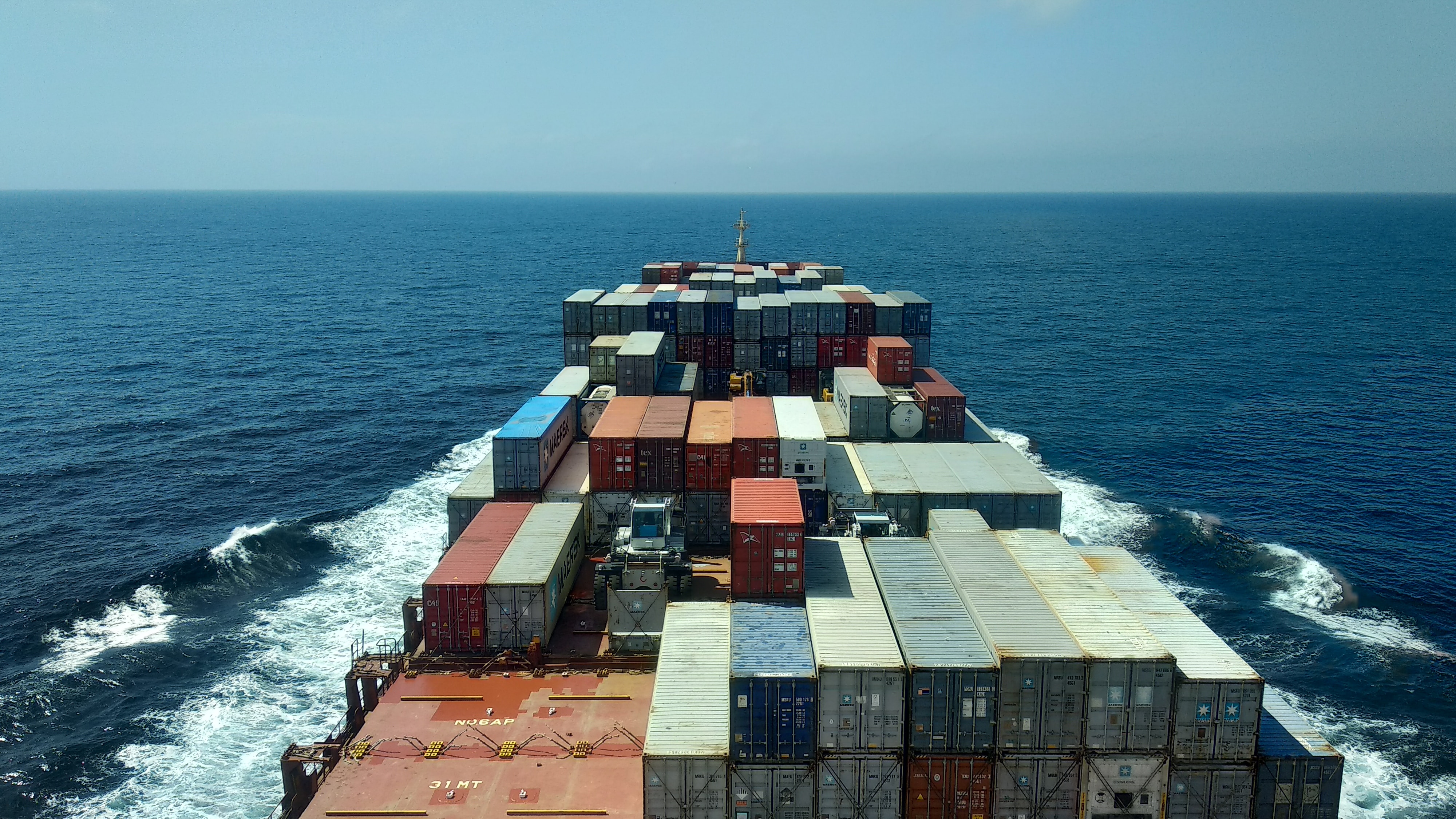
At its core, Less Than Container Load (LCL) shipping is an ocean logistics service designed for shipments that do not occupy the full cubic capacity or weight limit of a standard 20-foot or 40-foot ocean container. Instead of shipping half-empty containers at premium prices, LCL allows multiple independent shippers to share container space. Each buyer only pays for the specific cubic volume (CBM) or weight (Metric Tons) their cargo consumes.
Logistics providers known as Non-Vessel Operating Common Carriers (NVOCCs)—such as JH Logistics—act as the principal consolidators. NVOCCs combine shipments from various exporters at an origin Container Freight Station (CFS), secure master container space on ocean vessels, manage export customs, and coordinate deconsolidation at the destination CFS before final door delivery.
LCL vs. FCL vs. Air Freight: Comprehensive Strategic Comparison
Selecting the optimal transport mode requires balancing transit urgency, budget, and cargo volume. Below is an operational matrix designed for procurement planners:
| Logistics Metric | LCL Shipping (Ocean) | FCL Shipping (Ocean) | Standard Air Freight |
|---|---|---|---|
| Typical Cargo Volume | 1 CBM to 15 CBM | 15 CBM to 68+ CBM | Under 1 CBM or Time-Critical |
| Pricing Structure | Per CBM / Weight (W/M Rule) | Flat rate per container (20'/40'/40'HC) | Per Chargeable Weight (Kg) |
| Relative Cost | Low - Medium (Pay per space used) | Lowest cost per unit volume | High (4x - 8x Ocean Freight) |
| Transit Time Speed | Moderate (Port time + 3-5 days CFS) | Fastest Ocean Transit | Fastest Global Delivery (3-7 days) |
| Cargo Handling Risk | Multiple touchpoints (Origin/Dest CFS) | Sealed from origin factory to door | Minimal touchpoints |
| Inventory Impact | Enables frequent, smaller inventory batches | Requires large batch orders & capital | Emergency stock replenishment |
2. Recommended LCL Product & Service Solutions for Global Importers
Not all LCL services are structured identically. Depending on your supply chain architecture, supplier locations, and cargo characteristics, procurement teams can select from four tailored LCL service solutions:
Direct Port-to-Port LCL Consolidation
Ideal for regular shipments from major manufacturing hubs (e.g., Shanghai, Shenzhen, Busan, Hamburg) directly to key buyer gateways like Los Angeles/Long Beach. Direct routing eliminates mid-voyage transshipment touchpoints, reducing transit delays by 4 to 8 days.
Buyer’s Multi-Supplier Consolidation
When sourcing from 5 different factories across South China or Southeast Asia, a Buyer's LCL Consolidation model aggregates all supplier orders at JH Logistics' origin warehouse into one custom dedicated container, eliminating multiple destination CFS breakdown fees.
Temperature-Controlled & Special LCL
Designed for sensitive goods including pharmaceuticals, cosmetics, high-grade electronics, and food ingredients that require strict ambient or reefer monitoring throughout the ocean consolidation lifecycle.
Bonded Warehouse LCL & Inland Deconsolidation
Leveraging bonded CFS facilities allows importers to defer duty and tariff payments until goods are cleared and dispatched for domestic distribution, significantly unlocking cash flow.

3. Mastering LCL Cost Engineering: The W/M Rule & Fee Breakdown
One of the greatest points of confusion for international buyers when analyzing LCL freight quotes is the Weight or Measurement (W/M) pricing metric. Unscrupulous forwarders often lure buyers with ultra-low ocean freight rates while inflating destination Container Freight Station (CFS) charges.
The Revenue Ton (RT) & W/M Formula Explained
Ocean LCL freight is calculated based on **Revenue Tons (RT)** using the standard ocean conversion ratio:
Formula:
1. Measure Total Volume: Volume (CBM) = Length (m) × Width (m) × Height (m) × Total Packages
2. Measure Total Gross Weight: Weight (MT) = Gross Weight (kg) / 1,000
3. Billable Volume/Weight = Max( Total CBM, Total MT )
Practical Billing Example:
Suppose an importer buys 5 pallets of auto parts from a manufacturer:
- Total Volume: 4.2 CBM
- Total Gross Weight: 5,200 kg (5.2 Metric Tons)
Since 5.2 MT is greater than 4.2 CBM, the shipping line and NVOCC will bill the freight based on 5.2 Revenue Tons (RT). Conversely, if the cargo weighed only 1,500 kg (1.5 MT) for the same 4.2 CBM volume, the billable metric would be 4.2 RT.
Deconstructing the Total Cost of an LCL Shipment
A transparent LCL cost quote must detail three distinct cost centers:
- Origin Charges: Factory pick-up/inland trucking, origin CFS receiving, export documentation, export customs declaration, and origin terminal handling (THC).
- Ocean Freight Rate: Port-to-port ocean vessel transit fee quoted per CBM/RT, subject to Bunker Adjustment Factor (BAF) and Low Sulfur Surcharges.
- Destination Charges: Destination CFS unpacking and handling fees, import customs clearance, ISF filing, harbor maintenance fees (HMF/MPF in USA), cargo inspection access fees, and final mile door delivery.
Need an Exact LCL Rate Breakdown Free of Hidden Fees?
Our licensed NVOCC pricing experts evaluate your cargo dimensions, routing options, and customs requirements to deliver guaranteed transparent door-to-door LCL quotes.
Contact Us4. Industry Development Trends Shaping Ocean LCL Shipping
The global ocean container market is undergoing structural shifts driven by environmental mandates, carrier alliance realignments, and post-pandemic supply chain restructuring. Understanding these macro trends allows buyers to build resilient logistics models:
A. Decarbonization Mandates & IMO 2030 / EU ETS Regulations
The International Maritime Organization (IMO) has instituted strict Carbon Intensity Indicator (CII) regulations requiring ocean fleets to cut carbon emissions. Furthermore, the European Union's Emissions Trading System (EU ETS) now imposes carbon tariffs on ocean vessels calling at EU ports.
Impact on LCL Importers: Shipping lines are decommissioning older, inefficient feeder vessels and practicing "slow steaming." To counter extended ocean transit times, high-efficiency NVOCC consolidation networks become vital to avoid compounding delays at regional hubs. Furthermore, buyers will increasingly see "Green LCL" surcharges or carbon-offsetting options listed on freight bills.
B. Ocean Alliance Reshuffling & Direct Service Disruption
Major shipping alliances (2M, Ocean Alliance, THE Alliance) are restructuring their vessel sharing agreements. As ocean carriers prioritize mega-vessels servicing major hub ports, smaller secondary ports receive fewer direct calls.
The NVOCC Advantage: Independent forwarders with robust global warehouse networks can bypass carrier bottlenecks by utilizing agile co-loading and inland rail/truck feeder networks to maintain reliable delivery schedules.

5. Future Procurement Trends: How AI & Digital Tech are Transforming LCL
As artificial intelligence (AI) and enterprise supply chain digitization mature, international buyers are adopting advanced technologies to extract unprecedented value from LCL ocean freight:
1. AI-Powered Volumetric Container Packing Algorithms
Legacy LCL consolidation often suffered from inefficient spatial utilization inside ocean containers. Today, NVOCCs deploy 3D volumetric AI loading software. By calculating weight distribution, cargo fragility, pallet stackability, and destination unloading order, AI maximizes container volume utilization up to 96%. For buyers, this means lower risk of crushed boxes and reduced per-CBM handling surcharges.
2. End-to-End Real-Time Visibility & Predictive ETA Tracking
Historically, tracking LCL shipments was a black hole between origin CFS stuffing and destination deconsolidation. Modern LCL networks incorporate IoT container sensors and satellite AIS tracking, providing real-time visibility down to the individual SKU level. Artificial intelligence models analyze weather patterns, port congestion index data, and customs dwell times to provide predictive, highly accurate Arrival Notices.
3. Micro-Consolidation & Nearshoring Hybrid Supply Chains
Global buyers are diversifying manufacturing footprints beyond single origins (e.g., China + 1 strategy into Vietnam, India, or Mexico). Procurement teams are utilizing **micro-consolidation hubs**—shipping small weekly LCL batches to maintain continuous inventory flow rather than holding massive inventory safety stock in domestic warehouses.
6. Step-by-Step LCL Shipping Standard Operating Procedure (SOP)
To guarantee smooth execution and eliminate unexpected customs holds, global buyers should enforce the following standardized operational workflow:
Booking & Cargo Cutoff Scheduling
Importer or supplier places LCL booking with forwarder 7-10 days prior to target vessel Estimated Time of Departure (ETD). Cargo Cut-Off dates at the origin CFS are strictly enforced (typically 3 to 5 days before ship sailing).
CFS Receipt, Inspection & Palletization
Cargo arrives at origin CFS. Warehousing staff measure exact dimensions (Length × Width × Height), weigh items on certified scales, check external packaging condition, apply barcode tracking stickers, and issue a Dock Receipt.
Container Stuffing & Export Customs Clearance
NVOCC planners stuff compatible cargo into a 40ft High Cube container. Export customs declarations are filed. The master container is sealed with high-security bolt seals and drayed to the ocean port terminal for loading onto the container ship.
Ocean Voyage & Import Customs Advance Filing
During ocean transit, the forwarder transmits House Bills of Lading (HBL) and manifest data. For USA-bound cargo, Importer Security Filing (ISF 10+2) must be transmitted at least 24 hours prior to origin vessel departure to prevent mandatory $5,000 CBP fines.
Destination Unpacking & Delivery Dispatch
Upon vessel arrival, the master container is transferred to the destination bonded CFS facility. The container seal is broken under customs supervision, cargo is unpacked, sorted by HBL marks, customs released, and loaded onto trucks for final door delivery.
7. Corporate Expertise & Infrastructure: Why Partner with JH Logistics?
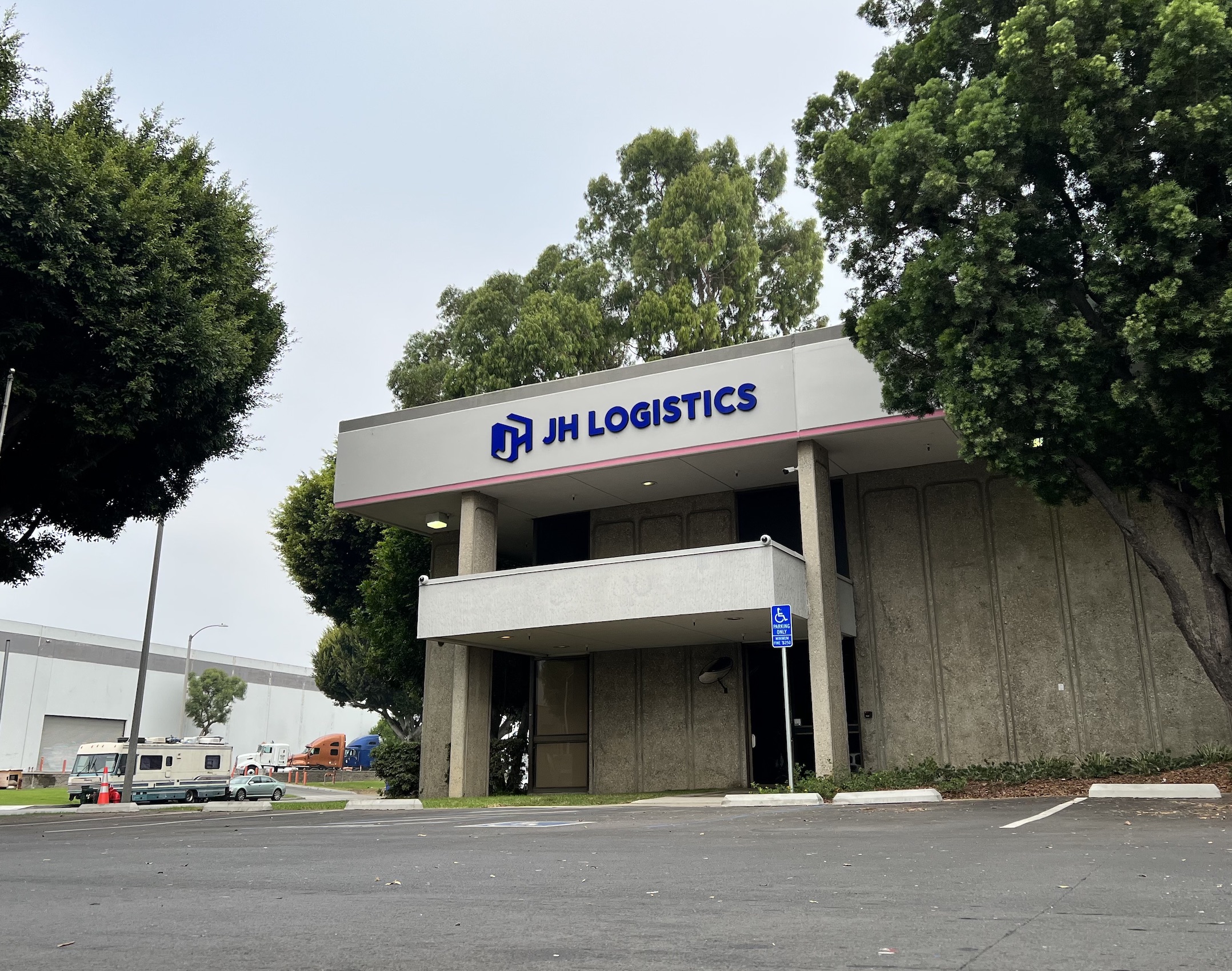
Established in 1999, JH Logistics has served as a premier global freight forwarder and licensed FMC NVOCC for over 26 years. We provide end-to-end supply chain mastery that directly empowers importers to streamline costs and eliminate risk.
Proven Infrastructure & Proven Scale
Our core asset base and operational performance metrics demonstrate uncompromised capability across air, ocean, and domestic transport networks:
- Licensed NVOCC Authority: Full FMC license providing direct contract purchasing power with top ocean carriers (MSC, Maersk, CMA CGM, COSCO, ONE).
- Ocean Freight Volume: Managing over 22,550+ TEUs of ocean containerized freight annually across transpacific, transatlantic, and intra-Asia lanes.
- Air Freight Capacity: Processing over 22,458+ tons of air export/import cargo with dedicated airline space allocations.
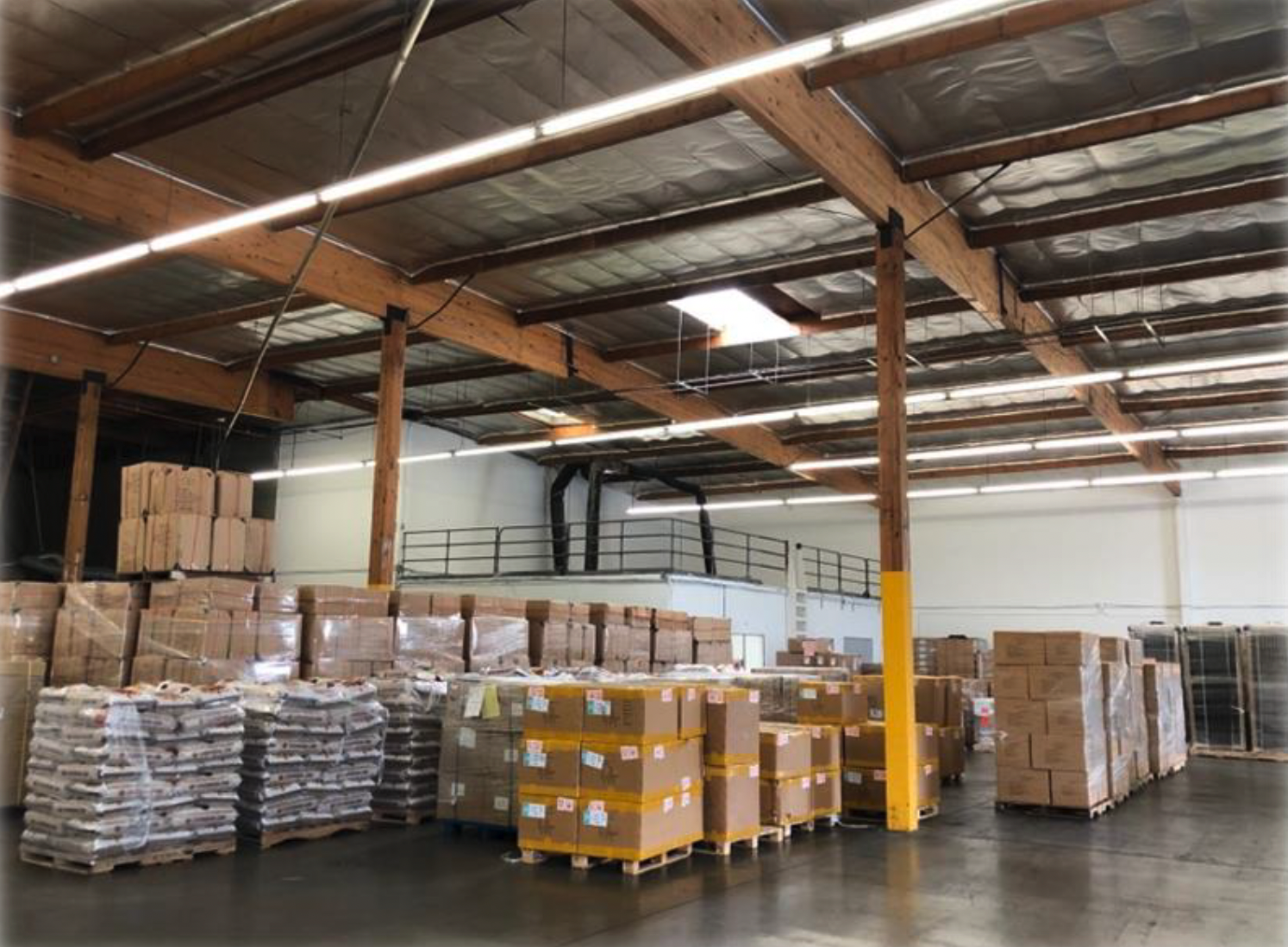
- Warehousing Infrastructure: Operating 70,640+ sq ft of secure warehousing space combined with 161,435+ sq ft of container yard capacity in Carson / Los Angeles, California.
- Air & Ocean Bonded Storage: Fully licensed US Customs bonded facilities allowing seamless duty deferral, staging, and custom sorting.
8. Frequently Asked Questions (FAQ) - Global Buyer Intent Guide
Below are detailed answers to the most common technical and operational questions global buyers ask search engines and AI assistants regarding Less Than Container Load shipping:
As a general financial tipping point, when your cargo volume reaches between 13 CBM and 15 CBM, the total cost of LCL freight (ocean rate + origin/destination CFS fees) frequently equals or exceeds the flat rate of a full 20ft FCL container (which holds up to 28-29 CBM of usable space).
If your cargo volume is under 13 CBM, LCL is nearly always more economical. If your volume is 14+ CBM, request quotes for both 20ft FCL and LCL to compare total landed costs including destination handling fees.
Because LCL involves loading goods alongside cargo from other shippers at origin CFS and unloading them at destination CFS, packages undergo more physical touchpoints than sealed FCL containers.
Mitigation Strategy: Importers must enforce strict export packaging standards with suppliers. Goods should be fully wooden-crated or double-wall corrugated, heavy-duty shrink-wrapped, and securely strapped to heavy-duty pallets. Never ship loose, un-palletized cartons in LCL ocean freight.
Unethical forwarders sometimes offer "Zero Ocean Freight" or negative ocean rates to origin suppliers. To recoup revenue, they sell cargo rights to destination co-loaders who charge the buyer exorbitant destination CFS unpacking, document release, and administrative fees.
JH Logistics Protection: As a direct FMC-licensed NVOCC, we issue complete, transparent, itemized door-to-door quotes prior to booking. We operate our own service contracts and trusted destination CFS hubs, guaranteeing no inflated surprise fees upon arrival.
In LCL shipping, each importer files an individual customs entry based on their specific House Bill of Lading (HBL). If US Customs (CBP) flags one shipper's cargo inside a master container for an X-ray or intensive physical exam, the entire master container is transferred to an Exam Site (CES).
While un-flagged cargo in the container will ultimately be released after inspection, a customs hold on one co-loader can cause a temporary delay of 3 to 7 days for all shipments in that container. Partnering with NVOCCs that vet co-loaders minimizes examination hold risks.
LCL ocean transit generally requires an additional 3 to 7 calendar days compared to FCL. This accounts for cargo cutoff processing (2-3 days before ship sailing for CFS receiving and container loading) and destination deconsolidation (1-3 days after vessel discharge to move the container to CFS, unpack, and sort cargo).
Yes, selected dangerous goods (DG) classified under the IMO International Maritime Dangerous Goods Code can be shipped via LCL, provided proper DG declarations, SDS sheets, UN packaging, and labeling are supplied. However, strict co-loading segregation rules apply (e.g., flammables cannot be loaded next to oxidizers). JH Logistics evaluates HAZMAT compatibility prior to consolidation booking.
Key documentation includes: Commercial Invoice, Detailed Packing List (indicating carton counts, net/gross weight, dimensions), House Bill of Lading (HBL), Certificate of Origin (if requesting tariff preference), ISF filing data (for US imports), and specific regulatory permits (e.g., FDA, USDA, EPA filings where applicable).
Work with your manufacturer to optimize master carton design and pallet stacking heights. Because LCL bills per CBM rounded up to 3 decimal places, minimizing excess air space inside cartons and ensuring pallets are stackable can reduce billable CBM volume by 10% to 25%, resulting in direct freight cost savings.
9. Partner with JH Logistics for High-Performance LCL Ocean Freight
Whether you are scaling a rapidly growing e-commerce brand, managing multi-tier industrial manufacturing supply chains, or optimizing enterprise procurement budgets, JH Logistics provides the NVOCC authority, direct consolidation networks, and dedicated customer service required to keep your business ahead of the competition.
Our dedicated ocean logistics team is ready to analyze your lane requirements, evaluate your pallet specifications, and deliver guaranteed competitive LCL freight solutions.