
Ex Works (Named Place)
Maximum Obligation on Buyer: The seller makes cargo available at their factory or warehouse. The buyer assumes all risk, loading responsibility, export clearance, and transportation costs from origin to final destination.
Since 1999, JH Logistics has served as a licensed FMC NVOCC and trusted global supply chain partner. Navigating international commerce requires absolute clarity in contractual terms, equipment specifications, and regulatory standards. We have compiled this comprehensive reference manual to assist global buyers, importers, exporters, and logistics managers in mitigating operational risks and optimizing cross-border cargo transit.
Commercial Standards
Published by the International Chamber of Commerce (ICC), Incoterms® (International Commercial Terms) establish pre-defined definitions for international sales contracts. They clearly define the allocation of freight charges, insurance procurement, export-import clearance obligations, and the exact physical point where risk transfers from buyer to seller.
Maximum Obligation on Buyer: The seller makes cargo available at their factory or warehouse. The buyer assumes all risk, loading responsibility, export clearance, and transportation costs from origin to final destination.
Export Cleared by Seller: Seller delivers goods, cleared for export, to the buyer’s designated carrier at a named point. Risk transfers once handed over to the initial carrier.
Freight Prepaid: Seller contracts and pays freight to bring cargo to the destination place. Risk transfers to the buyer as soon as goods are delivered to the first carrier.
Multimodal Equivalent of CIF: Seller covers carriage and comprehensive cargo insurance to the named place. Risk transfers upon handing over to the first carrier.
Replaced DAT: Seller pays for transportation, assumes all risk up to the destination, and handles physical unloading at the designated terminal or facility.
Ready for Unloading: Seller bears all transit risks up to the named destination. The buyer is responsible for import customs duty clearance and final unloading.
Maximum Obligation on Seller: Seller covers all freight expenses, import tariffs, customs duties, taxes, and delivery to the buyer's warehouse door.
Seller clears goods for export and places them alongside the ocean vessel at the loading berth. Ideal for heavy-lift, breakbulk, or bulk commodities.
Seller clears export customs and loads goods onto the ocean vessel nominated by the buyer. Cost and risk transfer to buyer once goods are stowed on board.
Seller pays main ocean freight to the port of discharge. Risk transfers to the buyer upon vessel loading. Marine transit insurance is buyer’s responsibility.
Identical to CFR, except seller is obligated to procure ocean marine insurance against buyer’s risk of loss or damage during main maritime carriage.
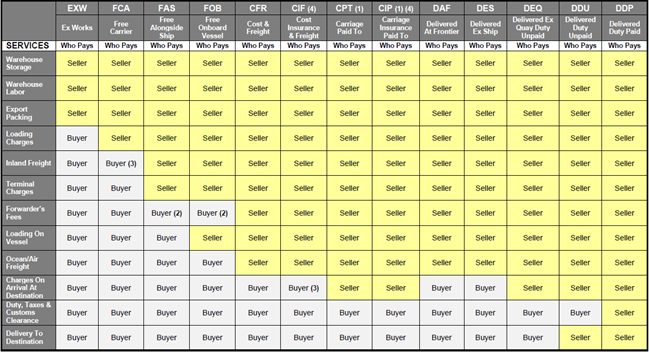
Figure 1: Incoterms® Risk & Responsibility Transfer Matrix for Global Procurement
Equipment Specifications
Selecting the appropriate intermodal shipping equipment is vital for cargo safety, space optimization, and freight cost mitigation. The operational guidelines below detail standardized dimensions for Full Container Load (FCL) shipping.
| Container Type | Internal Dimensions (L x W x H) | Max Gross Weight | Cubic Capacity |
|---|---|---|---|
| 20' Standard Dry Van | 5.89m x 2.35m x 2.39m (19'4" x 7'8" x 7'10") | 30,480 kg (67,200 lbs) | 33.2 CBM (1,172 cu.ft) |
| 40' Standard Dry Van | 12.03m x 2.35m x 2.39m (39'5" x 7'8" x 7'10") | 30,480 kg (67,200 lbs) | 67.7 CBM (2,390 cu.ft) |
| 40' High Cube (HC) | 12.03m x 2.35m x 2.69m (39'5" x 7'8" x 8'10") | 30,480 kg (67,200 lbs) | 76.4 CBM (2,698 cu.ft) |
| 45' High Cube (HC) | 13.55m x 2.35m x 2.69m (44'5" x 7'8" x 8'10") | 30,480 kg (67,200 lbs) | 86.0 CBM (3,037 cu.ft) |
| 20' / 40' Refrigerated (Reefer) | Controlled temperature environment (-30°C to +30°C) | 27,400 kg - 29,100 kg | 28.3 CBM / 59.3 CBM |
| 20' / 40' Open Top & Flat Rack | Designed for over-dimensional, heavy machinery & out-of-gauge (OOG) cargo | Variable by chassis | Custom heavy-payload solutions |
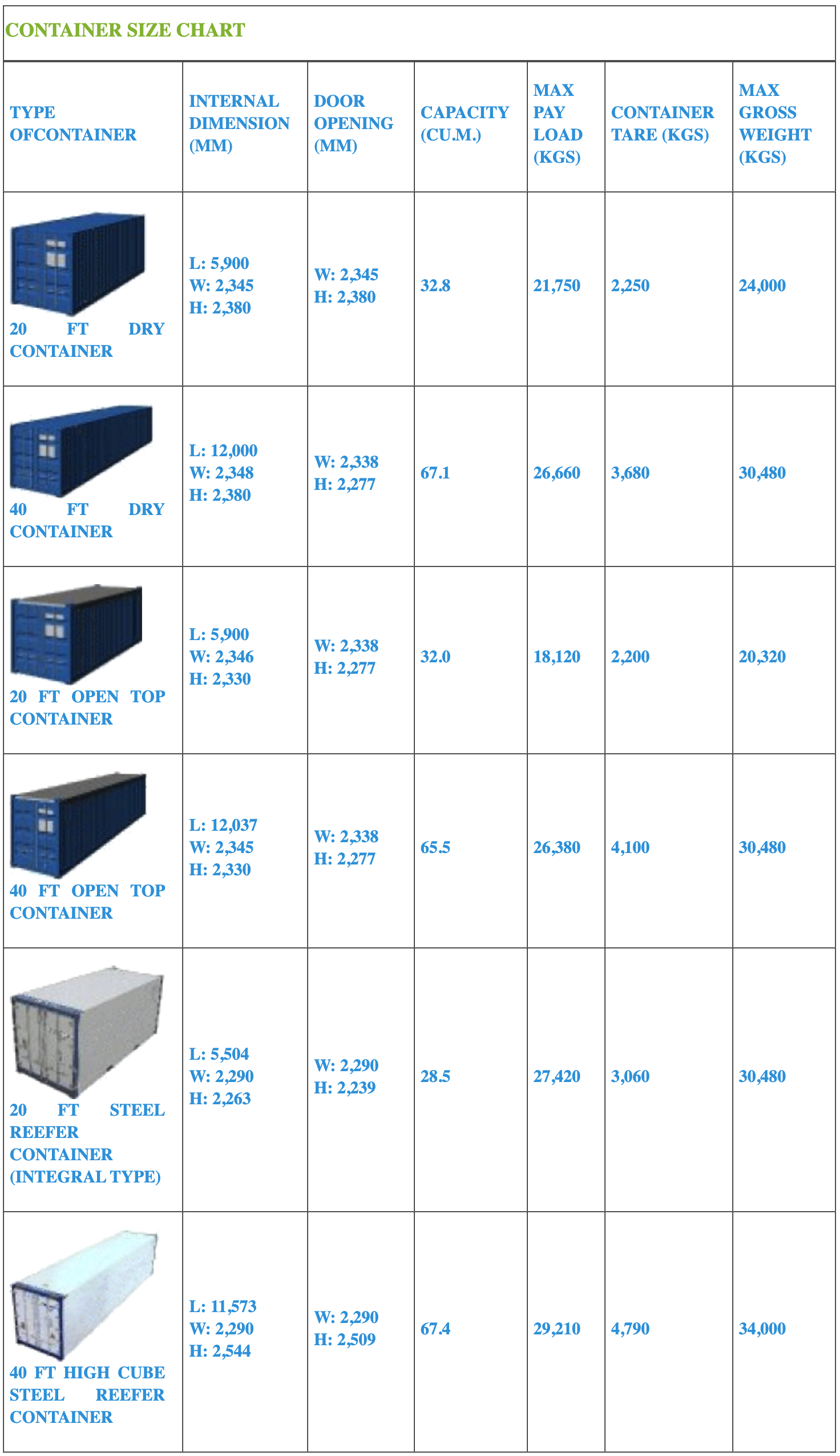
Figure 2: Overview of ISO Ocean Shipping Containers for Global Intermodal Freight
Logistics Infrastructure
Standardized coding systems maintain accuracy across automated Electronic Data Interchange (EDI) networks, customs entry declarations, and global tracking systems.
The International Air Transport Association assigns unique 3-letter designations to commercial airports worldwide (e.g., LAX - Los Angeles, JFK - New York, ORD - Chicago, PVG - Shanghai Pudong, FRA - Frankfurt). Essential for airway bill issuance and air freight routing schedules.
United Nations Code for Trade and Transport Locations provides standardized 5-character codes for seaport gateways (e.g., USLAX - Port of Los Angeles, USLGB - Port of Long Beach, CNSHA - Port of Shanghai, NLRTM - Port of Rotterdam). Crucial for ocean bills of lading and customs filing.
Standardized 11-digit Master Air Waybill (MAWB) prefixes identify operating airlines (e.g., 023 for Korean Air, 160 for Cathay Pacific, 006 for Delta). Enables real-time tracking across international cargo clearing systems.
Our licensed logistics specialists and customs brokerage experts are available to evaluate your supply chain parameters, assist with Incoterms compliance, and optimize your air or ocean freight strategy.
Contact Us