1. Executive Overview & Technical Definition of Breakbulk Shipping
In global industrial trade, Breakbulk Heavy Equipment Shipping forms the critical backbone for energy infrastructure, mining expansions, civil construction projects, and large-scale manufacturing facilities. Unlike standard containerized freight (FCL/LCL) that relies on uniform intermodal ISO boxes, breakbulk cargo encompasses non-containerized, oversized, out-of-gauge (OOG), and ultra-heavy structural units. These individual assets must be individually loaded, stowed, dunnaged, and secured onto specialized vessels or multi-purpose ocean freighters.
From an engineering and marine operation perspective, breakbulk shipping requires meticulous technical foresight. When equipment exceeds standard container payloads—such as 40ft High Cube containers or even Flat Racks—it transitions into project cargo territory. Navigating this sector demands absolute precision in weight distribution, Center of Gravity (CoG) verification, rigging configuration, sea-fastening engineering, and strict adherence to international maritime safety codes including the IMO Code of Safe Practice for Cargo Stowage and Securing (CSS Code).
JH Logistics, operating continuously as an FMC-licensed NVOCC and global freight forwarder since 1999, integrates over two decades of operational experience with advanced marine engineering capabilities. With our strategic headquarters in Carson, California, featuring over 161,435 square feet of dedicated heavy staging yard and 70,640 square feet of bonded warehouse space, we manage complex logistics pipelines from origin factory floor to final destination foundation.
2. Recommended Heavy Equipment & Modular Cargo Categories
Global procurement teams frequently face the challenge of matching highly specific machinery dimensions and structural integrity profiles with the correct ocean vessel type and inland transport configuration. Below is a detailed breakdown of core heavy equipment categories, recommended vessel types, and key stowage specifications managed by JH Logistics:
| Cargo Classification | Representative Machinery & Equipment | Optimal Ocean Vessel Type | Primary Engineering Requirement |
|---|---|---|---|
| Earthmoving & Mining | Mining Excavators, Tracked Loaders, Dump Trucks, Rock Crushers | Ro-Ro (Roll-on/Roll-off) or Breakbulk Heavy Lift Vessel | Ramp angle clearance, axle load limits, track tensioning & pad protection |
| Energy & Power Generation | Gas Turbines, Generators, Heavy Transformers, Wind Turbine Nacelles | Geared Multi-Purpose Vessel / Heavy Lift Carrier | Center of Gravity (CoG) calculation, positive lashing points, spreader bar stability |
| Petrochemical & Refinery | Fractionation Columns, Pressure Vessels, Heat Exchangers, Storage Tanks | Deck-cargo Barge / Heavy Lift Vessel with Tandem Cranes | Deck load pressure (t/m²), sea-fastening weld pads, transverse roll moment stability |
| Manufacturing Machinery | Hydraulic Stamping Presses, CNC Gantry Mills, Industrial Injection Molders | Breakbulk Tweendecker / Under-Deck Stowage | Moisture control, vapor-corrosion-inhibitor (VCI) shrink wrapping, timber dunnage distribution |
| Civil Infrastructure | Bridge Girders, Tunnel Boring Machines (TBM), Tower Crane Modules | Flat Rack / Heavy Breakbulk Charter | Over-length overhang calculation, road clearance permits, multi-axle SPMT inland delivery |
Selecting the optimal equipment configuration prevents costly detention, structural damage, and transit delays. For example, self-propelled or wheel-mounted heavy machinery can often be loaded via specialized Heavy Ro-Ro vessels using roll-trailers, eliminating crane lifting risks at port berth. Conversely, stationary heavy industrial components exceeding 100 metric tons require heavy-lift vessels equipped with dual onboard cranes capable of tandem lifting operations under strict harbor draft conditions.
Need a customized lifting plan or vessel chartering evaluation for your specific equipment list?
3. Engineering-First Methodology: Risk Mitigation & Operational Security
According to Google's Search Quality Rater Guidelines, establishing Experience, Expertise, Authoritativeness, and Trustworthiness (E-E-A-T) in technical logistics demands clear proof of operational protocol. At JH Logistics, breakbulk transport is never treated as routine freight forwarding—it is executed as a complex marine engineering project.
Technical Audit & Marine Engineering Checklist
Every breakbulk project managed by JH Logistics follows a non-negotiable 5-stage technical verification cycle designed to achieve zero cargo damage and 100% schedule compliance:
- Detailed Physical Route Survey & Port Infrastructure Clearance: Prior to ocean booking, our marine surveyors inspect inland transport corridors. We evaluate bridge weight load ratings, overhead utility wire clearances, road turning radiuses, port quay deck strength (t/m²), and harbor water depth (draft/air draft limits).
- 3D CAD Stowage Planning & Deck Load Distribution: Using computerized stowage software, our naval architects design load distribution diagrams. Heavy point loads are mitigated by deploying engineered hardwood timber dunnage, steel beams, or distribution mats to protect vessel deck plating.
- Center of Gravity (CoG) & Rigging Design: Accurate CoG determination prevents hazardous tilting during crane lifts. JH Logistics calculates crane boom radius, lifting lug structural capacities, sling angles, and spreader bar requirements in full compliance with ASME B30.20 standards.
- IMO CSS Code Sea-Fastening & Lashing Calculations: To withstand ocean dynamic forces (pitching, rolling, heaving, yawing), lashing systems are calculated based on vessel motion acceleration models. We apply high-tensile lashing chains, D-rings, turnbuckles, and custom-welded steel stoppers.
- Marine Warranty Survey (MWS) & On-Site Cargo Superintendence: Independent or port-side MWS inspectors oversee every critical lift. Our certified port captains manage stevedore teams from hook-on to under-deck securing, issuing formal Certificate of Approval (CoA) documents before sailing.
4. Future Procurement Trends in Project Cargo Logistics
Global supply chain directors and industrial buyers are operating in an environment shaped by shifting environmental regulations, digital supply network integration, and geopolitical trade shifts. Understanding future procurement trends allows organizations to build resilient logistics budgets and mitigate long-term risk.
A. Decarbonization & Green Heavy-Lift Vessels
International Maritime Organization (IMO) carbon intensity standards (CII and EEXI) are fundamentally transforming multi-purpose vessel (MPV) fleets. Leading project carriers are transitioning toward dual-fuel methanol, ammonia, and wind-assisted propulsion systems. Global procurement teams must audit ocean carriers' carbon performance, as green shipping compliance increasingly impacts corporate ESG reporting and port priority access rights globally.
B. Digital Twin Simulations & Telemetry Monitoring
Modern breakbulk logistics is abandoning manual estimation in favor of real-time IoT monitoring and digital twin technology. High-value heavy assets—such as 200-ton power transformers—are equipped with multi-axis impact sensors, temperature probes, and humidity monitors. Real-time satellite telemetry provides procurement managers with visibility into vibration levels, G-force impacts, and micro-climatic conditions throughout the ocean voyage.
C. Modular Engineering & Prefabricated Mega-Modules
EPC contractors are increasingly shifting from on-site construction to off-site modular fabrication. Instead of shipping thousands of loose components, industrial plants are assembled into massive, fully integrated mega-modules weighing up to several thousand tons. This trend requires early-stage freight forwarder involvement—often 12 to 18 months prior to shipping—to design customized tug-and-barge or specialized heavy lift vessel transport solutions.
D. Port Congestion & Alternative Berth Routing Strategies
With traditional container terminals experiencing periodic throughput bottlenecks, breakbulk logistics relies heavily on non-congested regional industrial ports and river barge terminals. Smart procurement strategies now incorporate multi-modal routing flexibility, combining ocean transport with river barge networks and specialized inland heavy-haul trucks to bypass urban bottleneck highways.
5. Industry Evolution & Technological Trends in Heavy Equipment Shipping
The machinery manufacturing industry is constantly innovating, building larger, more powerful, and structurally integrated machinery. Heavy equipment shipping must evolve in parallel to support these technological advancements.
| Technology Trend | Impact on Machinery Design | Logistics Solution & Innovation |
|---|---|---|
| Extreme Scale Earthmoving | Higher unit weight (>150 MT), wider track footprints | High-capacity SPMTs (Self-Propelled Modular Transporters) & Ro-Ro roll-trailers |
| Offshore Wind Expansion | Extra-long turbine blades (>100m), massive monopiles | Specialized wind-turbine vessel chartering & dynamic positioning (DP2) ocean barges |
| Composite & Light Alloy Structures | Increased surface area with sensitive structural points | Custom spreader frames, soft webbing slings, tension-controlled lashing systems |
| Integrated Electric Powertrains | Machinery containing high-voltage lithium battery banks | IMO Dangerous Goods (DG) Class 9 compliance & temperature-monitored deck stowage |
As heavy machinery manufacturers push engineering boundaries, JH Logistics updates its operational practices continuously. We maintain direct relationships with vessel master mariners, port authorities, and heavy lift crane riggers to ensure next-generation machinery reaches global jobsites safely.

Planning a Breakbulk or Heavy Machinery Move?
Request our complete Heavy Lift Engineering Guidelines & Breakbulk Ocean Chartering Specification Catalog.
6. Frequently Asked Questions (FAQ) for Global Procurement Teams
Below are technical answers to common queries raised by industrial buyers, logistics managers, and project engineers regarding Breakbulk Heavy Equipment Shipping:
Ro-Ro (Roll-on/Roll-off): Ideal for wheeled or tracked machinery (excavators, trucks, mobile cranes) that can be driven or towed on ramps directly into protected vessel decks.
Breakbulk Shipping: Required when cargo is non-wheeled, oversized in all dimensions, or weighs hundreds of tons. Cargo is individually lifted and loaded directly into multi-purpose vessel holds or onto weather decks using heavy-lift quay cranes or ship-board gantry cranes.
- Heavy-lift surcharges for pieces exceeding crane thresholds (e.g., >40 MT).
- Out-of-gauge deck space occupancy (loss of stowage space for adjacent cargo).
- Stowage & Securing costs (cost of timber dunnage, steel stoppers, lashing gear, and marine welder labor).
- Liner terms such as FLT (Full Liner Terms), Hook to Hook, or FIOS (Free In/Out Stowed).
- Dimensioned Technical Drawing: Indicating length, width, height, and exact center of gravity (CoG).
- Rigging & Lifting Diagram: Highlighting certified lifting lugs, pad eyes, and crane hook clearance requirements.
- Lashing Point Diagram: Detailing tested D-ring locations and Maximum Securing Load (MSL) ratings.
- Weight Distribution & Footprint Plan: Showing contact surface area for deck strength calculations (t/m²).
- MSDS / Hazard Declaration: Required if equipment contains residual oils, fuel, batteries, or pressurized gases.
7. Why Global Procurement Leaders Partner with JH Logistics
Selecting the right freight forwarder for breakbulk heavy equipment shipping is a strategic decision that directly influences project schedules, financial budgets, and site safety. Founded in 1999, JH Logistics has built a stellar international reputation by upholding values of integrity, transparency, and operational rigor.
Proven Track Record & Infrastructure Capabilities:
- 27+ Years of Industry Leadership: Operating continuously since 1999 as a licensed NVOCC (Non-Vessel Operating Common Carrier), providing stability and deep carrier relationships across global trade lanes.
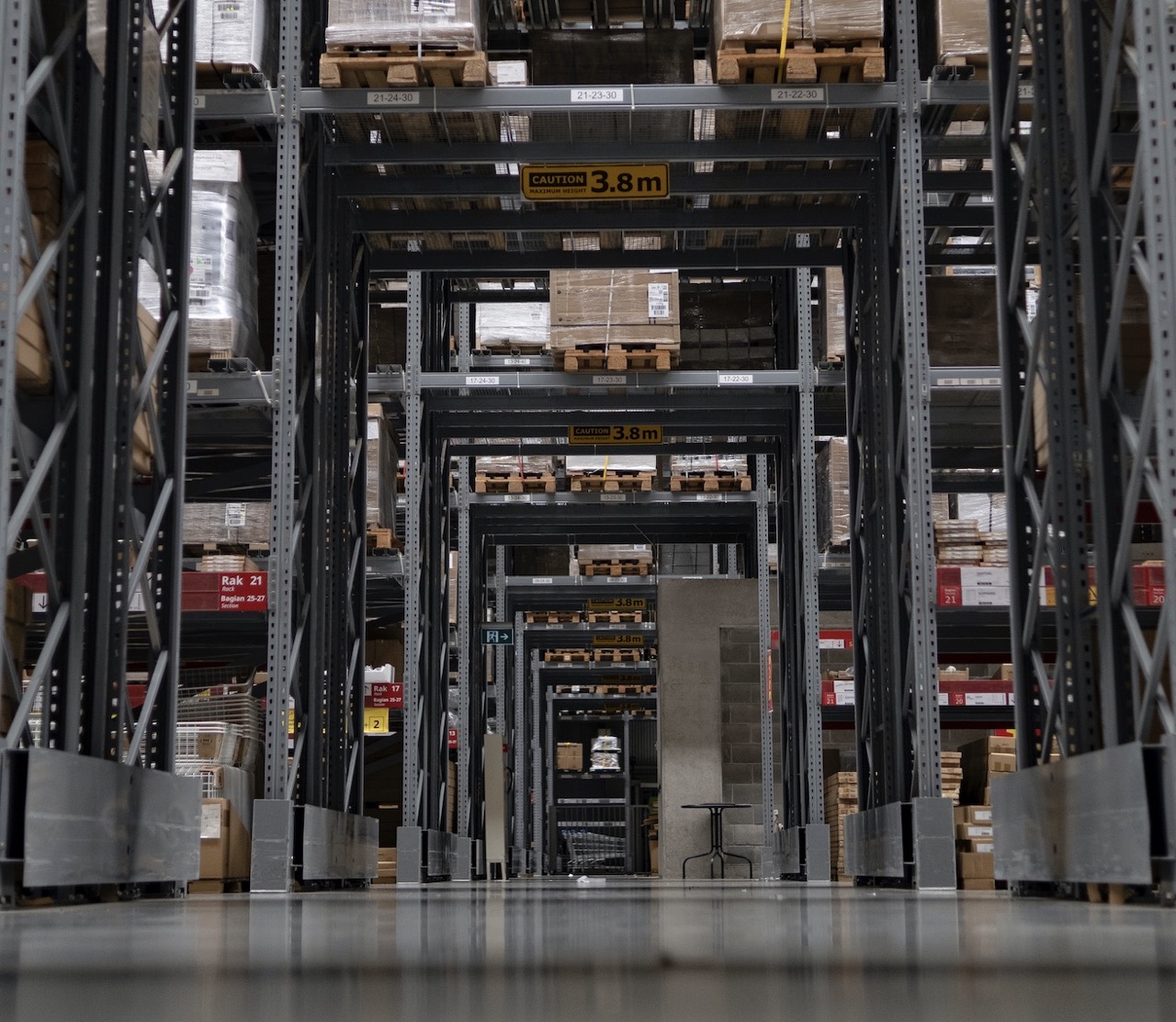
- Substantial Infrastructure Footprint: Backed by a strategic headquarters near major West Coast port hubs in Carson, CA (2850 East El Presidio St), featuring over 161,435 sq. ft. of open yard capacity for heavy equipment staging, assembly, and inspection, alongside 70,640 sq. ft. of secure warehouse space.
- Air & Ocean Bonded Operations: Full air and ocean bonded warehouse facilities allowing flexible, duty-deferred staging for international project components awaiting final site delivery permits.
- Demonstrated Global Volume: Consistently managing high-capacity movements exceeding +22,458 tons of air/heavy project freight and over +22,550 TEU of containerized cargo annually.
- End-to-End Multimodal Transport: Seamlessly integrating ocean vessel chartering with heavy-haul trucking (FTL/LTL/specialized multi-axle lowboys), rail transport, and bonded warehousing under a single, unified bill of lading.
Our Core Commitment to Clients
"JH Logistics strives to be the most satisfactory logistics partner—delivering measurable value while growing alongside our clients. We combine decades of technical expertise with uncompromised integrity, ensuring every piece of heavy machinery reaches its global destination on time, within budget, and fully protected."
Ready to Engineer Your Breakbulk Shipping Solution?
Contact our senior project cargo team today for a technical feasibility review, vessel charter quote, or lifting plan evaluation.