Executive Market Intelligence: China Import Duty Architecture & Clearance Engineering
Navigating the complex landscape of international cross-border trade requires a sophisticated understanding of customs clearance protocols, Harmonized System (HS) code classifications, import duty calculations, and supply chain infrastructure integration. As global trade policies undergo dynamic shifts, enterprise importers and industrial procurement directors must adopt high-precision customs risk mitigation strategies while leveraging high-efficiency cold chain logistics and storage equipment.
Strategic Key Takeaway: Customs clearance efficiency is directly correlated with pre-entry documentation integrity, accurate valuation methodologies under General Administration of Customs of China (GACC) guidelines, and the physical performance of cold storage logistics infrastructure.
China’s customs framework operates under strict regulatory oversight overseen by GACC, demanding exact compliance across tariff rate quotas (TRQ), anti-dumping duty (ADD) risk assessments, value-added tax (VAT) calculations, and sanitary and phytosanitary (SPS) inspections. Partnering with a licensed non-vessel operating common carrier (NVOCC) and customs brokerage manufacturer provides global buyers with the structural leverage needed to optimize total landed costs, prevent container demurrage, and maintain seamless cold-chain continuity.
China Customs Import Duty Minimization & Legal Compliance Framework
Import duty management is not merely an administrative requirement; it is a financial engineering mechanism that directly impacts gross margins. In China, customs duty is calculated using the Cost, Insurance, and Freight (CIF) value of imported merchandise. To legalistically structure customs declarations and mitigate duty burdens, importers must utilize established international trade mechanisms.
Under GACC Decree No. 213 (Measures for Determining the Dutiable Value of Import and Export Goods), certain expenses incurred post-importation can be lawfully deducted from the dutiable base value, provided they are distinguished from the actual price paid or payable. These include:
Post-Importation Construction & Installation: Charges for assembly, technical assistance, or maintenance undertaken after importation of equipment (such as cold room structural panels).
Inland Transportation Charges: Freight and insurance fees incurred within the destination country after unloading at the port of entry.
Customs Duties and Domestic Taxes: China Value-Added Tax (13% standard rate for manufactured items) and consumption taxes.
2. Bonded Warehousing (Comprehensive Bonded Zones - CBZ)
Utilizing Bonded Logistics Centers (Type B) and Comprehensive Bonded Zones allows foreign enterprises to defer import duty and VAT payments indefinitely until goods enter the domestic commerce zone. For cold-chain commodities, warehousing within a bonded facility enables strategic re-exporting, batch-by-batch customs clearance, and duty drawback mechanisms if re-shipped overseas.
With the implementation of the Regional Comprehensive Economic Partnership (RCEP), over 90% of trade in goods across signatory states will eventually achieve zero-tariff status. Importers sourcing cold chain components or raw materials must strict check Rules of Origin (ROO) requirements and present valid Certificates of Origin (Form RCEP) to secure preferential tariff rates.
Strategic Horizons
Future Trends in Global Customs & Cold Logistics
Anticipating regulatory shifts, technological automation, and sustainable cross-border infrastructure.
AI-Driven Automated Customs Filing
By 2026, over 75% of tier-1 freight forwarders will integrate optical character recognition (OCR) and machine learning algorithms to auto-populate GACC customs single-window entries, reducing documentation error rates from 4.2% to under 0.05%.
Green Cold Chain & Decarbonization
Strict ESG requirements and carbon border adjustment mechanisms (CBAM) are forcing manufacturers to adopt ultra-low GWP (Global Warming Potential) refrigerants and solar-integrated prefabricated cold storage structures.
Single-Window IoT Transparency
Real-time integration between container IoT thermal sensors and customs border systems will allow pre-clearance of perishable goods while vessels are still in international waters, eliminating terminal detention times.
Development Trends in Cold Storage Manufacturing & Engineering
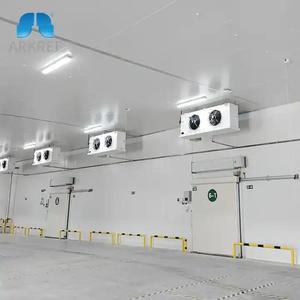
Modern industrial cold storage facilities are transitioning from static refrigeration boxes into highly dynamic, automated logistical powerhouses. As land costs rise in proximity to major port hubs like Shanghai, Ningbo, and Shenzhen, vertical high-rise cold logistics centers are becoming the global standard.
PIR/PUR Thermal Efficiency
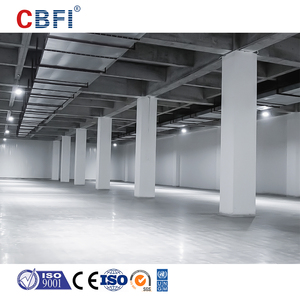
Advanced Polyisocyanurate (PIR) core panels achieve thermal conductivity rates as low as 0.021 W/m·K, delivering exceptional structural integrity and B1-s1,d0 fire safety classification.
Automated AS/RS Integration
Automated Storage and Retrieval Systems (AS/RS) operate seamlessly in sub-zero environments (-25°C to -40°C), maximizing racking density while eliminating human thermal fatigue.
Intermodal Container Mobility
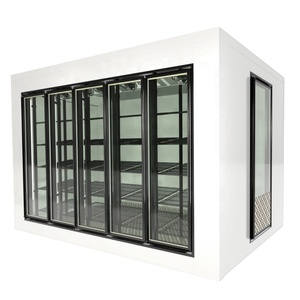
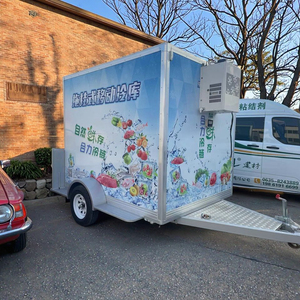
Modular containerized cold storage rooms (ARKREF series) enable instant deployment at customs inspection zones, remote distribution hubs, and agricultural harvesting sites.
Established in 1999, JH Logistics operates as a fully licensed Non-Vessel Operating Common Carrier (NVOCC) and global supply chain solutions provider. Headquartered at 2850 East El Presidio St, Carson, CA 90810, JH Logistics integrates international ocean shipping, air export/import freight forwarding, bonded warehousing, and customs clearance brokerage into a unified logistics matrix.
Licensed NVOCC & FMC Accreditation
Federal Maritime Commission compliant, issuing direct Bills of Lading and securing direct contract rates with global ocean carrier alliances.
US Customs Air Bonded Facility
Operates secure bonded storage enabling deferred duty processing, immediate IT (Immediate Transportation) filings, and high-value cargo security.
Turnkey Cold Chain Engineering
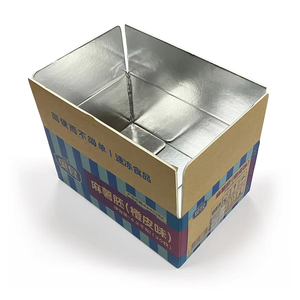
Partnering with China's leading cold storage manufacturers to supply custom-engineered commercial walk-in freezers, multi-storey steel warehouses, and insulated transit systems.
Q1: How is the import duty calculated for cold storage equipment entering China or overseas ports?
Import duty is derived by multiplying the dutiable CIF value (Cost, Insurance, Freight) by the applicable HS code duty rate. For example, prefabricated cold rooms under HS Code 8418.69 usually incur a Most Favored Nation (MFN) duty rate, plus local Value-Added Tax (VAT). If importing from an RCEP member state or a region with a Bilateral Free Trade Agreement, preferential duty rates (down to 0%) can be claimed using an authentic Certificate of Origin.
Q2: What essential documentation is required for smooth customs clearance of industrial refrigeration units?
Standard customs documentation includes: (1) Commercial Invoice stating itemized transaction values and Incoterms, (2) Detailed Packing List specifying gross/net weight and dimensions, (3) Bill of Lading (Ocean/Air Waybill), (4) Certificate of Origin, (5) Technical Compliance Datasheet (e.g., CE, ISO, or CCC certifications where mandatory), and (6) Import License or Special Inspection Clearance if the unit utilizes regulated fluorinated refrigerants.
Q3: How can an importer avoid costly demurrage and detention charges during customs inspection?
Demurrage can be minimized by executing pre-clearance customs filing (filing customs declarations before vessel arrival), verifying HS code classifications 14 days prior to dispatch, ensuring all shipping documents match physical marks, and utilizing bonded warehouses. Partnering with a licensed NVOCC like JH Logistics guarantees pre-arranged container free-time extensions (up to 14–21 days) at port terminals.
Q4: What are the primary structural advantages of prefabricated steel structure cold warehouses over traditional concrete?
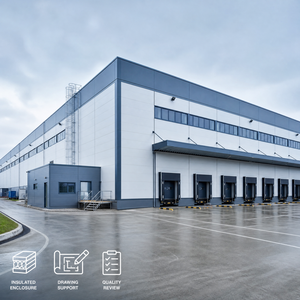
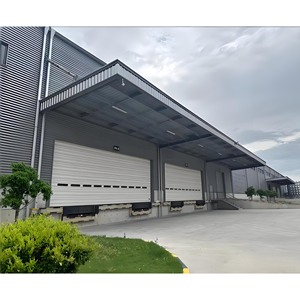
Prefabricated steel structures offer a 50% faster construction timeline, superior seismic resistance, lower overall foundation loads, and optimal architectural adaptability for automated high-density racking. Furthermore, integrated PIR insulated sandwich panel systems eliminate thermal bridges, drastically reducing operational compressor power consumption.
Q5: How does bonded warehousing assist in managing import tariffs for perishable or re-exported goods?
A bonded warehouse operates outside the traditional domestic customs territory for tariff purposes. Cargo can be stored, sorted, packaged, or held in temperature-controlled environments without immediate payment of import duties or VAT. If the goods are subsequently re-exported to another international destination, no import duty is ever assessed. If brought into the domestic market, duty is paid only upon release.
Q6: What refrigerant standards must modern cold storage equipment meet to comply with international green tariffs?
Under the Kigali Amendment to the Montreal Protocol, high-GWP hydrofluorocarbons (HFCs) like R404A are being systematically phased out. Importers should specify equipment utilizing eco-friendly low-GWP refrigerants such as R290 (Propane), R744 (CO2 cascade systems), or R448A/R449A to avoid green tariff surcharges, environmental compliance fines, and future operational restrictions.
Optimize Your Customs Clearance & Cold Chain Supply Chain Today
Connect with our licensed customs brokerage and cold storage engineering specialists. Get tailored tariff optimization advice, freight rate estimates, and turnkey warehouse project proposals.