Engineered for global deployment, extreme thermal efficiency, and seamless Out-Of-Gauge (OOG) multi-modal transport from China to worldwide destinations.
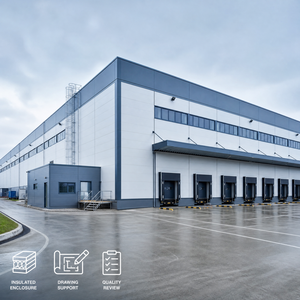
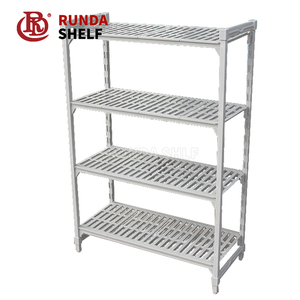
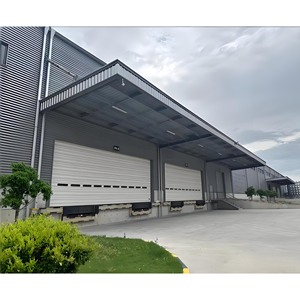
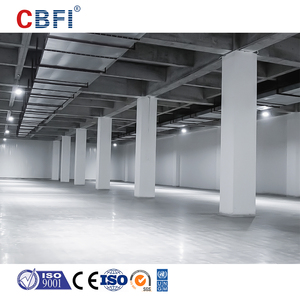
Out of Gauge (OOG) cargo logistics represents the pinnacle of complex global supply chain management. Unlike standardized containerized freight, OOG cargo encompasses machinery, pre-assembled structural units, industrial cold storage complexes, and heavy infrastructure modules that exceed the standard dimensions of 20-foot or 40-foot ISO intermodal containers—specifically exceeding 2.35 meters in width, 2.39 meters in height, or 12.03 meters in length.
When exporting heavy industrial equipment and modular prefabricated cold storage warehouses from manufacturing hubs across China (such as Ningbo-Zhoushan, Shanghai, Qingdao, and Shenzhen), cargo integrity relies on precise physical vectoring, Center of Gravity (CoG) calculations, and dynamic sea-keeping stability parameters. Transporting large insulated structures and high-rise vertical warehouses demands bespoke engineering solutions spanning Flat Rack (FR) containers, Open Top (OT) vessels, and Breakbulk Heavy Lift (HL) operations.
Key Operational Metric: Managing an OOG export shipment requires accurate assessment of Metacentric Height (GM) and dynamic rolling angles on ocean vessels to guarantee zero cargo movement during severe weather conditions in transpacific or cross-European trade routes.
Securing over-dimensional units, such as 10,000-square-meter modular freezer panels or pre-rigged industrial chiller containers, requires strict adherence to the International Maritime Organization (IMO) Code of Safe Practice for Cargo Stowage and Securing (CSS Code, Annex 13). Securing arrangements must withstand multi-directional accelerations, including longitudinal pitching, transverse rolling, and vertical heaving forces.
Custom-fabricated steel cradles, heavy-duty lashing chains with breaking strains exceeding 200 kN, and anti-slip rubber matting with friction coefficients (μ) above 0.6 are deployed across all specialized flat-rack assignments. By analyzing force-distribution vectors, freight forwarding engineers ensure that total lashing capacity counteracts all potential overturning moments.
Modern global commerce demands uninterrupted temperature-controlled supply chains. The integration of prefabricated steel structures with modular refrigeration systems enables rapid deployment of cold logistics hubs worldwide. Below is a structural and logistic breakdown of prime industrial cold storage assets exported via China's premier heavy-freight networks.
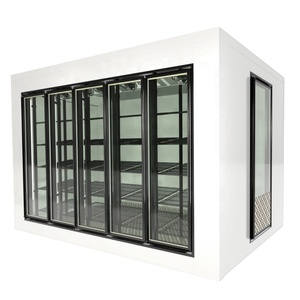
Multi-tiered modular panels utilizing high-density Polyisocyanurate (PIR) cores with thermal conductivity (λ) as low as 0.022 W/m·K. Exported via Flat-Rack platforms due to structural width profiles exceeding standard side-doors.
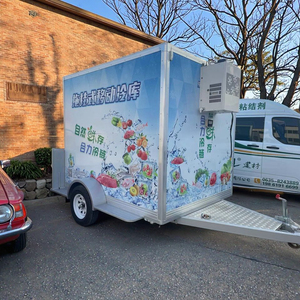
Integrated plug-and-play cold storage containers engineered for intermodal rail, sea, and highway transit. Built inside reinforced ISO corner-casting frames capable of supporting heavy stacking loads during ocean voyage.
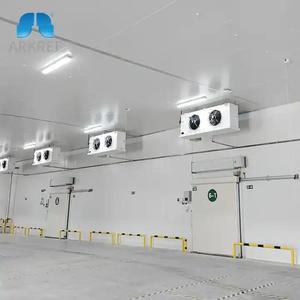
Multi-storey steel structures engineered for maximum vertical urban footprint efficiency. Shipped as bundled heavy-beam breakbulk cargo requiring specialized crane rigging and multi-axle hydraulic low-boy transport trailers.
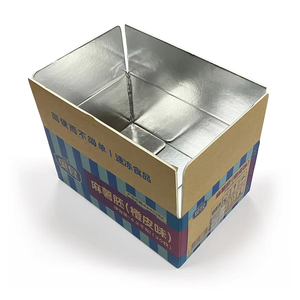
The export of large-scale cold rooms (such as 10,000-square-meter automated freezing projects) requires careful protection during sea freight against high humidity, salt spray, and extreme temperature fluctuations. Insulated shipping containers and corrugated cardboard packaging lined with multi-layer aluminum foil provide composite radiant barrier protection, reflecting up to 97% of thermal radiation.
For heavy industrial refrigeration machinery, moisture control during long-distance transits (e.g., 35–45 days from East Asia to South America or North America) is maintained using industrial-grade vapor barriers, vacuum sealed foil wraps, and active desiccant systems to prevent condensation corrosion on precision compressor components.
The global trade landscape for heavy machinery and modular cold chain infrastructure is undergoing a technological transformation driven by automated logistics, green energy transitions, and digital supply chain visibility. Procurement managers and EPC (Engineering, Procurement, Construction) contractors must align their logistics strategies with emerging macro trends:
Global demand for prefabricated industrial buildings is projected to grow significantly. Modular cold storage facilities offer up to a 40% reduction in site installation timelines compared to traditional brick-and-mortar construction. Consequently, freight forwarders must scale their capability to handle high volumes of Over-Height (OH) and Over-Width (OW) shipments with zero tolerance for transit damage.
Modern OOG freight operations incorporate IoT sensing arrays attached directly to breakbulk cradles and heavy-lift frames. Real-time telemetry tracks 3-axis shock vectors, tilt variations, ambient temperature, relative humidity, and precise GPS location. Procurement directors now gain complete visibility over high-value capital assets throughout their sea and land journeys.
With the International Maritime Organization's GHG reduction targets for 2030 and 2050, primary ocean carriers are transitioning to dual-fuel LNG and green methanol vessels. China-based freight forwarders are optimizing cargo stowage planning to reduce overall hydrodynamic drag on specialized vessels, ensuring maximum fuel efficiency for breakbulk and heavy-lift ocean passages.
Established in 1999 as a fully licensed Non-Vessel Operating Common Carrier (NVOCC), JH Logistics has evolved into an authoritative leader in global freight forwarding, heavy-lift project cargo, and cold chain distribution logistics. Headquartered in Carson, California, with major port operational hubs spanning East Asia, North America, and Europe, our enterprise infrastructure guarantees end-to-end reliability.
Direct contract rates with tier-one ocean carriers, providing guaranteed space allocations for Flat Racks, Open Tops, and Breakbulk vessels even during peak shipping seasons.
Over 161,435 square feet of dedicated staging yard capacity alongside 70,640 square feet of WMS-managed warehousing, enabling secure pre-assembly, lashing inspection, and export staging.
In-house customs brokerage, bonded warehouse management, and route clearance surveys ensuring flawless compliance with international customs regulations and inland highway transport permits.
Navigating the procurement, customs clearance, and heavy-lift logistics of Chinese export machinery requires clear operational insights. Below are technical solutions to common supply chain challenges.
An Out of Gauge (OOG) shipment refers to cargo whose dimensions exceed the standard interior dimensions of a typical 20ft, 40ft, or 40ft High Cube ISO dry container. This includes over-width (wider than 2.35m), over-height (taller than 2.39m), or over-length (longer than 12.03m) items. OOG items are transported using Flat Rack or Open Top containers, or shipped as Breakbulk on specialized vessel decks.
OOG freight calculations take into account the base container slot rate plus "lost slots" (the adjacent container spaces rendered unusable on the vessel due to the overhang of cargo). Rates also incorporate heavy-lift terminal handling charges (THC), lashing/securing material costs, and special equipment imbalance surcharges based on port availability.
Key documentation includes: Commercial Invoice, Packing List with itemized piece counts and weights, Bill of Lading (issued by licensed NVOCC), Certificate of Origin, Mill Test Reports (MTR) for structural steel, ISF (Importer Security Filing for US bound freight), and compliance certificates verifying foam insulation blowing agents meet environmental regulations (e.g., US EPA AIM or EU F-Gas mandates).
We implement multi-layered corrosion protection strategies: applying VCI (Vapor Corrosion Inhibitor) heat-shrinkable films, sealing key mechanical joints with marine-grade waterproof membranes, placing silica gel desiccants inside enclosed volumes, and arranging below-deck stowage on breakbulk vessels whenever available.
Inland route surveys for super-heavy or over-dimensional loads typically take 10 to 14 business days. Permit approvals from state or regional transport authorities require 1 to 3 weeks depending on bridge loading assessments, police escort requirements, and utility line clearance co-ordination.
Connect directly with our senior logistics engineers for custom freight quotes, route surveys, and dedicated vessel capacity booking from China to any global destination.