Direct factory supply and global logistics integration for oversized industrial refrigeration modules, heavy steel cold storage structures, and high-cube transport insulated boxes.
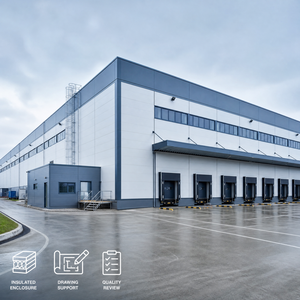
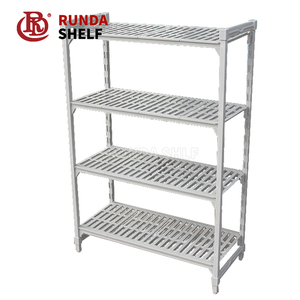
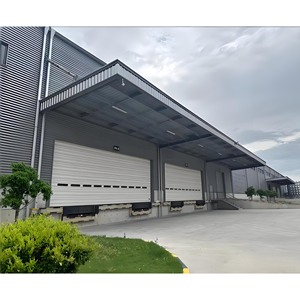
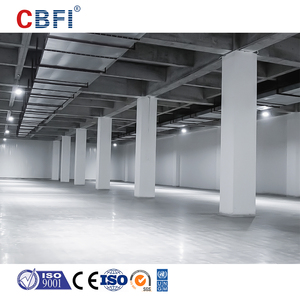
In the era of modern industrialization, international procurement of oversized cold-chain facilities, structural steel logistics centers, and heavy industrial machinery requires specialized ocean shipping methodologies. Standard containerized transport (FCL/LCL) often fails to accommodate heavy machinery, prefabricated structural spans exceeding 12 meters, or massive industrial refrigeration skids. This technical whitepaper explores the critical engineering standards, chartering methodologies, and supplier verification metrics necessary for executing seamless Breakbulk Ocean Cargo Shipping from China factories to global destinations.
When procuring high-capacity cold storage warehouses or heavy manufacturing plants from Chinese OEMs, understanding cargo classification dictates overall landed logistics costs and marine safety compliance:
Unlike standard container freight quoted per TEU/FEU, Breakbulk Ocean Freight is billed based on W/M (Weight or Measurement) revenue tons (RT), where 1 RT equals 1,000 kg or 1 Cubic Meter (CBM), whichever yields higher revenue for the ocean carrier. Calculating the exact stowage factor (SF) of prefabricated structural steel and polyurethane insulated panels prevents unexpected marine freight surcharges at origin ports such as Shanghai, Ningbo-Zhoushan, or Qingdao.
Sourcing industrial cold chain infrastructure requires evaluating mechanical integrity alongside logistics feasibility. The table below outlines standard technical thresholds for factory suppliers exporting heavy industrial cooling systems and warehouse units from China:
| Equipment Category | Structural / Material Standard | Thermal / Load Capacity | Ocean Logistics Method | Compliance Certification |
|---|---|---|---|---|
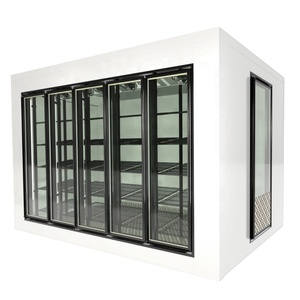
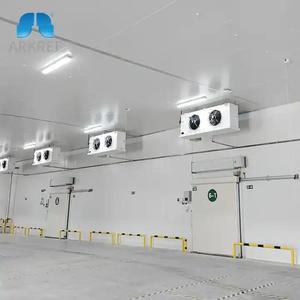
| Industrial Walk-in Freezer Rooms | 0.5mm Color Steel / 304 Stainless Steel | PUR Density 42kg/m³, R-Value > 38 | Flat Rack / Breakbulk Bundle | CE / ISO 9001 |
| Prefab Steel Warehouses | Q355B Heavy Structural H-Beams | Wind Load > 140 km/h, Seismic 8 | Breakbulk Bulk Carrier Charter | AWS D1.1 / EN 1090 |
| High-Rise Racking Structures | Cold-Rolled High-Tensile Steel | Pallet Load > 3,500 kg / level | High-Density Bundle Breakbulk | FEM 10.2.02 |
| Integrated Refrigeration Skids | German Bitzer / Copeland Compressors | Cooling Cap 50kW - 500kW+ | 40ft Open Top / OOG Deck Cargo | ASME / UL / PED |
Anticipating international trade regulations, decarbonization mandates, and modular construction shifts for industrial supply chains.
Global EPC contractors are shifting toward fully assembled, containerized cold-storage units and pre-engineered steel frames. By completing 85% of fabrication in China factories, overseas field assembly costs drop by up to 40% despite specialized breakbulk ocean shipping requirements.
The International Maritime Organization (IMO) carbon intensity rules require ocean breakbulk carriers to optimize vessel routing and propulsion efficiency. Procurement officers must verify vessel Energy Efficiency Existing Ship Index (EEXI) scores to avoid low-rated vessels subject to speed reduction delays.
Real-time telematics devices mounted on heavy-lift breakbulk shipments track 3-axis shock/g-force acceleration, ambient humidity, and temperature. This eliminates disputes regarding maritime transit damage for sensitive industrial refrigeration units and structural steel coatings.
The ocean transit of Breakbulk and Out-of-Gauge industrial cold storage modules from Chinese ports across international sea routes exposes cargo to multi-directional forces (pitching, rolling, yawing, and heave). Poorly secured cargo leads to structural deformation, compromised thermal insulation, and marine insurance rejection.
Expert answers addressing customs compliance, shipping calculations, quality inspection, and logistics execution.
Breakbulk freight is quoted per Revenue Ton (RT), calculated via Weight or Measurement (W/M). Total volume in CBM and total gross weight in Metric Tons are compared; the larger number is multiplied by the ocean carrier's base rate plus heavy-lift surcharges, terminal handling charges (THC), and bunker adjustment factors (BAF).
Essential documents include the Commercial Invoice, Packing List with detailed piece-by-piece dimensions/weights, Master Bill of Lading (MBL), Certificate of Origin (Form E/CO), Mill Test Certificates (MTC) for steel components, ISPM-15 Fumigation Certificate, and Crane/Rigging Test Certificates for heavy lift items.
As a licensed NVOCC with established infrastructure since 1999 (utilizing 70,640+ sqft of warehouse space and 161,435 sqft of yard capacity), an NVOCC acts as a single point of contract. They aggregate ocean carrier space, handle port-of-loading customs, manage bonded warehousing duty deferrals, and coordinate heavy trucking to final job sites.
Yes. Factory suppliers utilize high-density PUR/PIR core panels with interlocking cam-lock systems. When packed into steel-framed bundles with protective edge guards and weather-resistant plastic wrapping, panels resist physical impact, marine moisture, and stacking loads within vessel holds.
Manufacturing of structural steel frame and panels typically requires 25 to 35 days in Chinese factories. Ocean transit requires 14–22 days depending on the destination port (e.g., US West Coast vs. Europe/Middle East), plus 5–7 days for port clearance and inland heavy haulage.
Implement third-party pre-shipment inspections (PSI) via accredited agencies (e.g., SGS, Bureau Veritas, TUV). Inspectors verify dimensions, zinc coating thickness on structural steel, polyurethane density tests, insulation continuity, and trial assembly of prefabricated units prior to port dispatch.
Executing complex international infrastructure projects demands seamlessly integrated engineering and freight management. Operating with over 26 years of institutional experience since 1999, our supply network combines state-of-the-art Chinese manufacturing precision with licensed NVOCC ocean freight execution.
Eliminate intermediary markups by sourcing engineered steel structures, heavy-duty warehouse shelving, and industrial walk-in freezers directly from top-tier Chinese factories audited for ISO 9001 and CE compliance.
From factory staging and heavy-lift truck dispatch to ocean chartering, customs clearance, and bonded yard storage (161,435 sqft), your industrial cargo stays under strict engineering oversight.
All breakbulk and out-of-gauge ocean shipments receive custom survey reports, lashing certificates, and full marine cargo insurance coverage against rough seas, piracy, and terminal handling risks.