Explore our industrial-grade, thermal-validated product line manufactured for high-altitude air freight stability, strict GDP pharmaceutical transport, and commercial cold warehouse infrastructures.
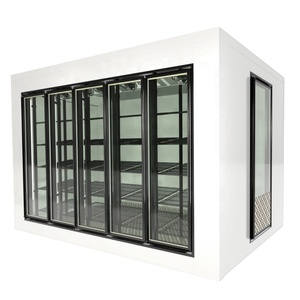
Modular polyurethane walk-in cooler engineered for air freight hubs and distribution centers. Features tongue-and-groove CAM-lock assembly and precision digital temperature control.
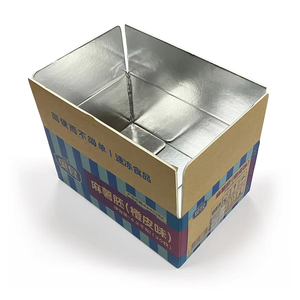
High-performance radiant barrier thermal boxes optimized for air export volumetric efficiency. Designed for temperature-sensitive food and biological payloads requiring 72-hour protection.
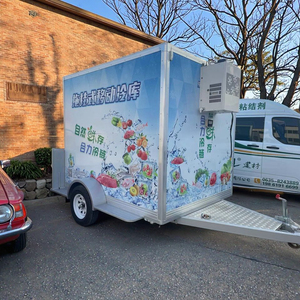
Prefabricated rapid-cooling mobile storage module designed for air-cargo transshipment points. Integrated floor rollers ensure smooth air pallet loading and unloading.
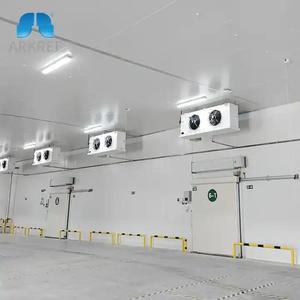
Ruggedized intermodal cold storage container built to meet strict ISO and air logistics standards. Features automated climate telemetry and dual-redundant cooling loops.
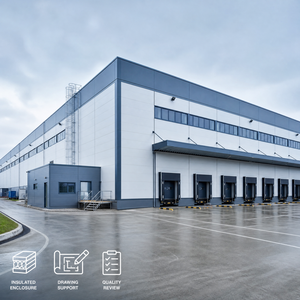
Heavy-duty industrial insulated steel buildings customized for high-volume airport logistics complexes. Engineered for minimal thermal bridging and low operational energy consumption.
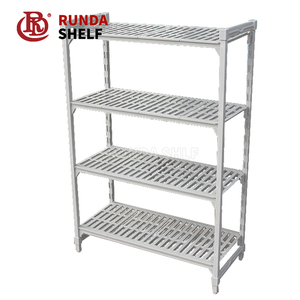
Specialized anti-corrosive multi-tier shelving designed to withstand continuous exposure down to -40°C in high-density cold chain warehouses and staging areas.
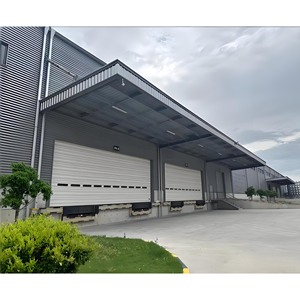
Vertical urban cold storage facility engineering designed for immediate air-to-land delivery operations. Maximizes volumetric land use with automated stacker crane technology.
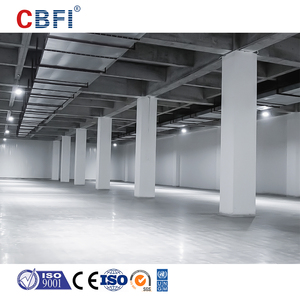
Full-scale OEM cold logistics installation featuring multi-zone temperature partitioning (-80°C ultra-low, -20°C freezer, +2°C to +8°C cooler) tailored for international freight forwarding centers.
As a global pioneer in thermal engineering and licensed freight logistics since 1999, our facility bridges the gap between high-precision packaging manufacturing and complex international air shipping compliance. Maintaining structural integrity and exact thermal windows during high-altitude transit demands zero margin for thermal bridging or insulation degradation.
Every customized packaging design undergoes simulated extreme ambient temperature cycles in our climate chambers (-40°C to +60°C) to guarantee compliance before deployment.
We integrate nano-porous Vacuum Insulation Panels (VIP) with thermal conductivity lower than 0.004 W/m·K alongside organic non-toxic PCMs to sustain strict payload heat bounds.
Operating 70,640+ sqft of bonded warehouse space and 161,435 sqft yard capacity, our factory seamlessly connects manufacturing directly to customs cleared air lanes.
Air transport poses unique thermal challenges not encountered in ocean or ground logistics. Commercial aircraft cargo holds experience extreme pressure drops, ambient ground tarmac heat spikes exceeding +45°C during loading phases, and sub-zero temperatures at cruising altitudes. Designing custom OEM air shipping containers requires a hybrid approach combining passive thermal resistance and active micro-climate regulation.
Information Gain Insight: Replacing standard Polyurethane (PUR) insulation with ultra-thin Vacuum Insulation Panels (VIP) decreases outer container tare weight by up to 38% while improving internal payload volume ratios by 27%—dramatically lowering IATA volumetric air freight charges.
In standard air freight container design, expanded polystyrene (EPS) or rigid polyurethane (PUR) requires substantial thickness (50mm–100mm) to reach target R-values. This drastically increases the exterior volumetric dimensions ($L \times W \times H / 6000$), inflating shipping costs. Our OEM manufacturing process encapsulates core fumed silica inside multi-layer barrier films under deep vacuum conditions, attaining thermal resistance up to $R-40$ per inch.
To resist external ambient variations during tarmac exposure, our thermal packaging utilizes engineered PCMs calibrated for precise transition points:
Cargo holds experience pressure fluctuations from sea level to 8,000 feet equivalent cabin pressure. Inferior sealed insulated containers risk structural wall collapse or seal leakage due to pressure differential ($\Delta P$). Our custom-molded outer shells utilize reinforced corrugate, composite aluminum skins, and pressure-equalization breathable hydrophobic membranes (Gore-Tex grade) that equalize air pressure without compromising thermal insulation.
Review the technical trade-offs between dynamic packaging methods to select the ideal OEM specification for your supply chain requirements:
| Insulation Core Tech | Thermal Conductivity ($\lambda$) | Tare Weight Index | Max Duration (Hours) | IATA Volumetric Score | Ideal Target Payload |
|---|---|---|---|---|---|
| OEM VIP + Organic PCM | 0.004 - 0.006 W/m·K | Very Low (Ultra-Light) | 120+ Hours | Superior (Optimal) | Biologics, Vaccines, Active API |
| Rigid PUR + Water Packs | 0.022 - 0.026 W/m·K | Medium | 48 - 72 Hours | Moderate | Perishable Foods, Seafood |
| EPS Foam + Gel Packs | 0.033 - 0.040 W/m·K | High (Bulky Volume) | 24 - 48 Hours | Poor (High Air Fee) | Standard Express Goods |
| Active Battery-Compressor Unit | N/A (Mechanical Cooling) | Very High (Heavy) | 100+ Hours (Rechargeable) | Heavy Freight Rate | Bulk Pharma Pallets (RKN/RAP) |
Regulatory pressures across North America and Europe are driving demand for fully circular packaging. Global buyers are rapidly shifting from single-use EPS foam towards 100% recyclable mono-material polyurethane, biodegradable plant-based phase change fluids, and reusable returnable box rental networks.
Modern air shipping requires more than passive insulation. Future-ready OEM shippers now integrate embedded BLE (Bluetooth Low Energy) and cellular 5G data loggers into the insulation walls, constantly transmitting internal temperature, humidity, shock, ambient pressure, and GPS locations directly to cloud compliance dashboards.
Supply chain managers are replacing static packaging validation with AI-driven thermal modeling. Real-time predictive algorithms evaluate seasonal ambient forecasts along specific flight paths (e.g., Shanghai to Chicago via Anchorage) to automatically select the optimal PCM loading ratio per box.
Strict enforcement of Good Distribution Practice (GDP) guidelines for medicinal products requires complete audit trails. OEM manufacturing must supply detailed thermal qualification dossiers (DQ, IQ, OQ, PQ) proving zero temperature excursions during transit.
Find authoritative answers regarding custom mold design, minimum order quantities, thermal validation protocols, and global air cargo compliance.
Partner directly with a certified cold chain engineering factory. Contact our technical engineering team today to request custom CAD drawings, VIP/PCM payload calculations, or a competitive quotation for your air shipping operations.