Explore our integrated OEM/ODM multimodal transport and insured cargo services, optimized for global trade lanes with end-to-end financial protection.
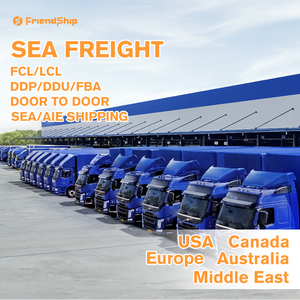
In the contemporary architecture of international trade, supply chain vulnerability has transitioned from a operational inconvenience to an executive-level balance sheet threat. As original equipment manufacturers (OEMs) and original design manufacturers (ODMs) scale global production across complex transpacific, Asia-Europe, and intra-Asia trade corridors, the financial liability associated with transit loss, marine casualties, and catastrophic cargo destruction must be systematically transferred through specialized OEM/ODM Marine Cargo Insurance Services.
Standard carrier liability limits—often restricted to $500 per package under the United States Carriage of Goods by Sea Act (COGSA) or 2 SDR per kilogram under the Hague-Visby Rules—leave enterprise buyers severely under-protected. When ocean vessels encounter rough seas, container stack collapses, engine room fires, or general average declarations, manufacturers without tailored marine insurance policies face unrecoverable financial write-offs. This comprehensive whitepaper explores the operational mechanics, legal structures, underwriting clauses, and strategic procurement trends governing marine cargo risk transfer for global factories and supply chain executives.
Many OEM/ODM exporters mistakenly assume that freight forwarders or shipping lines bear financial responsibility for lost or damaged goods during ocean transit. In reality, under maritime law, if a vessel captain declares General Average (sacrificing property to save the ship and cargo), all cargo owners on board are legally obligated to contribute financially to compensate the party whose property was sacrificed before their own goods are released from the port. Without an active Institute Cargo Clauses (A) marine policy in place, your factory's container will be held under maritime lien until a substantial cash deposit—often 20% to 50% of the cargo's commercial invoice value—is paid directly to the average adjuster.
Underwriting precision is critical when establishing OEM/ODM insurance protocols. Marine cargo insurance is structured around standardized clauses established by the International Underwriting Association (IUA) and the Lloyd's Market Association (LMA). Selecting the correct coverage clause dictates whether your financial assets are fully shielded or exposed to conditional exclusions.
| Coverage Parameter | Institute Cargo Clauses (A) - "All Risk" | Institute Cargo Clauses (B) - Named Perils | Institute Cargo Clauses (C) - Basic Perils |
|---|---|---|---|
| Scope of Coverage | All risks of physical loss or damage except specifically excluded perils. | Loss due to fire, explosion, grounding, capsizing, collision, discharge at port of distress, earthquake, volcanic eruption. | Major vessel casualties: fire, explosion, vessel grounded/capsized, collision, jettison of cargo. |
| Water Damage & Washing Overboard | Covered (Sea, lake, or river water entry into hold or container). | Covered (Washing overboard + entry of sea water into hold/container). | Excluded (Only covers jettison of cargo during emergency). |
| Partial Loss / Heavy Weather Damage | Covered fully subject to policy deductible. | Restricted to specific incident triggers. | Excluded unless caused by major vessel disaster. |
| General Average & Salvage Charges | Fully Covered (Insurer posts General Average Bond). | Fully Covered. | Fully Covered. |
| Best Suited For | OEM/ODM Electronics, Precision Machinery, High-Value Consumer Goods, FCL/LCL. | Bulk Commodities, Raw Industrial Materials, Non-fragile steel/lumber. | Scrap Metals, Low-Value Bulk Materials, Low-risk raw inputs. |
The seamless alignment of International Commercial Terms (Incoterms 2020) with marine insurance policies is paramount for preventing liability gaps during cargo custody transfers. In OEM and ODM supply chains, manufacturing processes typically cross multiple jurisdictions, involving complex inland trucking, bonded warehousing, ocean freight, and final-mile delivery.
Custom manufacturing requires specialized insurance policy riders that address the unique commercial risks of private-label manufacturing and custom-engineered goods. Standard off-the-shelf marine policies often fail to compensate for the true loss of proprietary products. Essential riders include:
How advanced logistics integration and risk management protocols protect global supply chains from port-to-port and door-to-door.
Instant underwriting cover under Institute Cargo Clauses (A), shielding shipments against maritime loss, theft, stack collapse, and adverse weather events globally.
Immediate insurer-backed financial guarantees to release cargo under General Average liens without forcing exporters to freeze capital in cash escrow bonds.
Seamless insurance continuity spanning factory pick-up, port drayage, ocean vessel transit, bonded warehousing, and final door delivery.
Digital inspection processing, survey coordination, and expedited claims payouts, minimizing operational disruption for high-volume manufacturers.
Full alignment with international customs rules, export controls, FMC regulations, and NVOCC documentation standards across all major trade lanes.
Tailored marine coverage for oversized industrial machinery, project cargo, and out-of-gauge (OOG) containerized freight shipments.
For enterprise procurement officers and supply chain directors, marine cargo insurance cannot be evaluated in isolation from physical logistics execution. JH Logistics stands as a premier licensed Non-Vessel Operating Common Carrier (NVOCC) and full-service global freight forwarder, delivering end-to-end supply chain infrastructure since 1999.
Headquartered in Carson, California (2850 East El Presidio St, Carson, CA 90810), JH Logistics operates at the vital nexus of major West Coast port hubs (Port of Los Angeles and Port of Long Beach), providing unparalleled integrated logistics, drayage, and risk management solutions. Our operational footprint spans every critical node of global trade:
When insurance policies are underwritten independently of the freight forwarder, claims processing frequently degenerates into finger-pointing between carrier, trucker, warehouse operator, and insurer. By consolidating freight forwarding, bonded warehousing, drayage, and marine insurance under JH Logistics' unified umbrella, cargo survey reports, chain-of-custody logs, and bill of lading records are synchronized instantly, dramatically accelerating claims settlement cycles from months to days.
As international supply chains adapt to geopolitical shifts, nearshoring strategies, and technological innovations, the landscape of marine risk engineering and cargo underwriting is undergoing a fundamental transformation. Procurement leaders must anticipate these major industry trajectories:
Traditional marine insurance relies on static risk evaluations based on vessel age, trade lane history, and commodity classification. However, the integration of smart IoT container sensors—monitoring real-time GPS locations, shock impacts, ambient humidity, temperature fluctuations, and door-opening alerts—is enabling dynamic policy underwriting. Insurers are offering premium rebates for shipments protected by real-time telematics, as real-time alerts allow carriers to intervene before cargo suffers catastrophic spoilage or damage during transit.
Increasingly frequent extreme weather events, severe ocean storms, and canal disruptions (such as Panama Canal drought-induced transit restrictions or Red Sea rerouting around the Cape of Good Hope) have expanded transit times and heightened cargo exposure. Future OEM procurement contracts must incorporate extended transit time riders, delay coverage options, and flexible routing endorsements to protect against global supply chain bottlenecks.
For high-volume electronics and automotive OEM suppliers, traditional indemnity insurance claims—which require physical adjusters to inspect damaged goods—are being supplemented by parametric insurance models. Parametric policies pay out pre-determined sums automatically upon the occurrence of specific trigger events (e.g., vessel grounding, ocean swell thresholds exceeding safety parameters, or container temperature deviations beyond set limits), providing instant liquidity without lengthy claims disputes.
Environmental, Social, and Governance (ESG) mandates are reshaping maritime salvage and claims recovery. Underwriters are prioritizing green salvage protocols, enforcing non-toxic cargo disposal practices, and offering premium incentives for goods shipped aboard dual-fuel (LNG/Methanol) modern container vessels equipped with advanced fire suppression technologies.
Detailed technical answers to critical questions faced by global risk officers, supply chain buyers, and manufacturing managers.
Don't leave your global OEM/ODM cargo exposed to maritime peril, container loss, or general average liens. Consult with JH Logistics' licensed NVOCC and insurance specialists today to structure a customized All-Risk marine policy tailored to your manufacturing schedule.
Contact Us