Explore our audited roster of standard and specialized consolidation equipment, international door-to-door forwarding frameworks, and cold-chain infrastructure designed to reduce total landed logistics costs for enterprise supply chains.
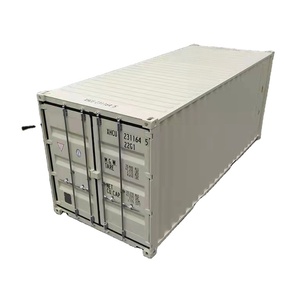
Structural grade ISO intermodal containers (20ft/40ft/40ft HC) for cargo transport and consolidated warehouse storage. Fully wind and watertight certified.
Send an Inquiry
Turnkey DDP LCL sea consolidation and express air freight from China to Saudi Arabia. Complete clearance under SABER and customs compliance protocols.
Send an Inquiry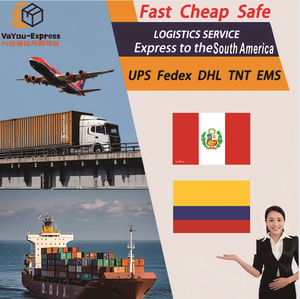
Integrated multi-vendor cargo consolidation, express customs handling, and last-mile distribution via UPS, DHL, FedEx, and localized carrier networks.
Send an Inquiry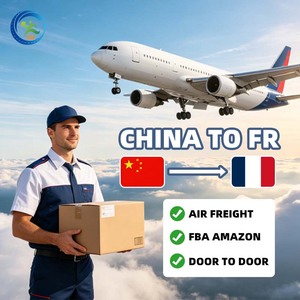
Optimized LCL consolidation pathways to European portals. Comprehensive warehousing, palletization, VAT compliance, and express transit to EU hubs.
Send an Inquiry
Strategic LCL+Express freight consolidation covering KSA, UAE, and Oman. Includes supplier verification, warehouse inspection, and unified billing.
Send an Inquiry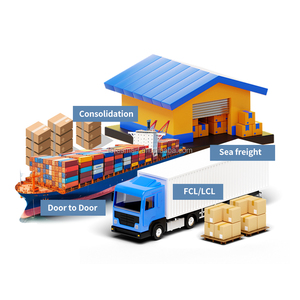
Multi-origin consolidation networks in primary Chinese port hubs. Efficient cross-docking, pick-and-pack, and direct container loading for export control.
Send an Inquiry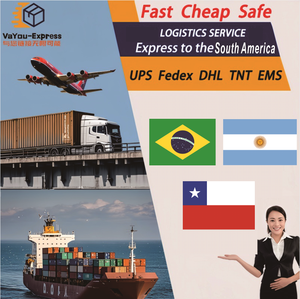
Specialized LATAM express consolidation solution. Duty-paid door delivery resolving complex customs hurdles across South American border agencies.
Send an Inquiry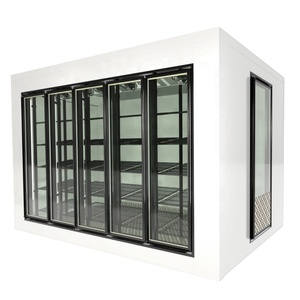
Modular industrial cold storage facilities designed for temperature-sensitive cargo consolidation, pharmaceutical storage, and perishable food distribution.
Send an InquiryIn an era characterized by dynamic global trade shifts, volatile ocean freight spot rates, and heightened supply chain fragmentation, enterprise procurement managers are undergoing a structural shift toward strategic cargo consolidation. Freight consolidation warehousing—the operational practice of merging smaller Less-Than-Container Load (LCL) shipments from multiple vendors into single, unified Full-Container Load (FCL) consignments—has emerged as a foundational lever for margin preservation and inventory optimization.
Modern consolidation warehouses do not function merely as passive storage facilities. Instead, they serve as high-throughput operational nodes capable of real-time stock segregation, value-added packaging, quality control verification, customs compliance prep, and cross-dock routing. By leveraging multi-origin consolidation suppliers across major manufacturing clusters—such as Shenzhen, Ningbo, Shanghai, and regional North American logistics gateways like Carson, California—importers can effectively flatten their cost curves while gaining supply chain agility.
Identifying an elite freight consolidation partner requires evaluating operational throughput, digital infrastructure, regulatory certifications, and asset capabilities. Enterprise buyers must assess prospective factories and suppliers across five core dimensions:
Direct access to major port gates, railheads, and airfreight terminals to minimize drayage delays and eliminate secondary transport legs.
Licensed NVOCC operations and air/ocean bonded warehouse status allowing duty-deferred storage, re-exportation, and streamlined customs clearance.
Real-time inventory visibility via automated Warehouse Management Systems (WMS), SKU-level tracking, dynamic EDI integration, and electronic BOL creation.
| Supplier Capability Parameter | Standard LCL Forwarder | Tier-1 Consolidation Factory/Supplier | Enterprise Strategic Impact |
|---|---|---|---|
| Cargo Receipt & Verification | Basic piece-count check | Dimensional scan, weight check, SKU inspection | Prevents downstream shipping discrepancies |
| Customs Integration | Third-party broker hand-off | In-house Licensed NVOCC / Bonded Facility | Reduces dwell times by 48-72 hours |
| Container Space Utilization | 65% - 75% volumetric efficiency | 88% - 96% optimized dynamic loading | Directly cuts per-unit sea/air freight costs |
| Special Handling | Standard ambient dry cargo | Cold-chain storage, hazmat, overdimensional | Enables complex multi-industry logistics |
Established in 1999, JH Logistics stands as a premier licensed Non-Vessel Operating Common Carrier (NVOCC) and global supply chain solutions provider. Anchored by a state-of-the-art facility in Carson, California, JH Logistics bridges manufacturing ecosystems in Asia, Europe, and the Americas through robust freight consolidation warehousing, air bonded handling, and comprehensive inland transportation networks.
Our infrastructure spans over 70,640 square feet of WMS-managed warehouse capacity and 161,435 square feet of secure container yard space. Built on principles of absolute integrity, operational transparency, and client-centric growth, we process tens of thousands of TEUs and air freight tonnage annually with unmatched reliability.
JH Logistics Co.
2850 East El Presidio St
Carson, CA 90810, USA
Tel: +1-310-223-0040
Fax: +1-310-223-0062
Email: [email protected]
The next decade will redefine how multinational corporations approach freight consolidation and warehouse staging. Key macro-trends shaping global procurement strategy include:
Machine learning algorithms now analyze item dimensions, weight distribution constraints, and discharge port sequences to generate 3D loading schematics. This maximizes container cubic capacity and reduces cargo shifting damage during transit.
As global supply networks diversify beyond single-country origins, multi-hub consolidation centers across Southeast Asia, Mexico, and Eastern Europe allow buyers to aggregate regional sub-components into unified containers before ocean transport.
Regulatory mandates across North America and the EU are driving consolidation providers to integrate carbon emissions telemetry. Consolidating shipments directly mitigates overall shipping ton-kilometers, drastically lowering greenhouse gas footprints.
Full Container Load (FCL) involves a single shipper utilizing an entire container, while traditional Less-Than-Container Load (LCL) mixes multiple shippers' goods through co-loaders. Strategic Freight Consolidation allows a single buyer to collect goods from multiple distinct factories or suppliers into a designated warehouse, combining them into one proprietary FCL container under unified control and documentation.
An Air Bonded Warehouse enables imported cargo to be stored, sorted, and consolidated without immediate payment of import duties or customs taxes. This provides crucial cash flow flexibilities, allows re-exportation without duty penalties, and streamlines secondary customs clearance procedures under official oversight.
Delivered Duty Paid (DDP) consolidation requires commercial invoices, detailed packing lists specifying harmonized system (HS) codes, certificates of origin, and relevant country-specific compliance permits (such as SABER for Saudi Arabia). The consolidator manages full customs entry, tax clearance, and final delivery logistics.
Tier-1 consolidation facilities execute strict receiving procedures including visual outer packaging checks, gross weight verifications, dimensional measurements, and optional pallet re-wrapping or crating. High-value or fragile shipments receive specialized blocking and bracing inside the container to prevent transit damage.
Yes. Specialized cold chain logistics providers offer temperature-controlled staging areas and walk-in cooler storage rooms. Perishable, chemical, or pharmaceutical products can be stored at precise temperature ranges (chilled or frozen) before being loaded into specialized refrigerated intermodal containers (reefers).
Partner with JH Logistics to leverage our 25+ years of licensed NVOCC expertise, extensive warehousing network, and dedicated door-to-door freight forwarding infrastructure.