
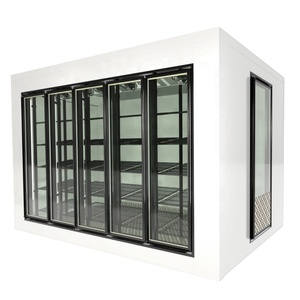
Direct overseas factory supply with local US technical support. Specialized modular refrigeration, high-rise logistics warehouses, and heavy-duty cold chain containers engineered for global export shipping.
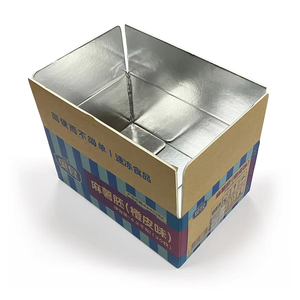
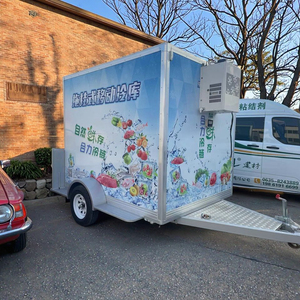
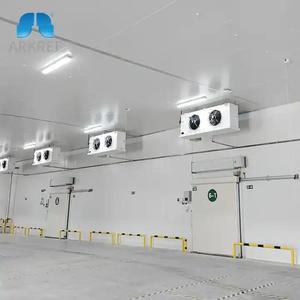
Managing international logistics for Out-of-Gauge (OOG) cargo, breakbulk machinery, and pre-fabricated cold chain structures requires meticulous structural engineering, maritime route optimization, and rigorous NVOCC regulatory compliance.
Over-Dimensional Cargo (ODC) exceeds standard ISO container dimensions in height, width, or length. Our technical teams utilize specialized sea freight equipment including Flat Rack (FR) containers, Open Top (OT) units, and heavy-duty platform trailers. Every cargo unit undergoes center-of-gravity (CG) structural calculations and dunnage distribution analysis to ensure maximum stability on container vessels.
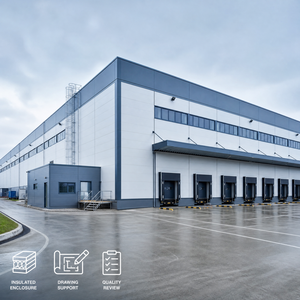
For industrial cold storage buildings, multi-storey warehouse steel frames, and 10,000+ SQM prefabricated freezer components that cannot fit standard container vessels, we provide full and part-charter vessel services. Utilizing shipboard heavy-lift derrick cranes, our port engineers manage tandem lifting operations directly from dockside heavy haulage trucks onto ocean vessel holds.
Exporting walk-in coolers, insulated polyurethane (PU/PIR) panels, and integrated containerized cold rooms requires anti-corrosion ocean packaging. Vapor-barrier foil wrapping, desiccants, and customized wooden crating certified under ISPM 15 guard thermal core structures against saltwater ocean mist, humidity fluctuations, and kinetic shock forces during transoceanic shipping.
Operating out of our primary gateway facility at 2850 East El Presidio St, Carson, CA 90810, JH Logistics integrates ocean freight discharge with 70,640 SqFt of secure warehouse space and 161,435 SqFt of yard capacity. Goods remain duty-deferred within US Customs Air/Ocean Bonded storage, streamlining import/export re-routing and urban distribution.
Comparative analysis of ocean vessel equipment configurations utilized for heavy machinery, prefabricated structural steel warehouses, and oversized cold storage exports.
| Equipment / Mode Type | Max Payload Capacity | Suitable Cargo Dimensions | Primary Industrial Applications | Lashing & Securing Protocol |
|---|---|---|---|---|
| Flat Rack (40' Collapsible) | Up to 45,000 kg (99,207 lbs) | Over-width (>2.44m) & Over-height (>2.59m) | ARKREF Container Coolers, Heavy Compressors | IMO CSS Code, Steel Chains & Turnbuckles |
| Open Top Container (40' OT) | Up to 28,200 kg (62,170 lbs) | Over-height equipment loaded via overhead crane | Vertical Rack Storage, Steel Frame Columns | Tir Cable Securing, Heavy-Duty Tarpaulins |
| Breakbulk Heavy-Lift Hold | Unlimited (Vessel Crane dependant up to 500 MT) | Massive modular structural steel & prefabricated panels | 10,000 SQM Industrial Cold Room Projects | Custom Welded Deck Stoppers & Heavy Wire Lashings |
| Ro-Ro (Roll-on/Roll-off) | Up to 120 MT via Mafi Trailer | Self-propelled machinery & heavy wheeled chassis | Mobile Industrial Cooler Trailers & Gensets | Internal Vessel Deck Webbing & Wheel Chocks |
| 40' High Cube Reefer (RF) | Up to 29,400 kg (64,815 lbs) | Standard ISO dimensions with temperature control | RDY Insulated Foil Boxes & Frozen Consumables | Integrated Floor T-Bar Locking System |
Key macro-environmental shifts transforming global heavy logistics, factory-prefabricated cold room supply chains, and international maritime exports over the next decade.
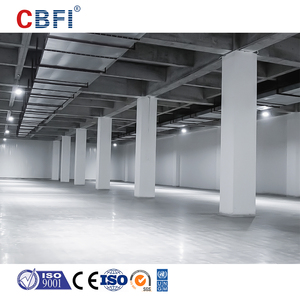
Global procurement managers are shifting away from traditional on-site masonry cold room construction toward prefabricated modular cold storage warehouses. Products such as high-efficiency walk-in freezers and multi-storey steel-structure logistics hubs are manufactured entirely in specialized overseas factories and shipped as knock-down kits via ocean freight. This reduces regional installation timelines by up to 65% and guarantees standardized insulation thermal coefficients (R-value integrity).
Future ocean procurement contracts demand real-time visibility into out-of-gauge equipment movement. Smart sensors mounted on Flat Racks and containerized cold rooms stream real-time metrics regarding structural strain, tilt dynamics, temperature stability, and ambient relative humidity. Integrating WMS and GPS telemetry allows buyers to monitor high-value breakbulk assets throughout ocean transit and intermodal drayage.
With the International Maritime Organization (IMO) enforcing CII (Carbon Intensity Indicator) and EEXI energy efficiency mandates, ocean carriers are phasing in dual-fuel LNG and methanol vessels. Procurement strategies must align with green logistics corridors. Sourcing low-weight, high-insulation aluminum-foil corrugated cardboard shipping packaging optimizes container cargo density, significantly lowering carbon emissions per ton-kilometer.
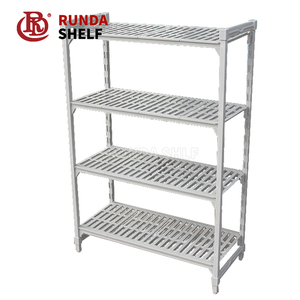
Land constraints in metropolitan centers are driving demand for multi-storey, high-rise cold storage logistics warehouses equipped with heavy-duty multi-level plastic and steel rack shelving. Ocean shipping providers must handle complex structural steel shipments, heavy freight elevator components, and specialized vertical automated storage and retrieval systems (ASRS) within tight urban delivery windows.
Established in 1999, JH Logistics is a fully licensed NVOCC (Non-Vessel Operating Common Carrier) and end-to-end freight forwarder. We specialize in complex ocean shipping, breakbulk heavy equipment transport, and integrated cold storage logistics. Grounded in integrity, operational expertise, and transparency, we deliver turnkey supply chain solutions worldwide.
Our senior project logistics engineers analyze vessel stowage plans, load distribution, and customs compliance for your exact cargo profile.
Get CatalogExpert insights into oversized ocean freight pricing, cold storage customs clearance, and heavy machinery transport procedures.
Oversized or Out-of-Gauge (OOG) cargo refers to freight that exceeds the standard internal dimensions of a standard 20ft, 40ft, or 40ft High Cube ISO dry container (Width > 2.35m, Height > 2.39m, or Length > 12.03m). Common examples include prefabricated cold storage building frames, large industrial evaporator units, and heavy-duty industrial warehouse racks. OOG freight requires special ocean equipment like Flat Racks or Open Tops.
Unlike standard FCL (Full Container Load) which is billed at a flat rate per container, oversized freight rates are determined using Revenue Tons (W/M - Weight or Measure), slot loss calculations on container vessels, specialized crane lifting fees at the origin/destination port, and mandatory marine lashing/surveyor certifications. Our NVOCC logistics team provides itemized cost modeling to prevent surprise port surcharge fees.
Yes. Most modular walk-in coolers, polyurethane insulated sandwich panels, and multi-level cold storage shelving units are specifically designed by factories for optimized container packing. Panel lengths are engineered to fit inside 40ft High Cube containers. However, complete 10,000 SQM projects or integrated containerized cold rooms may require a combination of standard High Cube reefers and Flat Racks for heavy refrigeration compressors.
Overseas factory-supplied cold rooms undergo strict structural quality assurance including thermal efficiency testing (B1/B2 fire resistance rating, CFC-free polyurethane cores with density around 42kg/m³), cam-lock mechanical locking precision, and local engineering compliance. Local technical support teams assist with site layout validation, structural rack assembly, and HVAC compressor commissioning upon arrival.
A US Customs Bonded Warehouse (such as JH Logistics' facility in Carson, CA) allows importers to store foreign goods for up to 5 years without immediate duty or tax payments. This provides immense cash-flow flexibility for large-scale cold chain developers, allowing components to be cleared in staged phases as construction progresses on site.
We mandate ISPM 15 heat-treated export packaging, vacuum-sealed aluminum foil barrier bags, VCI (Vapor Corrosion Inhibitor) coatings on steel structural elements, and heavy-duty shrink wrapping. Desiccant packs are placed inside control panels and refrigeration unit housings to absorb condensation caused by ocean temperature shifts.