
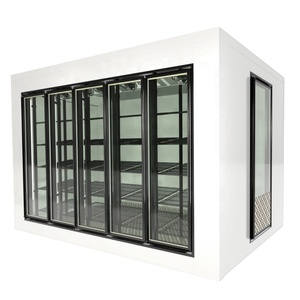
Commercial Walk-in Cooler Storage Room Industrial Cold Warehouse
Temp Range: -35°C to +10°C
Insulation Core: PU / PIR (100-200mm)
Compliance: HACCP / ISO9001
Direct factory-supplied refrigeration engineering, modular storage facilities, and specialized thermal containment shipping solutions built for global trade compliance.
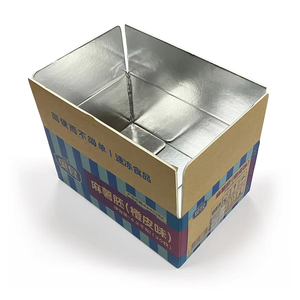
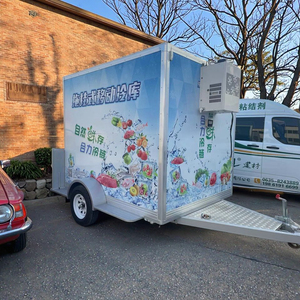
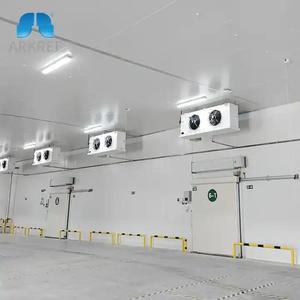
Backed by over two decades of global logistics mastery, FMC licensed NVOCC management, and comprehensive manufacturing integration.
An engineering and strategic procurement framework for global enterprises navigating thermal compliance, structural safety, and cross-border freight integration.
Global supply chains have arrived at a critical juncture. Modern cross-border commerce demands unprecedented precision in temperature-controlled logistics, driven by tightening international regulations (such as FDA 21 CFR Part 11, EU GDP guidelines, and HACCP compliance) and growing consumer demand for fresh produce, biopharmaceuticals, and high-value chemical reagents. Maintaining continuous thermal integrity across long-haul multimodal routes—spanning factory floor, container staging yards, air freight transshipment, and last-mile urban distribution centers—requires an integrated approach combining structural engineering with end-to-end logistics execution.
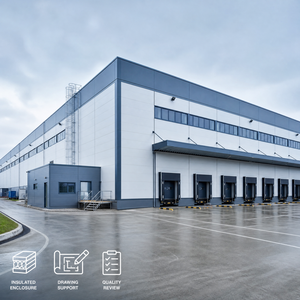
Standard logistics practices often treat cold storage facilities and freight forwarding as isolated supply chain segments. However, modern high-efficiency supply chains require structural hardware—such as modular polyurethane (PUR) or polyisocyanurate (PIR) insulated cold rooms and structural steel logistics centers—to synchronize directly with global transport nodes. By eliminating thermal bridge risks and minimizing transit delays through FMC-licensed NVOCC freight scheduling, enterprise buyers can drastically lower operating expenses, mitigate product loss, and achieve long-term supply chain resilience.
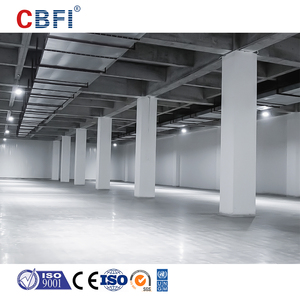
Thermal bridging at panel joints can increase total HVAC energy consumption by up to 28% over a facility's operational lifecycle. Implementing tongue-and-groove structural panel locks with continuous dual-gasket sealing ensures thermal conductivity ($\lambda$) remains below $0.020 \text{ W/m}\cdot\text{K}$, maximizing structural insulation efficiency under ambient temperatures up to +45°C.
Choosing the optimal insulation core is critical when engineering commercial walk-in freezers, multi-storey cold storage facilities, or transport containers. The matrix below outlines key engineering metrics across primary insulation materials used in export-grade supply chain projects:
| Insulation Core Material | Density (kg/m³) | Thermal Conductivity ($\text{W/m}\cdot\text{K}$) | Fire Performance Rating | Moisture Resistance | Primary Supply Chain Application |
|---|---|---|---|---|---|
| Polyisocyanurate (PIR) | 40 - 45 | 0.020 - 0.022 | B1 / Class 1 (Fire Retardant) | > 98% Closed Cell Ratio | Mega Industrial Cold Warehouses, High-Rise Steel Centers |
| Polyurethane (PUR) | 38 - 42 | 0.022 - 0.024 | B2 Standard Commercial | > 95% Closed Cell Ratio | Commercial Walk-in Freezers, Prefabricated Modular Rooms |
| Extruded Polystyrene (XPS) | 32 - 38 | 0.028 - 0.030 | B2 / B3 Rated | High Compression / Moisture Resistant | Cold Room Floor Insulation, Heavy Equipment Underlayment |
| Vacuum Insulation Panel (VIP) | 180 - 220 | 0.004 - 0.006 | A1 Non-Combustible Core | 100% Sealed Barrier Envelope | Ultra-Low Temp Biopharmaceutical Transport, Foil Mailers |
Critical shifts shaping global sourcing, factory export models, and logistics infrastructure investments over the next decade.
As land values rise in major metropolitan port corridors, procurement is shifting rapidly toward multi-storey, high-rise steel cold storage distribution centers. Utilizing Automated Storage and Retrieval Systems (AS/RS), vertical automated facilities increase storage density per square meter by up to 300% while cutting refrigeration footprint costs.
International environmental mandates are accelerating the phase-out of high Global Warming Potential (GWP) hydrofluorocarbons (HFCs). Modern cold chain projects specify natural refrigerants such as Ammonia ($\text{NH}_3$), Carbon Dioxide ($\text{CO}_2$/R-744), and R-290. Factory-assembled compressor racks are now optimized for ultra-low power consumption and zero-ozone-depletion operation.
Real-time sensory tracking integrated into containerized walk-in units and insulated packaging gives logistics operators live visibility into temperature, humidity, door openings, and structural vibration. Automated alerts enable proactive rerouting before thermal degradation occurs, protecting cargo value across sea and air transits.
Conventional brick-and-mortar warehouse construction is being replaced by prefabricated, modular cold storage buildings. Pre-engineered structural steel frames combined with cam-lock insulated panels reduce field installation time by over 60%, allowing commercial operators to scale storage capacity rapidly to meet shifting market demands.
Leading industrial exporters now bundle physical infrastructure manufacturing with licensed NVOCC freight forwarding, customs clearance, and bonded air/ocean warehousing. This unified service model eliminates middleman handoffs, optimizes load factors, and significantly reduces total cost of ownership (TCO) for global enterprise buyers.
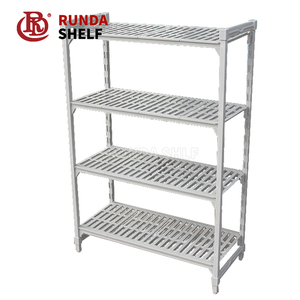
Modern refrigerated logistics facilities utilize heavy-duty drive-in, push-back, and shuttle racking systems built from low-temperature alloy steels. Designed to withstand extreme thermal cycles without structural embrittlement, these systems maximize volumetric efficiency and safeguard operational teams.
Direct engineering and operational answers to common questions asked by supply chain managers, warehouse directors, and international buyers.
Established in 1999, JH Logistics combines heavy-duty industrial cold storage manufacturing with licensed global freight forwarding into a unified supply chain solution.
As a fully licensed NVOCC and international freight forwarder, we maintain direct carrier service contracts with top ocean lines and air cargo fleets. We secure guaranteed vessel allocation, streamlined customs clearances, and competitive ocean rates across major global trade corridors.
Our infrastructure includes 70,640+ sq ft of state-of-the-art warehouse space and 161,435+ sq ft of secure yard capacity centered near major gateway ports in Carson, California. Featuring TSA-certificated Air Bonded Storage, we offer secure duty-deferred holding and rapid transshipment options.
Unlike traditional forwarders who only move boxes, we manage structural cold room design, thermal panel manufacturing, heavy racking production, and international delivery under a single accountability framework. Our factory-direct export model eliminates agent markups and guarantees structural precision.
Consult with our engineering and logistics specialists today. Get tailored factory quotes, structural panel designs, and comprehensive ocean/air freight schedules for your project.