Factory-direct engineered refrigeration modular structures, insulated freight containers, and high-capacity storage racks customized for Nigerian environmental conditions.
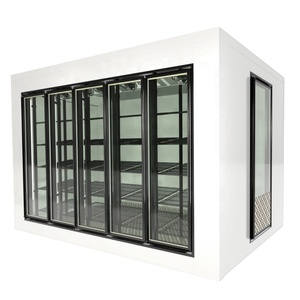
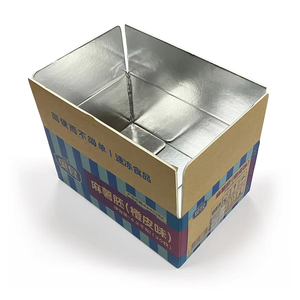
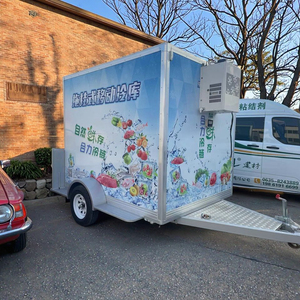
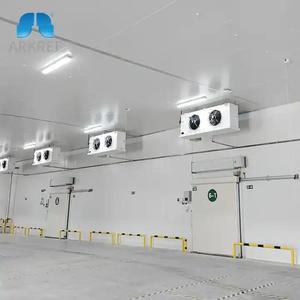
The Federal Republic of Nigeria represents Africa’s largest market economy, serving as the primary commercial engine for West Africa. However, cross-border shippers and local industrial developers face acute operational bottlenecks: maritime port congestion at Apapa and Tin Can Island, fluctuating electrical grid reliability, high ambient humidity in coastal zones like Lagos and Port Harcourt, and stringent regulatory oversight under the Standards Organisation of Nigeria Conformity Assessment Program (SONCAP) and NAFDAC.
To successfully import, secure, and distribute high-value merchandise—ranging from temperature-sensitive pharmaceuticals and perishable agro-commodities to expensive telecommunication infrastructure and consumer electronics—enterprises require an integrated end-to-end factory exporter and NVOCC logistics framework. As an overseas manufacturing partner backed by licensed NVOCC freight operations and custom cold-room fabrication plants, JH Logistics bridges the gap between global origin factories and Nigerian regional distribution hubs.
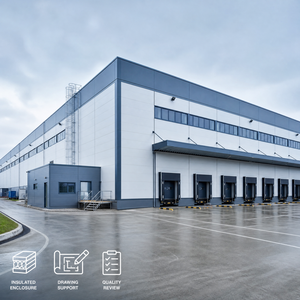
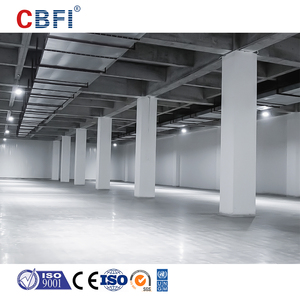
Standard commercial refrigeration systems routinely fail when deployed in West Africa due to extreme solar radiation loads, power surges, and ambient temperatures exceeding 45°C. Our industrial prefab cold storage warehouses and modular walk-in freezer rooms utilize continuous-injection Polyisocyanurate (PIR) and Polyurethane (PUF) sandwich panels with densities of $42 \text{ kg/m}^3$ or higher, achieving an ultra-low thermal conductivity rating of $\lambda \le 0.022 \text{ W/m}\cdot\text{K}$.
| Engineering Dimension | Standard Commercial Specification | JH Industrial Nigeria-Tropicalized Standard | Operational Benefit |
|---|---|---|---|
| Insulation Core | Standard EPS / Low-density PUR | 42-45 kg/m³ High-Density PIR (Cam-Lock Integrated) | Zero thermal bridging, self-extinguishing fire rating (B1 class). |
| Refrigeration Racks | Single Hermetic Compressors | Multi-compressor Bitzer/Copeland Racks with Inverters | 50% power savings, seamless redundancy against single-point failure. |
| Power Resiliency | Direct Grid Reliance | Automatic Dual Generator Switch + Off-Grid Solar PV Ready | Uninterrupted 24/7 cooling despite local TCN power grid drops. |
| Corrosion Protection | Standard Painted Galvanized Steel | 0.6mm Stainless Steel / Marine-Grade Anti-Salt Coating | Prevents rusting in high-salinity coastal environments (Lagos/Calabar). |
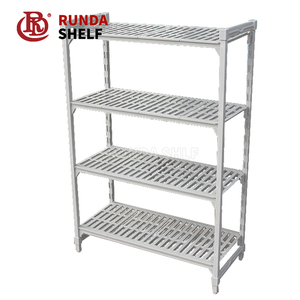
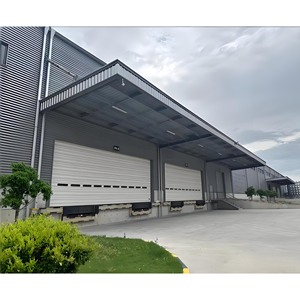
Furthermore, structural steel frame modules for multi-storey high-rise urban logistics facilities are hot-dip galvanized to withstand saline atmospheric corrosion in coastal maritime cities. Integrated heavy-duty multi-level pallet rack systems are mathematically engineered for seismic stability and dynamic fork-truck loading stresses, ensuring high density vertical volume utilization where metropolitan industrial real estate commands premium valuation.
Different commercial regions across Nigeria present distinct supply chain and cold infrastructure requirements. Our overseas factory supply chain model combined with localized technical installation teams delivers bespoke solutions tailored to localized trade corridors:
NAFDAC-compliant $+2^\circ\text{C to }+8^\circ\text{C}$ temperature-controlled walk-in clean rooms deployed in Abuja, Ikeja, and Port Harcourt for vaccine storage and biological import distribution.
Multi-unit prefab freezing rooms positioned near agricultural belts in Kano, Kaduna, and Benue to flash-freeze horticultural produce and seafood for domestic trade and international export.
Multi-storey cold storage buildings tailored for dense commercial centers in Lagos Island and Lekki Free Zone, maximizing cubic storage volume per square meter of expensive land.
Integrated telemetry, tamper-proof containerized coolers, and air-bonded storage units designed to secure telecom gear, luxury goods, and electronics against pilferage during transit.
Navigating the Nigerian supply chain landscape requires foresight into regulatory evolutions and regional economic policies. Over the next decade, three macro dynamics will dictate logistics profitability and operational success:
The African Continental Free Trade Area (AfCFTA) is converting Nigeria into a central hub for transshipments into landlocked Sahel nations (Niger, Chad). Standardized containerized cold rooms (ARKREF series) allow seamless intermodal rail-to-truck border transport without breaking thermal chain integrity.
As fossil fuel subsidies shift, energy cost optimization is critical. Modern logistics installations in Nigeria are standardizing on integrated Lithium Battery Energy Storage Systems (BESS) combined with rooftop PV panels to run variable-frequency refrigeration compressors autonomously.
The operational commissioning of Lekki Deep Sea Port combined with electronic call-up systems (Eto) is shifting industrial warehousing nodes toward the Lekki Free Trade Zone corridor. Scalable prefab steel buildings offer rapid 90-day site construction turnarounds for swift market entry.
Direct answers to common engineering, regulatory, and logistics queries from Nigerian enterprise buyers, importers, and project engineers.
All our manufactured cold room panels, structural steel buildings, and refrigeration racks are fully compliant with International Electrotechnical Commission (IEC) and ISO standards. We handle factory auditing, Product Certificate (PC) issuance, and final SONCAP Certificate (SC) clearance through accredited testing agencies (e.g., SGS, Cotecna, Intertek) prior to port dispatch, ensuring smooth Form M processing and customs release at Nigerian ports.
Yes. Our industrial units feature soft-start variable frequency drives (VFD) and intelligent PLC controllers that limit peak starting currents by up to 60%. This reduces generator sizing requirements and allows direct synchronization with hybrid solar PV microgrids, significantly lowering ongoing Diesel GenSet fuel overheads in off-grid or weak-grid locations.
Ocean freight transit from our global manufacturing center to Apapa, Tin Can, or Onne ports typically ranges from 28 to 35 days. Custom engineering and modular fabrication require 15 to 20 days. For urgent high-value electronics or critical pharmaceutical units, our NVOCC air freight export department provides express charter and bonded air freight options delivering within 5 to 7 days directly to Murtala Muhammed International Airport (LOS) or Nnamdi Azikiwe International Airport (ABV).
Yes. We offer factory overseas supply integrated with on-site technical support. We send lead structural and refrigeration engineers for site supervision, installation commissioning, and operator training across major industrial hubs (Lagos, Ogun State, Port Harcourt, Abuja, Kano). Local warranty spare parts stock is maintained for rapid component replacement.
Combining over two decades of global logistics mastery with specialized engineering manufacturing, JH Logistics provides an unmatched competitive advantage for high-value goods distribution into West Africa:
Operating as a fully licensed Non-Vessel Operating Common Carrier (NVOCC) since 1999. We manage air bonded warehouse facilities, duty-deferred cargo staging, and secure customs brokerage in-house.
Eliminate middleman markups. We manufacture walk-in cold rooms, insulated boxes, and heavy-duty steel rack systems directly in our owned industrial manufacturing plants.
Over 22,550 TEU handled in ocean shipping and 22,458+ tons of air freight. Decades of specialized experience mitigating West African port clearing delays and transport risks.