High-performance insulated structures, walk-in coolers, and heavy-duty logistics systems optimized for Peruvian last-mile delivery chains.
The last-mile delivery ecosystem in Peru is undergoing a profound structural transformation. Driven by rapid urban expansion across Metropolitan Lima (encompassing key commercial hubs like San Isidro, Miraflores, and Callao), along with high-growth regional hubs such as Arequipa, Trujillo, Chiclayo, and Piura, logistics operators face unprecedented demands for rapid, temperature-controlled product fulfillment.
Peru's complex geography—spanning coastal desert corridors, high-altitude Andean mountain ranges (exceeding 3,500 meters above sea level), and tropical Amazonian territories—creates unique micro-climate challenges. Maintaining an unbroken temperature range ($+2^\circ\text{C}$ to $+8^\circ\text{C}$ for biopharmaceuticals, $-18^\circ\text{C}$ to $-25^\circ\text{C}$ for frozen agro-exports and seafood) during urban transit requires modular cold storage infrastructure, high-density insulated shipping packaging, and seamless multi-modal cargo connectivity.
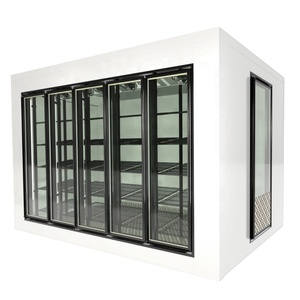
Metropolitan Lima houses over 10 million residents. Severe traffic bottlenecks require decentralized urban micro-fulfillment centers equipped with compact, high-rise cold room panels to ensure sub-60-minute delivery SLAs.
Deliveries ascending into the Andes encounter significant barometric pressure drops and thermal shifts. Structural thermal panel enclosures must feature high-density Polyisocyanurate (PIR) cores with sealed cam-lock mechanisms.
The inauguration of the Port of Chancay shifts Pacific-Latin American maritime routes. Exporters require automated multi-storey cold storage units directly connected to Callao and Chancay transit corridors.
Deploying international-standard thermal engineering to meet localized operational demands in South America.
Peru is a powerhouse exporter of fresh produce, leading global markets in blueberries, avocados, fresh table grapes, and asparagus. The journey from primary farming valleys (Ica, La Libertad, Piura) to dispatch points at Jorge Chávez International Airport (LIM) or Callao Port requires continuous thermal integrity.
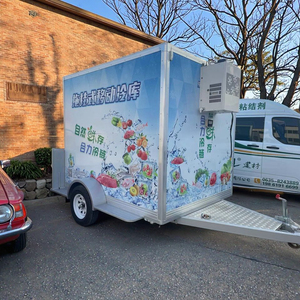
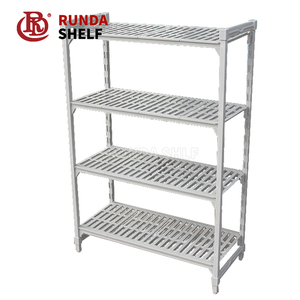
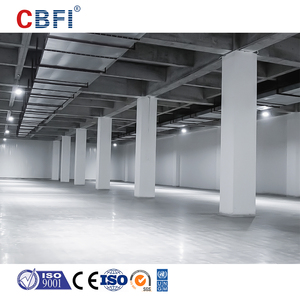
Our prefabricated walk-in cold storage rooms and mobile container coolers enable field-side rapid pre-cooling (forced-air cooling down to $0.5^\circ\text{C}$). This preserves respiration rates and shelf life before long-haul transport. Modular cold storage facilities integrated with multi-level heavy-duty racking maximize vertical density in limited port-adjacent logistics yards.
Compliance with DIGEMID (Dirección General de Medicamentos, Insumos y Drogas) regulations demands strict validation of thermal performance. Last-mile distribution of vaccines, insulin, and blood products across Peru's 24 regions requires active and passive cold boxes.
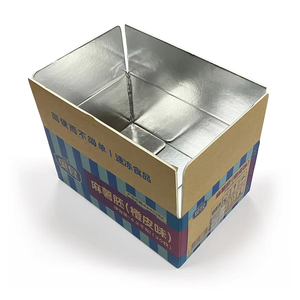
Utilizing high-efficiency RDY aluminum foil corrugated cardboard insulated shipping boxes coupled with Phase Change Materials (PCM), logistics suppliers maintain $+2^\circ\text{C}$ to $+8^\circ\text{C}$ integrity for up to 96 hours. This holds true even when transit vehicles navigate extreme ambient heat along the Northern Coastal Pan-American Highway.
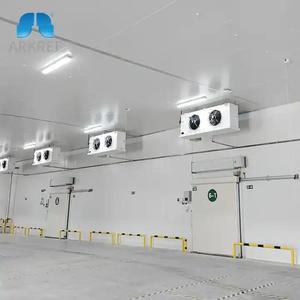
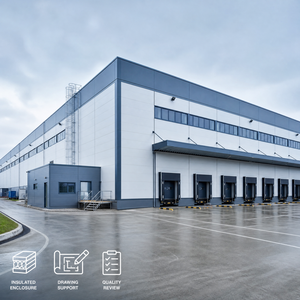
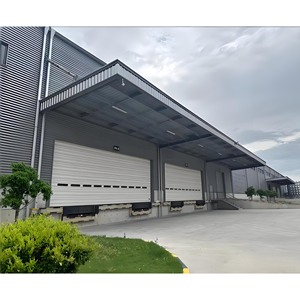
Supermarket chains, dark stores, and delivery platforms operating in Lima (Surco, La Molina, San Borja) are rapidly adopting urban vertical cold storage. Multi-storey high-rise steel structure cold chain warehouses allow operators to store high-SKU inventories within dense metropolitan footprint limits.
Modular walk-in freezers equipped with dual-stage scroll compressor units provide zero-latency restocking for last-mile delivery couriers, ensuring ice cream, frozen proteins, and dairy products reach end consumers without micro-thawing.
Major mining operations located in remote highlands (such as Ancash, Apurímac, and Cajamarca) require robust food logistics to support large workforces. Integrated container cold rooms (ARKREF containerized series) provide plug-and-play refrigeration capable of operating reliably on generator power under extreme weather variations and seismic activity.
Selecting the optimal equipment configuration based on thermal insulation specs, volumetric capacity, and localized Peruvian operational conditions.
| Equipment / Solution Type | Thermal Insulation Rating | Target Temperature Range | Primary Peruvian Use Case | Structural Footprint & Scalability |
|---|---|---|---|---|
| Prefab Walk-in Cold Rooms | 100mm - 150mm PIR Panel ($\lambda = 0.022 \text{ W/m}\cdot\text{K}$) | $-25^\circ\text{C}$ to $+10^\circ\text{C}$ | Agro-processing hubs in Ica/Trujillo & Urban Dark Stores | Custom modular footprint; scalable up to 10,000+ $\text{m}^2$ |
| ARKREF Container Coolers | 75mm ISO-PIR Injected Polyurethane | $-30^\circ\text{C}$ to $+15^\circ\text{C}$ | Remote mining camps & Inter-valley highway transport | Standardized 20ft / 40ft High Cube ISO footprint |
| Multi-Storey Steel Cold Warehouses | Double-skin Insulated Steel Panels | $-20^\circ\text{C}$ to $+4^\circ\text{C}$ | Metropolitan Lima central distribution hubs (Callao/Chancay) | High-rise vertical layout; maximum land-use efficiency |
| RDY Cardboard Cooler Boxes | Multi-layer Aluminum Foil & Corrugated Air Insulated | Passive Cooling ($0^\circ\text{C}$ to $+8^\circ\text{C}$ w/ Gel Ice) | Last-mile pharma delivery & Direct-to-Consumer e-commerce | Ultra-lightweight, collapsible, single-use or reusable packaging |
Key macro trends shaping procurement, regulatory compliance, and thermal engineering investments over the next decade.
The inauguration of the deep-water Port of Chancay establishes a direct maritime route between South America and Asia-Pacific markets. This infrastructure development demands rapid construction of regional cold storage logistics hubs along the Central Pacific coast. Suppliers providing prefabricated, quick-assembly thermal warehouses are critical to preventing port bottlenecks.
Regulatory authorities in Peru (SENASA for agricultural biosecurity and DIGEMID for pharmaceuticals) have elevated traceability requirements. Modern last-mile operators must incorporate real-time IoT temperature telemetry, micro-zone logging, and redundant refrigeration back-ups into all modular cold rooms and transport boxes.
Energy costs in remote coastal and desert locations drive demand for energy-efficient cold storage. Advanced cold room units utilizing variable-frequency inverter compressors, low-GWP refrigerants (such as R290 and R448A), and direct solar PV integration reduce grid dependency by up to 35%.
Operating as a licensed NVOCC and full-service logistics infrastructure supplier since 1999, our organization bridges the gap between high-specification cold chain manufacturing and end-to-end international freight delivery. We don't just export cold storage hardware—we design, ship, clear customs, and support deployment across Peru.
From 10,000 square meter mega-cold storage warehouses to specialized aluminum foil corrugated insulated containers, our manufacturing plants produce engineered systems matching exact structural, seismic, and thermal requirements.
With over 22,550 TEU ocean freight handled annually, 70,640 SQFT of controlled warehousing, and 161,435 SQFT of yard capacity, we manage complete export documentation, ocean transit to Callao/Chancay, and inland trucking to job sites across Peru.
Practical advice for Peruvian logistics managers, supply chain directors, and cold storage project developers.
Whether you require modular cold rooms for urban micro-fulfillment, high-density warehouse racking, containerized mobile coolers, or customized insulated export boxes, our team delivers factory-direct quality with full freight support.