Explore our industrial-grade cold room modules, thermal insulated shipping boxes, and heavy-duty logistics infrastructure deployed across Chile and international maritime trade corridors.
Chile's unique geography—spanning over 4,200 kilometers along South America’s Pacific coast—presents both strategic maritime trade advantages and complex logistics challenges. As a globally recognized export powerhouse for high-value agricultural produce (such as fresh cherries, blueberries, and table grapes), salmonids, wine, and specialized mining equipment, the demand for flexible, cost-efficient, and thermally stable logistics is critical. For medium-sized exporters and specialized manufacturers, booking a Full Container Load (FCL) is not always economically viable or operationally practical. This is where Less Than Container Load (LCL) Refrigerated Shipping and modular cold infrastructure serve as vital economic drivers.
Operating as an established NVOCC (Non-Vessel Operating Common Carrier) and specialized manufacturer since 1999, JH Logistics integrates containerized cold storage engineering with precision ocean freight consolidation. Our specialized Chilean shipping corridors connect key Chilean ports—including Valparaíso, San Antonio, Coronel, and the Iquique Free Trade Zone (ZOFRI)—with North American, European, and Asian Pacific trade networks. By combining factory-direct modular cold rooms, polyurethane (PU/PIR) insulated paneling, and advanced thermal cardboard containers with certified LCL consolidation, we eliminate cargo thermal degradation, reduce landside overhead, and maximize volumetric payload efficiency.
How specialized LCL freight consolidation and modular cold storage solve operational bottlenecks across Chile's key industrial zones.
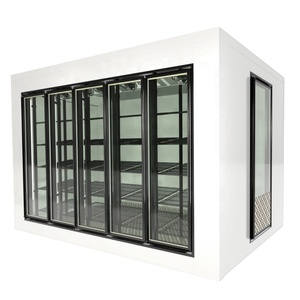
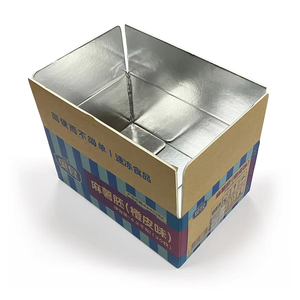
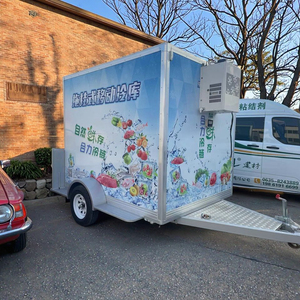
During peak harvest seasons in the O'Higgins and Maule regions, boutique cherry and berry growers face severe container allocation shortages. Our modular prefab walk-in cold rooms are rapidly deployed directly at regional collection sites to pre-cool harvested fruit down to 0.5°C within hours. The produce is then packed using RDY Aluminum Foil Corrugated Cardboard Cooler Boxes and consolidated into LCL reefer containers at San Antonio port, allowing small-scale orchards to access premium trans-Pacific markets without the financial commitment of full container leases.
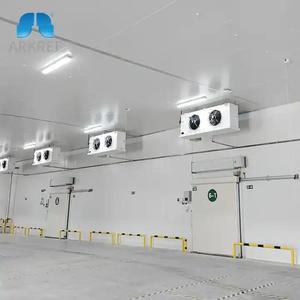
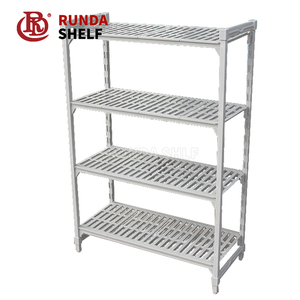
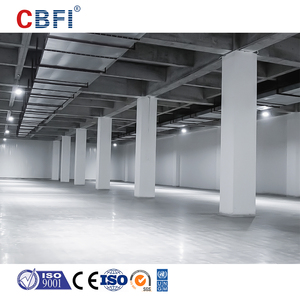
Chile’s southern aquaculture sector requires stringent sub-zero temperature preservation (-18°C to -25°C) from harvest to final buyer delivery. By installing integrated ARKREF Containerized Cold Rooms near processing facilities in Puerto Montt, producers maintain an unbroken thermal chain. Products are stored on multi-level heavy-duty steel shelving systems before undergoing LCL ocean consolidation via Puerto Angamos or San Antonio, guaranteeing international food safety compliance (HACCP / FDA) for sea-freight shipments.
In northern mining districts (Atacama and Antofagasta), copper extraction operations frequently require urgent, specialized replacement parts manufactured overseas. Utilizing our licensed NVOCC networks, heavy machinery parts are imported as consolidated LCL shipments through the Free Trade Zone of Iquique (ZOFRI). We utilize heavy-duty pallet racking and bonded air/ocean storage facilities to streamline customs clearance, eliminating operational downtime for remote mining sites.
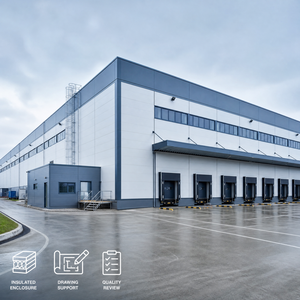
With urban industrial real estate prices rising in Santiago, logistics operators are transitioning from sprawling single-story warehouses to High-Rise Steel Multi-Storey Cold Storage Buildings. Our structural prefabricated steel designs enable maximum vertical space utilization, integrating multi-level automated racking and precise multi-zone temperature controls (+4°C ambient, -20°C freezer) for last-mile distribution across South America.
Data visualization comparing operational parameters for temperature-controlled freight exported from Chile.
| Logistics Parameter | Standard FCL Reefer Shipping | JH Logistics LCL Consolidated Reefer | Modular Cold Unit + LCL Hybrid |
|---|---|---|---|
| Minimum Volume Threshold | 28 - 65 CBM (Fixed Container) | 1 - 15 CBM (Pay-per-use volume) | Scalable (1 CBM to Multi-Room) |
| Thermal Insulation Integrity | Container Wall Standard (R-13) | Thermal Barrier Packaging (R-22+) | 100-150mm PIR Panel (R-30+) |
| Capital Expenditure (CapEx) | High (Full booking overhead) | Low (Shared container costs) | Optimized (Prefab factory modularity) |
| SAG / Customs Inspection Risk | Container-wide hold if flagged | Itemized SKU bonded clearance | Pre-inspected bonded warehouse transfer |
| Suitability for Chilean Exporters | Large-scale industrial exporters | SMEs, Seasonal Fruit & Specialty Foods | Regional Hubs, Off-grid Farms & Mining |
As global environmental mandates tighten and supply chains demand greater traceability, Chile's export infrastructure is undergoing three structural shifts:
Established in 1999, JH Logistics is a fully licensed NVOCC (Non-Vessel Operating Common Carrier) and global freight forwarder headquartered in Carson, California, with extensive operational nodes across Latin America. We bridge the gap between manufacturing engineering and international transport logistics.
Unlike pure freight brokers, we manufacture and supply specialized refrigeration hardware—ranging from commercial walk-in freezer warehouses and insulated cardboard shipping boxes to heavy-duty multi-level warehouse racking. Operating over 70,640 SQFT of WMS-managed bonded warehouse space and 161,435 SQFT of container yard capacity, our global logistics network handles over +22,550 TEUs of ocean cargo and +22,458 tons of air freight annually. We provide Chilean businesses with transparent customs brokerage, SAG inspection assistance, and flexible door-to-door LCL consolidated services.
Clear, technical answers to common queries regarding LCL freight consolidation, customs clearance, and cold storage manufacturing.
LCL refrigerated shipping consolidates smaller shipments from multiple growers into a single multi-temperature reefer container. Cargo is securely segregated using insulated thermal barriers and RDY aluminum foil corrugated boxes to prevent cross-contamination while maintaining precise temperature profiles (e.g., 0°C to +2°C) throughout ocean transit.
Importing prefabricated cold rooms or steel warehousing structures into Chile requires a Commercial Invoice, Bill of Lading (B/L), Packing List, Certificate of Origin (to leverage Free Trade Agreements), and electrical safety certification (SEC) for refrigeration compressors. JH Logistics handles complete import documentation and customs clearance.
LCL sea freight is calculated based on Revenue Tons (W/M), which evaluates whichever is greater: actual gross weight in metric tons or volumetric measurement in Cubic Meters (CBM). 1 CBM equals 1,000 kg. Our engineering team optimizes cargo palletization to minimize volumetric space and reduce overall freight costs.
Yes. Our modular cold storage warehouses are manufactured with hot-dip galvanized steel frames and high-density Polyurethane (PU/PIR) sandwich panels. They are engineered to withstand high wind loads, coastal marine corrosion, and seismic activity compliant with Chilean structural building codes.
Ocean transit time from North American or Asian manufacturing hubs to main Chilean ports (Valparaíso/San Antonio) typically ranges from 22 to 32 days. Port handling, SAG inspection, and final inland trucking to Santiago require an additional 3 to 5 business days.
Yes. Sub-zero temperatures demand heavy-duty powder-coated or galvanized steel racking that resists thermal contraction stress and rust. Proper racking alignment ensures uniform cold air airflow around stored pallets, maintaining consistent ambient temperatures throughout the facility.
Speak directly with our logistics engineers and NVOCC specialists to design a customized LCL freight consolidation program or procure factory-direct cold storage infrastructure.
Contact Us