Factory-direct thermal protection solutions tailored for Vietnam's tropical supply chain hubs, seaport cold storage, and export logistics corridors.
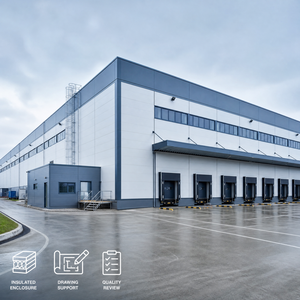
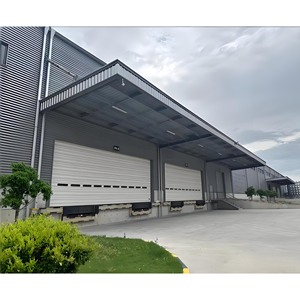
Ho Chi Minh City (HCMC) serves as the primary engine for Vietnam's rapidly expanding international trade ecosystem. Positioned strategically at the intersection of maritime shipping routes, inland waterway networks, and major highway arteries connecting the industrial zones of Binh Duong, Dong Nai, and Long An, HCMC demands high-performance, resilient multimodal supply chain solutions. As global manufacturing continues to migrate into Southeast Asia, multinational corporations and local exporters face complex operational demands requiring seamless transfers between ocean vessels, river barges, air freighters, and temperature-controlled trucking fleets.
The core challenge of operating within Southern Vietnam's multimodal corridor lies in managing ambient environmental stress while maintaining unbroken chain custody. With average annual temperatures hovering between 28°C and 35°C combined with relative humidity exceeding 85%, temperature-sensitive exports—such as fresh aquaculture from the Mekong Delta, high-value electronics from the Saigon Hi-Tech Park (SHTP), and perishable pharmaceutical products—are subject to immediate thermal degradation if supply chain handoffs experience latency.
Understanding the infrastructural hierarchy of Southern Vietnam is essential for designing cost-effective, high-reliability supply chains:
Solving localized infrastructure constraints with modular engineering, thermal insulation, and multi-temperature storage technology.
Mekong Delta frozen pangasius and shrimp processing facilities utilize our modular 10,000 sqm walk-in blast freezers (-30°C to -40°C) coupled with containerized reefer units for barge-to-ship transshipment at Cat Lai and Cai Mep ports, preserving product texture and weight without thermal drip loss.
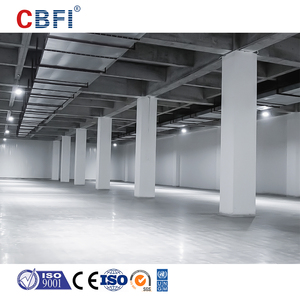
Cleanroom-grade cold storage buildings in Saigon Hi-Tech Park maintain precise temperature control (20°C ± 2°C) and relative humidity control (<50% RH) to protect sensitive integrated circuits and microchips from tropical moisture ingress prior to air transport via SGN airport.
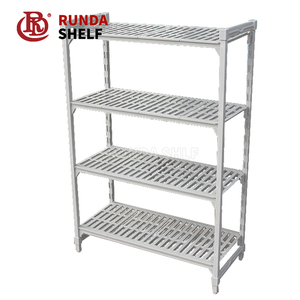
To combat urban density and real estate constraints in HCMC's inner districts, multi-storey vertical high-rise cold storage facilities equipped with heavy-duty galvanized racking maximize cubic storage volume per square meter of footprint while serving e-commerce fresh food delivery networks.
Designing thermal insulation and refrigeration infrastructure in Southern Vietnam requires strict engineering compliance to mitigate intense solar radiation (solar heat gain coefficients exceeding 700 W/m²) and humidity-induced moisture vapor drive. Standard commercial refrigeration systems often suffer catastrophic energy efficiency losses when subjected to HCMC's ambient conditons without thermal barrier optimization.
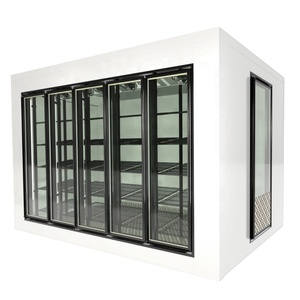
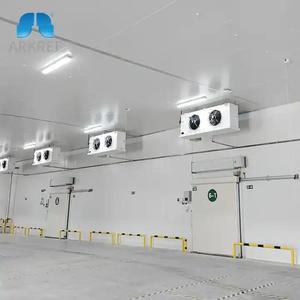
Our prefabricated steel structures and modular walk-in cold rooms utilize continuous-line manufactured Polyisocyanurate (PIR) and Polyurethane (PU) sandwich panels featuring high closed-cell ratios (>95%). This structural density prevents water vapor absorption, which is the primary cause of insulation degradation in tropical logistics facilities.
| Application Profile | Target Temp (°C) | Recommended Panel Thickness | Thermal Conductivity (λ) | Core Density | Vapor Barrier Tech |
|---|---|---|---|---|---|
| Chilled Produce Distribution | 0°C to +5°C | 100 mm PIR Panel | ≤ 0.021 W/m·K | 40 - 42 kg/m³ | Double embossed aluminum facing |
| Frozen Food Storage Hub | -18°C to -25°C | 150 mm PIR Panel | ≤ 0.020 W/m·K | 42 - 45 kg/m³ | 0.5mm Hot-dip galvanized steel |
| Deep Freeze Seafood Vault | -28°C to -35°C | 200 mm Modular PU Panel | ≤ 0.019 W/m·K | 45 - 48 kg/m³ | Cam-lock joint with silicone sealant |
| Pharmaceutical Cold Chain | +2°C to +8°C | 120 mm Cleanroom PIR | ≤ 0.021 W/m·K | 42 kg/m³ | Antimicrobial powder-coated steel |
To ensure high Energy Efficiency Ratios (EER) and operational redundancy, systems installed in the HCMC logistics sector employ multi-compressor rack configurations (Bitzer, Copeland, or Danfoss scroll/screw compressors) featuring variable frequency drives (VFDs). Under partial load conditions during cooler night cycles in HCMC, VFD controllers step down motor speeds, reducing electrical power consumption by up to 28% compared to fixed-speed legacy compressors.
The Vietnamese logistics market is undergoing a structural transition driven by government master plans, foreign direct investment (FDI), and stringent global sustainability standards. Exporters operating out of Ho Chi Minh City are aligning with several key macro trends:
Cat Lai Port is operating near maximum design capacity. As a result, the Ba Ria-Vung Tau province along the Cai Mep estuary has become the strategic focal point for megaship container terminals. The construction of the Phuoc An Bridge and the Bien Hoa-Vung Tau Expressway will directly connect Dong Nai and HCMC industrial zones to Cai Mep deep-water terminals without entering inner HCMC city limits.
International buyers in North America and the European Union increasingly require Scope 1, 2, and 3 carbon accounting for imported goods. Modern cold storage warehouses across Binh Duong and HCMC are retrofitting rooftop solar photovoltaic (PV) arrays. A typical 10,000 sqm warehouse roof in Southern Vietnam generates approximately 1.2 to 1.5 MWp of solar electricity, offsetting up to 40% of daytime refrigeration energy consumption.
Industrial land prices in key HCMC logistics hubs (such as Binh Chanh, Nha Be, and Thu Duc) have risen significantly over the past decade. To optimize land use, suppliers are shifting from traditional single-storey warehouses to high-rise vertical cold chain warehouses reaching heights of 25 to 40 meters. Automated crane-driven AS/RS systems operating inside oxygen-reduced, ultra-low temperature environments eliminate human error and increase pallet storage density by up to 250% per square meter.
Combining global NVOCC authority with local operational boots on the ground in Southern Vietnam since 1999.
Founded in 1999, JH Logistics operates as a fully licensed Non-Vessel Operating Common Carrier (NVOCC). We maintain direct service contracts with major ocean container lines (Maersk, MSC, COSCO, ONE, CMA CGM), securing priority space allocations and competitive FCL/LCL spot rates for transpacific and intra-Asia trade lanes originating in HCMC ports.
Our operational footprint includes over 70,640 square feet of WMS-managed bonded warehousing and 161,435 square feet of secure container yard capacity. We handle complex cargo workflows including cross-docking, export palletizing, custom labeling, and duty-deferred bonded storage near air and sea gateways.
Our localized customs clearance specialists navigate Vietnam’s VNACCS/VCIS electronic customs EDI systems with precision. We assist clients with HS Code tariff classification, C/O (Certificate of Origin) forms under EVFTA, CPTPP, and RCEP agreements, and specialized sanitary inspection clearances for food items.
From specialized breakbulk equipment moving heavy machinery into local factories to time-critical air freight charters originating at Tan Son Nhat Airport (handling over 22,458 tons of air cargo annually), our single-source logistics management minimizes handoff friction and operational liability.
Contact our team of logistics specialists and refrigeration engineers to design an efficient, end-to-end multimodal transport or cold storage solution for your enterprise operations in Ho Chi Minh City.