High-specification OEM/ODM cold storage warehouses, insulated shipping containers, and heavy-duty structural racking designed for extreme tropical climates and rigorous industrial logistics.
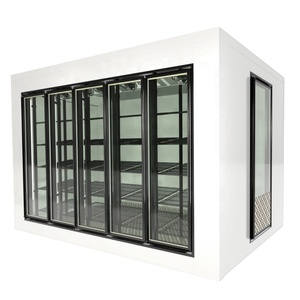
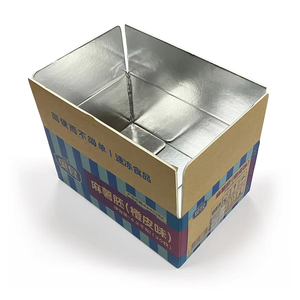
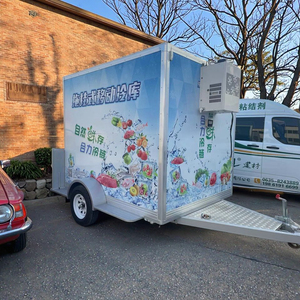
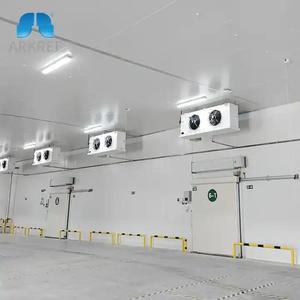
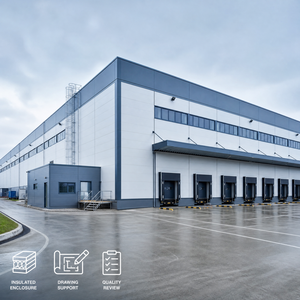
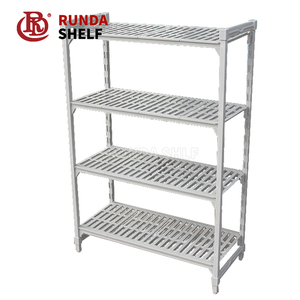
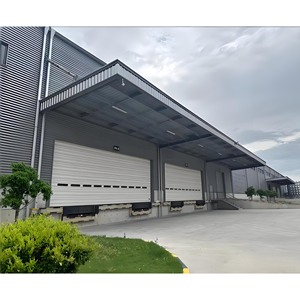
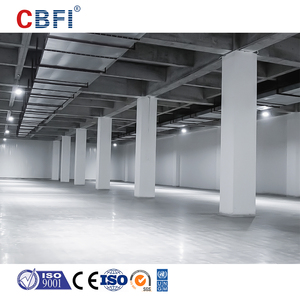
Navigating the cross-border distribution of hazardous materials (DG) and temperature-sensitive chemicals into Ghana requires an uncompromising alignment between structural engineering, international maritime safety codes, and West African environmental constraints. As a licensed NVOCC operator and specialized OEM/ODM manufacturer with global supply chain origins dating back to 1999, JH Logistics delivers custom-built refrigerated container systems, hazardous cargo logistics services, and modular cold warehouse infrastructure directly tailored to the operational realities of the Ghanaian corridor.
Freight movements originating from major global manufacturing hubs to Ghana's primary commercial gateways—Port of Tema and Port of Takoradi—encounter strict environmental and infrastructural hurdles. Successfully deploying temperature-controlled units and hazardous chemical storage requires solving four key variables:
Ghana's coastal belt features humidity levels consistently exceeding 85% with high salinity. Custom reefer boxes and prefabricated warehouse frames require specialized C5-M marine-grade anti-corrosion exterior coatings and hot-dip galvanized steel structural beams.
Unannounced power fluctuations require all OEM walk-in coolers and containerized units bound for Ghana to feature automatic dual-source transfer switches, integrated surge protection, and low-draw Copeland/Daikin scroll compressors compatible with heavy-duty diesel generators.
Ambient solar radiation in West Africa can heat standard steel container skins beyond 65°C. Our OEM insulated structures utilize high-density polyurethane (PUF) injection cores (42 kg/m³) with B1/B2 fire ratings to guarantee inner skin temperature stability.
Hazardous material freight moving through the Accra-Kumasi transport spine generally services gold mining activities (cyanide reagents, nitric acid), offshore oil fields in the Tano Basin, and agricultural production. JH Logistics manufactures and custom-configures ISO reefer containers and modular units built explicitly for IMDG (International Maritime Dangerous Goods) compliance across the following classes:
| Hazmat Class | Primary Industrial Application in Ghana | OEM Engineering & Storage Specification | Safety Compliance Standard |
|---|---|---|---|
| Class 2 (Gases) | LPG distribution, industrial refrigeration, offshore energy | Explosion-proof HVAC, ATEX Zone 1/2 fan motors, gas detection telemetry | ISO 1496/2, IATA-DGR Section 5 |
| Class 3 (Flammable Liquids) | Mining extraction solvents, paints, petroleum additives | Spill-containment sump flooring, spark-free stainless steel interior, emergency venting | IMDG Code Code 3.2, NFPA 30 |
| Class 5.1 / 5.2 (Oxidizers) | Gold ore leaching catalysts, industrial bleaching chemicals | Non-combustible PIR wall panels, isolated thermal sensors, dynamic air exchange | GSA Standards, ADR Regulation |
| Class 6.1 (Toxics) | Agro-chemical pesticides, active pharmaceutical ingredients (APIs) | Hermetically sealed door gaskets, negative-pressure bio-filters, remote monitoring | Ghana FDA / EPA Directive |
| Class 8 (Corrosives) | Battery acid, refinery processing reagents, industrial wash | FRP (Fiberglass Reinforced Plastic) floor liners, acid-resistant epoxy resin coatings | UN Portable Tank T1-T22 |
With the African Continental Free Trade Area (AfCFTA) Secretariat headquartered in Accra, Ghana has solidified its status as the commercial springboard for West Africa. Freight moving through Tema Port no longer serves solely national consumption; it acts as the primary transit corridor for landlocked nations including Burkina Faso, Mali, and Niger.
Key macro trends transforming procurement strategies for Ghanaian importers and industrial developers include:
JH Logistics provides complete design-to-delivery customization services for enterprise clients, engineering procurement firms (EPCs), and government agencies requiring specialized transport and storage equipment. Our factory engineering team manages the complete lifecycle:
Custom dimensions from 10ft compact mobile reefers to 10,000+ sqm industrial prefabricated steel cold storage warehouses. Multi-temperature zoning (e.g., dual-room freezer + chiller combinations) engineered into single container chassis.
Integration of Carrier Transicold, Thermo King, or Bitzer compressor racks. Optional hybrid solar-assisted power kits designed specifically to maintain critical internal temperatures during prolonged power outages in rural West Africa.
Remote IoT sensor integration tracking temperature, relative humidity, door-open alerts, and GPS location via cellular/satellite networks, fully compatible with Ghanaian logistics tracking software platforms.
Founded in 1999, JH Logistics operates as a fully licensed NVOCC (Non-Vessel Operating Common Carrier) and global freight forwarder. Combining multi-national logistics capabilities with dedicated overseas manufacturing, we eliminate middleman overhead while providing end-to-end liability coverage for high-value hazardous material and cold chain projects.
Direct contracts with major ocean carriers (Maersk, MSC, CMA CGM) ensuring guaranteed space allocations out of Asian and American ports directly into Tema and Takoradi.
Over 70,640 sqft of indoor bonded warehouse capacity and 161,435 sqft of heavy equipment staging yard space in strategic port hubs for pre-shipment staging and inspection.
By combining modular warehouse panel manufacturing with in-house logistics freight forwarding, we cut procurement costs by up to 22% compared to local middleman distributors.
Clearing hazmat equipment and containerized units via ICUMS (Integrated Customs Management System) in Ghana requires a detailed Commercial Invoice, Packing List, Bill of Lading, EPA (Environmental Protection Agency) Import Permit, Ghana Standards Authority (GSA) Certificate of Conformity, and Material Safety Data Sheets (MSDS) translated into English.
Yes. Our modular cold storage units engineered for Ghana feature 120mm to 150mm thick high-density polyurethane (PUF) insulation panels with a thermal conductivity of 0.022 W/m·K. They are designed to maintain internal temperatures of -20°C to +4°C even when outside ambient temperatures reach +45°C.
All OEM electrical systems exported to Ghana are configured for 380V/415V 3-Phase 50Hz operation and come equipped with heavy-duty phase protection relays, digital voltage monitoring regulators, and seamless automatic transfer switches (ATS) ready for generator linkage.
Production and custom engineering typically take 15–25 days depending on exact specs. Ocean transit via direct container vessel from our primary manufacturing facilities to Port of Tema averages 28–35 days. Inland haulage to site can be completed within 3–5 days after customs release.
Absolutely. For Class 3 flammable liquids and Class 2 gases, we offer certified ATEX Zone 1 and Zone 2 explosion-proof refrigeration units, spark-free interior electrical lighting, anti-static flooring, and external control panels.
Yes. As a full-service manufacturer and NVOCC ocean freight forwarder, we provide complete DDP (Delivered Duty Paid) or CIF (Cost, Insurance, Freight) solutions, taking single-source accountability for fabrication, international ocean transport, insurance, and local port clearance.
Consult with our senior logistics engineers today. We provide full technical drawings, thermal efficiency calculations, and door-to-door ocean freight schedules customized for your industrial facility in West Africa.
Inquire Now