As the primary gateway for transpacific trade, Greater Los Angeles represents the most sophisticated and high-volume freight corridor in North America. The convergence of the Port of Los Angeles and the Port of Long Beach—collectively processing over 16 million TEUs annually—demands a seamless, high-throughput inland transport matrix. Within this ecosystem, rail freight services factories & suppliers for Los Angeles provide the indispensable backbone that links maritime discharge points with Midwest, Sunbelt, and East Coast consumer markets.
Rail freight intermodal transport in Southern California is not merely a long-haul alternative; it is an optimized economic imperative. By utilizing the 20-mile Alameda Corridor rail expressway, Class I railroads such as Union Pacific (UP) and BNSF Railway bypass urban traffic congestion, routing intermodal container trains directly from port terminals to major intermodal yards including Hobart Yard in Commerce and the Los Angeles Transportation Center (LATC). For industrial suppliers, cold chain operators, and manufacturing entities, establishing factory-direct supply pipelines for specialized rail containers, refrigerated intermodal equipment, and modular cold storage facilities is essential to securing structural cost advantages.
JH Logistics, operating from our prime 70,640 sq ft warehouse and 161,435 sq ft yard facility in Carson, CA (2850 East El Presidio St), stands at the epicenter of this rail-to-road integration. Established in 1999 as a licensed NVOCC and full-service freight forwarder, our organization bridges the gap between overseas equipment manufacturers and domestic rail supply chains, ensuring regulatory compliance, thermal security, and rapid asset deployment across the Southern California logistics basin.
Managing perishable commodities, pharmaceuticals, and industrial components across double-stack rail networks requires specialized hardware designed to endure harsh dynamic stresses. Overseas factories and suppliers specializing in Los Angeles rail infrastructure engineer equipment to satisfy stringent Association of American Railroads (AAR) standards and California Air Resources Board (CARB) environmental mandates.
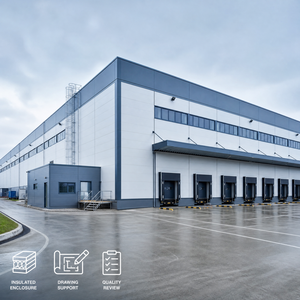
Whether deploying 53-foot domestic intermodal refrigerated containers or constructing 10,000-square-meter prefabricated cold storage centers adjacent to rail spurs, direct factory sourcing eliminates redundant intermediary markup while facilitating custom engineering tailored to Southern California's seismic zone 4 structural codes.
Supply chain dynamics in Southern California vary dramatically by sub-market micro-geography. Understanding these localized operational contexts is vital for procurement executives selecting rail freight supplier networks and cold chain storage hardware.
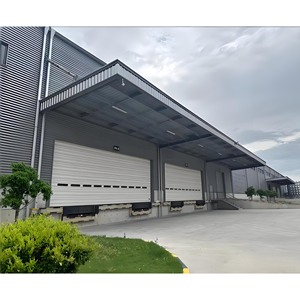
Container ships discharging at LA/LB ports often require immediate devanning to prevent ocean carrier demurrage and detention charges. Sourcing modular walk-in coolers, heavy-duty warehouse racking, and mobile reefer units for Carson facilities allows rapid cross-docking from 40ft ocean containers into 53ft rail intermodal units. JH Logistics operates within this immediate port interface zone, utilizing our air-bonded warehouse capabilities and 161,435 sq ft yard to manage customs-cleared and duty-deferred cargo transfers seamlessly.
As rail cars travel eastward along the UP Alhambra Sub and BNSF Cajon Pass corridors, cargo reaches the massive distribution centers of San Bernardino and Riverside counties. Here, large-scale prefabricated steel structure cold storage centers (exceeding 10,000 sqm) and high-density multi-story vertical racking systems are essential. These facilities act as regional fulfillment nodes for major grocery chains, cold-chain third-party logistics (3PLs), and e-commerce platforms, requiring high-thermal-efficiency insulation panels and automated storage and retrieval system (ASRS) racking supplied directly from specialized overseas manufacturers.
Urban density in downtown Los Angeles limits land availability, driving demand for high-rise steel cold chain logistics warehouses and compact modular walk-in cooling units. Localized supplier support ensures rapid assembly of insulated cardboard cooler boxes for insulated last-mile delivery, combined with micro-temperature-controlled hub buildings capable of handling rapid turnaround times for fresh produce and biomedical shipments.
To assist logistics managers in selecting appropriate infrastructure for Los Angeles rail and cold chain operations, the matrix below outlines key technical parameters across primary product classifications:
| Equipment Category | Structural Material | Thermal Range | Intermodal/Rail Rating | LA Regional Application |
|---|---|---|---|---|
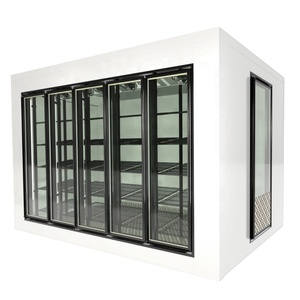
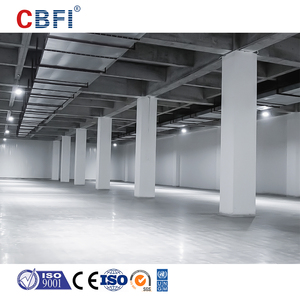
| Modular Walk-In Cold Rooms | Cam-lock Polyurethane / Color Steel | -25°C to +10°C | Stationary Transload Support | Carson & Commerce Cross-Docks |
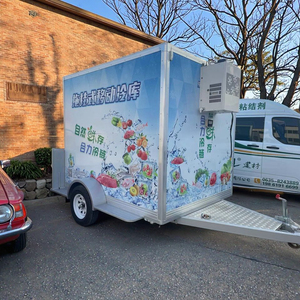
| ARKREF Integrated Cold Containers | Corten Steel / Marine-Grade Aluminum | -30°C to +20°C | AAR / ISO Double-Stack Rail | Port-to-Rail Intermodal Express |
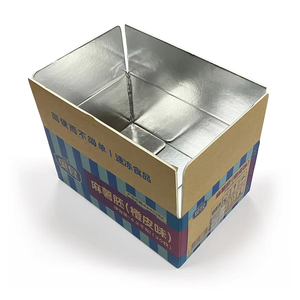
| Insulated Cardboard Shipping Boxes | Corrugated Cardboard + Foil Liner | Passive (24h to 72h Hold) | Parcel / LTL Intermodal Rail | Urban LA Last-Mile Delivery |
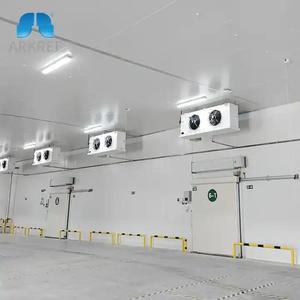
| Prefab Steel Cold Storage Buildings | Q355B Heavy Structural Steel | Custom Multi-Zone (-40°C) | Direct Rail Spur Sidings | Inland Empire Mega-Distribution |
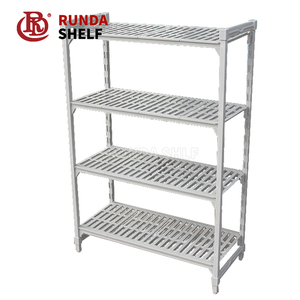
| Heavy-Duty Warehouse Cold Racking | Q235 Industrial Cold-Rolled Steel | Engineered for Sub-Zero | Vibration-Resistant Layout | High-Density Vertical Storage |
The regulatory and operational landscape for rail freight and industrial storage in Los Angeles is undergoing a historic transformation driven by environmental sustainability mandates and technology adoption.
Under CARB’s Advanced Clean Fleets (ACF) rule, drayage trucks operating at Port of LA/LB terminals and intermodal rail yards must rapidly transition to zero-emission vehicles (ZEVs). This shift elevates the strategic value of rail-adjacent warehousing. By routing freight directly via rail spurs or short-haul electric drayage to facilities like JH Logistics in Carson, shippers reduce exposure to diesel truck restrictions and emissions surcharges.
Modern supply chains demand real-time visibility. Overseas factories now embed dual-mode satellite/cellular IoT sensors into intermodal refrigerated units and cold room controllers. Cargo owners monitoring freight moving along the UP Sunset Route or BNSF Transcon receive real-time telemetry regarding internal temperature, ambient humidity, door status, and GPS location, satisfying strict FDA Food Safety Modernization Act (FSMA) requirements.
Industrial real estate constraints in the Los Angeles central core have catalyzed the adoption of high-rise steel cold chain logistics warehouses. These multi-storey buildings utilize specialized multi-level cold storage shelving and automated crane systems, maximizing volumetric cubic space rather than land footprint—a trend heavily supported by specialized factory-direct steel fabricators.
Navigating global manufacturing procurement alongside domestic rail logistics requires an experienced partner with localized physical assets and global licensing. Operating continuously since 1999, JH Logistics provides an integrated service bridge tailored to North American importers, regional distributors, and global manufacturers.
Our operational metric of handling over 22,550 ocean TEUs and 22,458 tons of air freight annually demonstrates the scale and reliability we bring to every supply chain contract. By pairing high-performance overseas factory equipment with localized Los Angeles handling expertise, we eliminate supply chain friction from port discharge to final warehouse delivery.
Whether you are sourcing factory-direct walk-in freezer systems, high-rise industrial warehouse racking, or seeking end-to-end NVOCC rail intermodal freight solutions through the Port of Los Angeles, JH Logistics provides the expert team and physical facilities to power your growth.