Explore our top-tier prefabricated cold storage units, walk-in freezers, insulated shipping containers, and high-density warehouse racking systems engineered specifically for tropical and high-altitude East African climates.
Kenya has consolidated its position as the undisputed economic, logistics, and financial engine of East and Central Africa. Driven by the strategic expansion of the Port of Mombasa, the Standard Gauge Railway (SGR), the Inland Container Depots (ICD) in Embakasi (Nairobi) and Naivasha, and the world-class perishable handling hubs at Jomo Kenyatta International Airport (JKIA), the country serves as the primary gateway for a market exceeding 300 million consumers across the East African Community (EAC) and the Common Market for Eastern and Southern Africa (COMESA).
However, modern international commerce demands far more than basic storage and haulage. Global exporters, multinational fast-moving consumer goods (FMCG) conglomerates, agricultural producers, and pharmaceutical enterprises operating in Kenya are transitioning from transactional warehousing to comprehensive Value Added Warehousing Services (VAWS). VAWS bridges the gap between raw production and retail-ready distribution by embedding customized processing, packaging, compliance monitoring, and supply chain telemetry directly into the storage environment.
As primary suppliers and exporters of turnkey cold storage infrastructure, prefabricated modular warehouses, and integrated logistics management solutions, our mission is to empower Kenyan businesses with high-yield, energy-efficient, and fully customizable logistics assets. By combining heavy-duty physical engineering with digital Warehouse Management Systems (WMS), we provide importers and exporters in Nairobi, Mombasa, Eldoret, and Nakuru with a decisive competitive advantage.
To capture maximum market value and navigate complex regulatory environments such as the Kenya Revenue Authority (KRA) customs protocols and Kenya Bureau of Standards (KEBS) quality controls, enterprise logistics facilities must execute an array of specialized value-added functions within the warehouse perimeter:
Operating within licensed customs-bonded storage facilities allows international exporters and Kenyan importers to defer customs duties, VAT, and excise taxes until goods enter the domestic market. This cash-flow preservation mechanism is crucial for high-value machinery, automotive spares, electronics, and pharmaceuticals landed at Mombasa or JKIA.
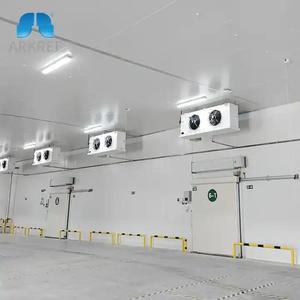
Managing stringent micro-climates ranging from deep freeze (-25°C to -18°C) for seafood and meat, to precise chilled ranges (+2°C to +8°C) for horticulture and vaccines. Integrated hydro-cooling, vacuum cooling, and forced-air precooling units rapidly reduce field heat for fresh cut flowers and vegetables prior to export flight consolidation.
Enabling post-import customization, including applying KEBS Standardization Marks (ISM), multi-lingual Swahili/English labeling, promotional bundling, barcoding, and blister packing. Raw bulk imports are converted into retail-ready stock units (SKUs) inside the warehouse environment.
Establishing systematic inspection protocols for returned goods, damaged container sorting, agricultural grading, and refurbishment. Automated WMS tracking guarantees complete trace-backs, fulfilling international ISO 22000 and HACCP food safety compliance mandates.
Understanding the unique geographical and economic landscape of Kenya is essential for designing resilient warehousing infrastructure. Our modular cold storage rooms, insulated shipping containers, and heavy-duty structural steel logistics centers are actively deployed across critical national supply chains:
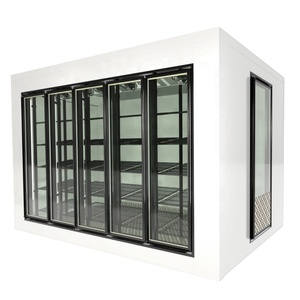
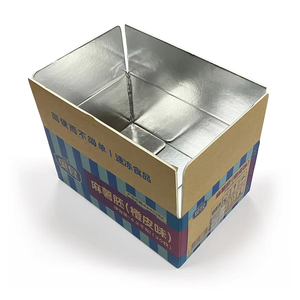
Kenya is one of the world's largest exporters of cut roses, carnations, and fresh vegetables (such as snow peas and avocadoes) to the European Union, the UK, and the Middle East. Perishables harvested around Lake Naivasha and Mount Kenya require immediate pre-cooling to preserve post-harvest shelf life. Our prefabricated modular walk-in coolers and thermal insulation boxes maintain a continuous unbroken cold chain from packhouses in Naivasha to the airside freight terminals at JKIA, preventing thermal spikes during tarmac transfers.
Nairobi serves as the primary regional distribution nexus for global pharmaceutical companies supplying vaccines, insulin, and specialized biologics to Kenya, Uganda, Rwanda, and South Sudan. Our cold storage container systems feature redundant dual refrigeration circuits, real-time IoT temperature/humidity dataloggers, and backup power integration to comply with strict Pharmacy and Poisons Board (PPB) and WHO Good Distribution Practice (GDP) standards.
At the Kilindini Harbour in Mombasa, ocean freight containers carrying frozen poultry, seafood, dairy products, and fast-moving consumer goods require immediate transition into temperature-controlled bonded warehouses. High-rise steel vertical cold chain warehouses provide ultra-high storage density within limited port-adjacent footprints, enabling swift container devanning, palletizing, and onward truck loading along the Northern Corridor highway to Kampala and Kigali.
Kenya’s rapidly expanding urban population in Nairobi, Mombasa, and Kisumu has driven demand for processed dairy, meats, and ready-to-eat frozen foods. Supermarket chains and quick-service restaurants rely on integrated 10,000+ sqm logistics cold storage centers equipped with heavy-duty multi-level racking systems to execute fast-paced pick-and-pack operations, cross-docking, and daily last-mile deliveries.
The logistics and warehousing market in Kenya is undergoing a rapid technological transformation driven by climate imperatives, regional economic integration, and digital modernization:
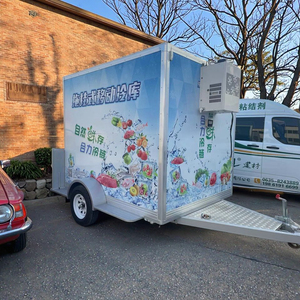
With grid power costs in Kenya representing a significant proportion of operational expenses—and rural agricultural regions experiencing occasional voltage fluctuations—there is a massive pivot toward solar-powered modular cold rooms. Using solar PV microgrids with thermal energy storage (phase-change materials) allows cold storage facilities in rural farming clusters to operate autonomously, cutting energy overheads by up to 65%.
Modern Kenyan warehouses are replacing manual ledgers with cloud-native Warehouse Management Systems (WMS) integrated with KRA’s Integrated Customs Management System (iCMS). Real-time IoT temperature sensors, automated door-opening logs, and RFID pallet tracking provide international buyers with complete visibility over cargo status via live online dashboards.
The operationalization of the African Continental Free Trade Area (AfCFTA) is positioning Kenya as the gateway for intra-African trade. This development is driving demand for massive regional distribution hubs situated along the SGR corridor in Naivasha, where dry ports and EPZs (Export Processing Zones) offer tax incentives and seamless rail-to-road intermodal transfers.
Environmental regulations enforced by NEMA (National Environment Management Authority) are accelerating the phase-out of high-GWP HFC refrigerants in favor of natural refrigerants such as R290 (Propane) and R744 (CO2). Concurrently, prefabricated modular steel warehouse structures allow developers to erect 10,000+ sqm facilities in under 120 days with zero construction waste.
Backed by decades of international freight forwarding, custom warehousing engineering, and supply chain management expertise, our organization stands as a trusted supplier, exporter, and logistics partner for enterprise clients operating in East Africa and across global trade lanes.
Established in 1999, our enterprise operates as a fully licensed Non-Vessel Operating Common Carrier (NVOCC), managing end-to-end Ocean Freight (FCL, LCL, Breakbulk, Ro-Ro) and Air Freight logistics connecting Africa, the Americas, Europe, and Asia.
Our operational footprint encompasses over 70,640 sq. ft. of specialized indoor warehouse storage alongside 161,435 sq. ft. of secure container yard capacity, equipped with heavy container reach stackers, multi-level pallet racking, and specialized air-bonded staging zones.
Our global track record demonstrates annual handling capacities exceeding 22,458 tons of air freight and 22,550 TEUs of ocean cargo, proving our capability to manage enterprise-scale supply chain movements under strict SLA parameters.
We provide full factory-direct supply, structural design, mechanical installation, and localized technical maintenance for all modular cold rooms, industrial steel structures, and insulated packaging systems delivered into the Kenyan market.
Below are expert responses to common technical, legal, and operational questions regarding the procurement, import, and installation of value-added warehousing and cold storage systems in Kenya:
All our cold room panels, refrigeration compressors, insulated shipping boxes, and structural warehouse materials undergo rigorous Pre-Export Verification of Conformity (PVoC) testing. We issue a Certificate of Conformity (CoC) authorized by KEBS-appointed inspection agents (such as SGS, Intertek, or Bureau Veritas) prior to shipment, ensuring smooth customs clearance at Mombasa Port or JKIA without penalty fees.
Our walk-in cold rooms and refrigerated container solutions utilize high-density polyurethane (PUF) insulation panels (42 kg/m³ density) with thermal conductivity as low as 0.022 W/m·K. Panels are manufactured with cam-lock tongue-and-groove joints and coated in corrosion-resistant stainless steel or prepainted galvanized steel (PPGI). This design ensures reliable internal temperatures (-20°C to +4°C) even when ambient coastal temperatures exceed +40°C.
Yes. Our low-power-consumption inverter refrigeration units are specifically engineered to accept DC power inputs from solar PV arrays as well as standard 3-phase grid electricity (415V/50Hz). We offer optional thermal storage (ice-bank) integration that maintains stable temperatures for up to 14 hours during grid power outages or non-sunlight hours, eliminating reliance on expensive diesel generators.
From final engineering design approval, manufacturing takes approximately 20–25 days. Shipping via ocean freight from our factory to the Port of Mombasa typically takes 22–30 days. Onsite civil works foundation preparation happens concurrently, allowing our technical installation team to assemble the prefabricated steel structure and insulated panels on site within 15–20 days after port customs release.
Under the East African Community (EAC) Single Customs Territory (SCT) framework, goods stored in our KRA customs-bonded facilities in Nairobi or Mombasa can undergo value-added processes (such as repacking, labeling, or consolidation) without incurring domestic Kenyan import duties. Duties are only declared and settled upon final consumption entry into the destination EAC partner state.
Our VAS ecosystem includes automated barcode generation and application, shrink-wrapping, palletizing, order pick-and-pack, lot tracking, serial number control, quality assurance inspection, temperature validation reporting for pharmas, and direct EDI integration with your enterprise ERP software.
Whether you require factory-direct supply of modular cold storage rooms, insulated transport containers, heavy-duty warehouse racking, or complete NVOCC bonded logistics management—our engineering and freight specialists are ready to assist.