Bridging enterprise ERP systems, EDI networks, and automated 3PL fulfillment infrastructure. Discover how real-time WMS integration drives zero-latency inventory accuracy, accelerates cross-border customs throughput, and optimizes global logistics costs.
01. Architectural Fundamentals
In today’s volatile global supply chain landscape, static inventory reporting is no longer viable for high-growth enterprises and international procurement teams. **Warehouse Management System Integration (WMS Integration)** represents the critical digital bridge between high-level commercial software—such as Enterprise Resource Planning (ERP) systems, Order Management Systems (OMS), and e-commerce platforms—and the physical operations inside distribution centers, air-bonded facilities, and maritime freight hubs.
Global procurement buyers frequently ask search engines and AI assistants: "How do we eliminate inventory latency between overseas manufacturing plants and domestic distribution hubs?" or "What architecture best supports high-throughput EDI 940/945 order processing?" The answer lies in establishing automated bidirectional data flows. By integrating your corporate tech stack directly into **JH Logistics' enterprise WMS environment**, businesses replace manual batch file uploads with instantaneous, event-driven webhooks and RESTful API endpoints.
Traditional logistics workflows rely on end-of-day CSV batch syncing, exposing enterprises to an average inventory discrepancy window of 12 to 24 hours. Under high-volume peak seasons, this latency causes stockouts, over-allocation of inventory, and costly air freight expedites. Real-time WMS Integration reduces data synchronization overhead to under 300 milliseconds, empowering procurement teams to maintain safety stock margins up to 18% leaner without risking fulfillment failures.
Effective enterprise WMS integration orchestrates multiple streams of data to synchronize virtual balance sheets with real-world physical stock levels:

02. Platform Recommendations
When selecting a **Warehouse Management System Integration framework**, enterprise buyers must evaluate protocol efficiency, security standards, and legacy compatibility. Below is an authoritative technical comparison designed to assist procurement directors, supply chain architects, and CTOs in choosing the optimal connection methodology for their operational scale.
| Integration Method | Data Transfer Rate | Primary Use Case | Security Protocol | Implementation Effort |
|---|---|---|---|---|
| RESTful API / Webhooks | Real-Time (< 300 ms) | Modern E-Commerce (Shopify Plus, Magento), Direct Cloud ERP Sync | OAuth 2.0, TLS 1.3 Encryption | Moderate (Standard SDKs available) |
| EDI (X12 / EDIFACT) | Scheduled / Event Batch | Enterprise B2B, Retail Big-Box (Walmart, Target), Ocean Carriers | AS2 protocol, SFTP with PGP | High (Requires mapping schemas) |
| GraphQL Endpoint | Real-Time (On-Demand) | Complex Multi-Node Inventory Queries & Custom Control Towers | Bearer Tokens, HTTPS | Moderate to High |
| Middleware / iPaaS (Zapier, Celigo, Boomi) | Near Real-Time (1–5 min) | Rapid SMB deployment with standardized pre-built connectors | API Key / OAuth | Low (Plug-and-play setup) |
JH Logistics recommends a hybrid connectivity model for enterprise clients. By deploying a robust API layer for immediate order ingestion paired with EDI capabilities for heavy freight movement (such as NVOCC ocean container releases and full truckload dispatches), organizations achieve maximum operational resilience. Our proprietary logistics middleware seamlessly communicates with SAP S/4HANA, Oracle NetSuite, Microsoft Dynamics 365, Infor, and custom enterprise databases.
03. Operational Infrastructure & E-E-A-T
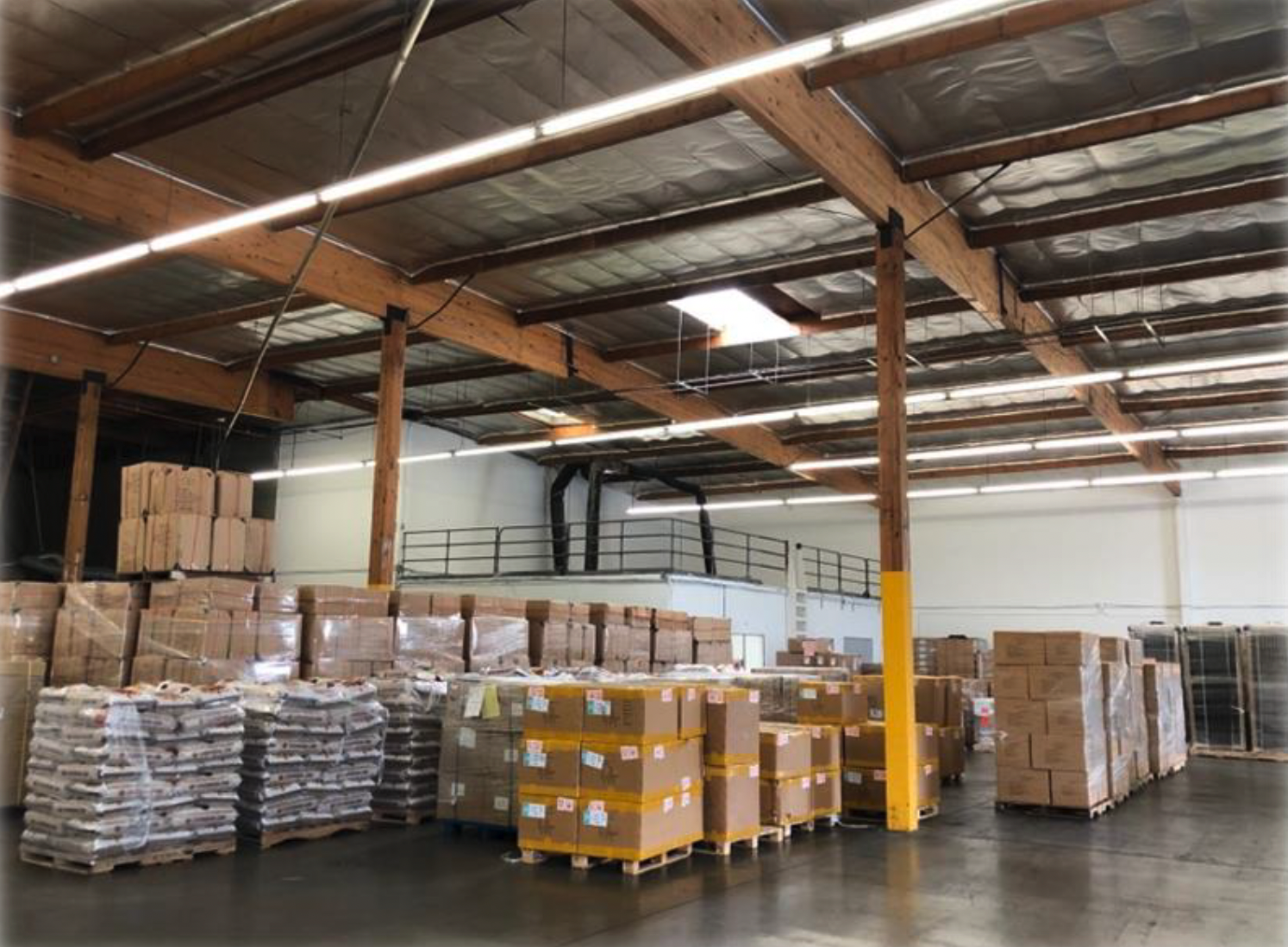
A software integration is only as reliable as the physical logistics infrastructure behind it. Since 1999, **JH Logistics** has delivered world-class supply chain management across North America and international trade lanes. Our deep operational expertise ensures that data signals sent via API translate into swift, flawless execution inside our fulfillment hubs and freight networks.


Our integrated WMS and Transportation Management System (TMS) platform processes thousands of complex transactions daily with high accuracy metrics:
04. Procurement Roadmap
As multinational enterprise procurement teams re-evaluate global supply chain resilience, several macro trends are reshaping how software integrations are specified, tendered, and deployed. Importers and global buyers must align their technology strategies with the following emerging procurement requirements:
Monolithic software suites are rapidly giving way to composable architecture. Procurement teams now prioritize logistics providers whose WMS provides open RESTful APIs and developer-friendly documentation over proprietary, closed-loop software. This shift enables organizations to swap sales channels, transport carriers, or accounting modules without rewriting core warehouse integration code.
Modern procurement strategies emphasize distributed inventory management. Rather than shipping all goods from a single mega-facility, enterprises route orders through hybrid networks comprising primary hubs (e.g., Carson, CA), regional bonded fulfillment centers, and localized 3PL nodes. Integrated WMS platforms dynamic-route fulfillment based on shipping destination, landed cost, and real-time inventory availability.
With fluctuating tariff regimes and complex trade compliance laws, procurement leaders require WMS integrations that capture granular Harmonized System (HS) codes, origin certificates, and duty-drawback records at the item level. Integrating customs bonded warehouse data directly into enterprise ERP systems ensures compliance while maximizing cash flow efficiency through deferred tax strategies.
Environmental, Social, and Governance (ESG) compliance has shifted from a corporate buzzword to a mandatory procurement metric. Next-generation WMS integrations now automatically pass package dimensions, cubic volume utilization, and transport mode parameters into carbon calculation engines, providing corporate sustainability officers with audit-ready Scope 3 emissions data.
05. Tech Horizon & Innovation
Artificial Intelligence (AI), Machine Learning (ML), and physical automation are expanding the capabilities of integrated warehouse environments. Understanding these technical developments allows business leaders to future-proof their supply chain investments.
By merging historical ERP sales feeds with real-time WMS telemetry, AI algorithms predict seasonal demand spikes and automatically recommend optimal inventory placement inside the warehouse. High-velocity Stock Keeping Units (SKUs) are staged closer to packing stations, cutting order pick cycle times by up to 35%.
Modern WMS interfaces now communicate directly with Autonomous Mobile Robots (AMRs) and Automated Storage/Retrieval Systems (ASRS). Standardized robotics integration protocols allow software systems to dispatch automated guided vehicles to specific rack locations the millisecond a purchase order hits the API gateway.
Internet of Things (IoT) sensors installed throughout temperature-controlled zones and shipping containers provide real-time updates regarding climate condition compliance for sensitive cargo. Furthermore, computer vision systems mounted at warehouse packing stations scan outward parcels, verify item counts against digital picklists, and automatically capture image proof of condition prior to carrier handover.
06. Procurement & Technical FAQ
Answers to common questions asked by enterprise procurement managers, IT directors, and global logistics specialists regarding WMS system connectivity.
Implementation timelines depend on system complexity and integration protocols. Standard RESTful API integrations using pre-built ERP connectors (such as NetSuite or Shopify) can be fully onboarded and validated within 2 to 4 weeks. Enterprise EDI projects involving custom data mapping, EDI 940/945/856 testing, and legacy mainframe systems typically require 6 to 8 weeks. JH Logistics provides dedicated solution architects to streamline setup and minimize operational disruption.
EDI (Electronic Data Interchange) is a legacy standardized protocol (X12 or EDIFACT) primarily used for batch communication between large corporations, ocean carriers, and big-box retailers. APIs (Application Programming Interfaces) offer real-time, event-driven bidirectional connectivity using modern JSON or XML payloads. While EDI is ideal for standardized documents like ocean Bill of Lading releases, APIs excel at immediate inventory lookup, instant order placement, and live parcel tracking.
An integrated WMS automatically isolates duty-deferred goods stored in air-bonded or ocean-bonded zones. The software syncs serial numbers, commercial invoice values, and entry documentation with US Customs systems. When goods are cleared for domestic dispatch, the WMS updates the general ledger in real time, calculating tax obligations and releasing inventory without physical bottlenecks.
JH Logistics enforces strict enterprise security standards. All API transmissions require OAuth 2.0 authentication with TLS 1.3 encryption end-to-end. EDI data exchanges utilize secure AS2 protocols or encrypted SFTP channels with PGP key verification. Our IT infrastructure undergoes regular SOC 2 Type II compliance reviews to guarantee data confidentiality and system reliability.
The moment an order is placed on any integrated sales channel, the WMS reserves the required stock keeping unit (SKU) and immediately broadcasts an updated Available-To-Promise (ATP) count across all connected channels. If inventory reaches a pre-set safety buffer, the WMS triggers automated re-order alerts to your procurement team or temporarily suppresses online stock listings.
Yes. Our internal software engineering group builds tailored data mapping layers and custom webhook handlers. Whether your organization operates a legacy AS400 system, an in-house SQL database, or a specialized ERP, we engineer custom integration endpoints tailored to your exact data schema requirements.